
Novenas
St Jude Novena: The 9-Day Prayer for Hopeless Cases
The St Jude novena in full: the 'Most holy Apostle, St Jude' prayer said for nine days, when to begin before his feast of 28 October, and how to pray it for hopeless and impossible cases, work and healing.
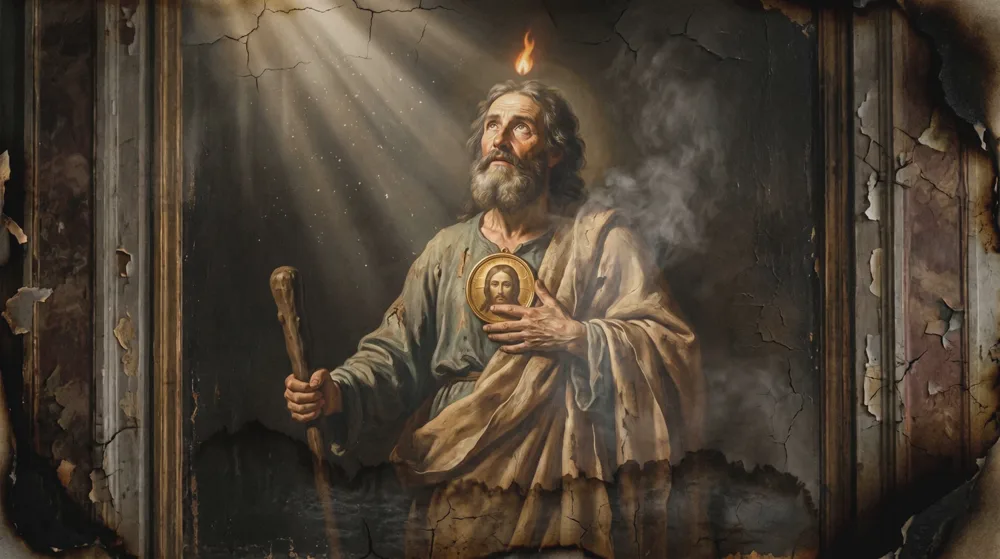
The St Jude novena is the nine-day prayer said to St Jude Thaddeus, the Apostle whom Catholics invoke as the patron of hopeless and desperate cases. It is made by saying the prayer that begins "Most holy Apostle, St Jude, faithful servant and friend of Jesus" once a day for nine consecutive days, for one grave need named each day. Its best-loved season is the nine days before his feast: in the traditional Roman calendar Saints Simon and Jude are kept on 28 October, so the novena of preparation is prayed from 19 to 27 October — though it may be begun on any day of urgent need.
The full St Jude novena prayer
This is the prayer at the heart of the devotion, said once on each of the nine days. Begin with the Sign of the Cross, name your intention, and pray:
Most holy Apostle, St Jude, faithful servant and friend of Jesus, the Church honoureth and invoketh thee universally as the patron of hopeless cases, of things almost despaired of. Pray for me, who am so miserable; make use, I implore thee, of that particular privilege accorded to thee, to bring visible and speedy help where help is almost despaired of. Come to my assistance in this great need, that I may receive the consolation and succour of Heaven in all my necessities, tribulations and sufferings, particularly (here name your request), and that I may bless God with thee and all the elect throughout eternity.
I promise thee, O blessed St Jude, to be ever mindful of this great favour, and I will never cease to honour thee as my special and powerful patron, and to do all in my power to encourage devotion to thee. Amen.
Many prayer-books join to it these acclamations of the Sacred Heart and the threefold blessing, said once at the end of each day:
May the Most Sacred Heart of Jesus be adored and loved in all the tabernacles until the end of time. Amen.
May the Most Sacred Heart of Jesus be praised and glorified now and for ever. Amen.
St Jude, pray for us and hear our prayers. Amen.
Blessed be the Sacred Heart of Jesus.
Blessed be the Immaculate Heart of Mary.
Blessed be St Jude Thaddeus, in all the world and for all eternity. Amen.
Finish each day with an Our Father, a Hail Mary and a Glory Be. That is the complete daily form. For the meaning of a novena and why the Church counts nine days, see our guide to what a novena is; the Litany of the Sacred Heart of Jesus is a fitting companion to the acclamations above.
A word on the age of these texts: they are prayers of devotion, not liturgical prayers. Their author and date are not known, they belong to the modern spread of the devotion to St Jude, and we do not present them as ancient. What is ancient is the Church's own prayer on his feast, given further below from the Roman Missal.
The second St Jude prayer: "O holy St Jude, Apostle and Martyr"
A second prayer of devotion circulates in prayer-books and on prayer cards, said as its own novena or added to the first:
O holy St Jude, Apostle and Martyr, great in virtue and rich in miracles, near kinsman of Jesus Christ, faithful intercessor of all who invoke thy special patronage in time of need: to thee I have recourse from the depth of my heart, and humbly beg thee, to whom God hath given such great power, to come to my assistance. Help me now in my urgent need and grant my earnest petition. I will never forget thy graces and the favours thou obtainest for me, and I will do my utmost to spread devotion to thee. Amen.
St Jude, pray for us and for all who honour thee and invoke thy aid.
To this form one adds three Our Fathers, three Hail Marys and three Glory Bes, each of the nine days. Either prayer may serve as your novena; many say both. For the single daily prayer on its own, outside a novena, see our prayer to St Jude, patron of hopeless causes.
The Collect of the feast of Saints Simon and Jude
The one prayer to St Jude that the Church herself puts on the lips of the faithful is the Collect of his Mass on 28 October, in the Roman Missal of 1962. It is a fitting close to the ninth day:
Deus, qui nos per beátos Apóstolos tuos Simónem et Judam ad agnitiónem tui nóminis veníre tribuísti: da nobis eórum glóriam sempitérnam et proficiéndo celebráre, et celebrándo profícere. Per Dóminum nostrum.
O God, who by Thy blessed Apostles Simon and Jude hast brought us to the knowledge of Thy name: grant us both to celebrate their everlasting glory by advancing in virtue, and by celebrating it to advance. Through our Lord.
The nine days: praying the novena day by day
The St Jude novena is not made of nine different prayers but of one prayer said faithfully on nine consecutive days; that constancy is the whole of it. On Day 1 you begin, naming your intention plainly; on Days 2 to 8 you return to the same prayer, if possible at the same hour, holding the same need before the saint; on Day 9 you close, adding the Collect of the feast, and give thanks whether or not the answer has yet come. If you wish to join a decade of the Rosary to each day, our guide on how to pray the Rosary sets out the mysteries.
The novena to St Jude for impossible cases
The novena to St Jude for impossible cases is not a different prayer but the same one, brought to him under his best-known title. The first prayer already names him the patron of hopeless cases, of things almost despaired of; when you pray for an impossible cause, name it in that place. Butler's Lives of the Saints, in its notes on 28 October, records the invocation of St Jude "as believed to have special efficacy in desperate cases" and refers to the Bollandists' Acta Sanctorum for it.
St Jude does not promise the outcome we specify; he carries a hopeless case to the throne of God, which is a surer thing. Tradition sets beside him St Rita of Cascia, whose novena is prayed for causes called impossible, and our page on the patron saint of hopeless cases explains why the two are invoked together.
For desperate situations and hopeless cases
The St Jude novena for desperate situations carries the same trust one step further. When a marriage seems past saving, a diagnosis past hope, a debt past paying, a soul past reaching, the Church does not tell us to despair but to bring the case to the Apostle whose patronage is precisely the hopeless one. Name the desperate thing without softening it, and in naming it surrender also its ending: if it be for the good of my soul. That surrender is not a weakness in the prayer but its strength.
For work, employment and financial help
Many bring St Jude their work and their money: a lost job, a search for employment, a household that will not balance. The St Jude novena for a job or for financial help is the same nine-day devotion, with the need named plainly: the position sought, the provision required, the burden to be lifted. Ask him for the work or the help you need, and ask first for the grace to labour and wait in peace. Those who seek employment often join to it the novena to St Joseph, the carpenter who fed the Holy Family by the work of his hands.
For healing
The St Jude novena for healing, of body or of soul, for oneself or for one gravely ill, is among the most-prayed forms of the devotion. Name the sick person and the illness in the petition, and ask the health of body and soul, if it be God's will, together with the grace of patience. We ask the cure; we ask, more surely, the grace to bear the cross well should the cure be withheld, for that grace is never refused. In grave illness, the sick should also be helped to receive the Last Sacraments in good time.
For a specific intention
However wide the patronage, the novena is always prayed for one specific intention, named at the start and held through all nine days: a reconciliation, an examination, a conversion, a safe birth, a cause at law. Bring that one thing to St Jude, name it each day, and do not scatter the novena over many requests. It is good also to make a sacramental Confession and to receive Holy Communion within the nine days; our guide on how to go to Confession walks through the rite.
Does the St Jude novena "never fail", and what of "publishing" it?
You will often see this called the novena that never fails, together with notices in newspapers promising to publish the prayer, or to leave a number of copies in a church, once the favour is granted. A word of honesty belongs here. No novena binds God, and no number of printed copies can compel Him; to pray as though a fixed formula forced an answer would be superstition, which the Church condemns as attributing to creatures a power that belongs to God alone. What the phrase can rightly mean is soberer: that a trusting petition carried by an Apostle never returns empty, and always obtains what is truly best for the soul. The promise in the prayer to "encourage devotion" to St Jude is a pledge of gratitude, not a condition of the favour.
How to pray the St Jude novena
A novena is measured not by its words but by the soul that says them. Choose a fixed hour and keep it for nine days. Begin with the Sign of the Cross, name your one intention, say the prayer (or both prayers) above, add the Sacred Heart acclamations and the Our Father, Hail Mary and Glory Be, and close with the blessing.
When to start: the novena of preparation for the feast runs from 19 October to 27 October, so that the ninth day falls on the eve of the feast of Saints Simon and Jude on 28 October; some prefer to begin on 20 October and finish on the feast itself. Outside that season it may be begun on any day of need. Where you can, join the nine days to Holy Mass, Communion and Confession. The novena to the Sacred Heart follows the same simple pattern and may be made in the same spirit.
Who is St Jude Thaddeus?
St Jude, also called Judas and surnamed Thaddeus (or Lebbeus), "the brother of James", is one of the twelve Apostles, usually regarded as the brother of St James the Less. He is carefully distinguished from Judas Iscariot, the traitor: St Luke lists "Jude the brother of James, and Judas Iscariot, who was the traitor" (Luke 6:16), and St John names him "Judas... not the Iscariot".
Scripture records one saying of his. At the Last Supper he asked Our Lord, "Lord, how is it that thou wilt manifest thyself to us, and not to the world?" and received one of the tenderest promises of the Gospel: "If any one love me, he will keep my word. And my Father will love him and we will come to him and will make our abode with him" (John 14:22-23). His name is borne by one of the canonical Epistles, in which he beseeches the faithful "to contend earnestly for the faith once delivered to the saints" (Jude 3).
The Roman Breviary, in the lessons of his feast, says that Jude preached in Mesopotamia and Simon in Egypt, and that the two met afterwards in Persia, where they won countless souls to Christ and glorified His name "by a glorious martyrdom", which is why the Church keeps them together on one day. Eusebius preserves a story, repeated by Butler, that two grandsons of St Jude, poor working peasants, were brought before the Emperor Domitian as descendants of David's royal house, and dismissed with contempt when he saw they looked for a kingdom not of this world. We tell his life in full on our page on St Jude the Apostle.
Why St Jude is the patron of hopeless cases
Why should this Apostle, of whom the Gospels say so little, become the great patron of desperate causes? The explanation commonly given is a pious one, not a defined one: because his name was so close to that of Judas Iscariot, the faithful long hesitated to invoke him, and so the "forgotten" Apostle came to be sought for the causes others had abandoned.
Whatever its origin, the practice is old enough for Butler to record it, and in the twentieth century it spread widely: in 1929 the Claretian Father James Tort established a shrine of St Jude at Our Lady of Guadalupe Church in South Chicago, held the first solemn novena there on 17 February 1929, and saw an overflow crowd at the close of the solemn novena that ended on the feast, 28 October 1929. From that shrine, in the years of the Depression, much of the English-speaking devotion to St Jude took its shape.
Frequently Asked Questions
Who is St Jude the patron saint of?
St Jude Thaddeus is invoked as the patron of desperate situations, hopeless cases and causes almost despaired of, the saint turned to when every human means has failed. He is also widely invoked for the sick. The usual explanation is that the faithful long neglected him because of his name, so that the "forgotten" Apostle became the friend of forgotten causes.
When should I start the St Jude novena?
To prepare for his feast, begin on 19 October, so that the ninth day falls on 27 October, the eve of the feast of Saints Simon and Jude on 28 October in the traditional calendar. Some begin on 20 October to end on the feast itself. Outside October, the novena may be begun on any day of urgent need.
How do you pray the St Jude novena?
Say the prayer "Most holy Apostle, St Jude, faithful servant and friend of Jesus" once a day for nine consecutive days, naming one intention and keeping to it throughout. Add the Sacred Heart acclamations, the Our Father, Hail Mary and Glory Be, and the closing blessing. Keep a fixed hour, and join Holy Mass, Communion and Confession where you can.
How many days is the St Jude novena?
Nine days. The word novena comes from the Latin novem, nine, in memory of the days the Apostles and Our Lady spent in prayer between the Ascension and Pentecost. It is one prayer said on nine consecutive days, not nine different prayers.
Is the St Jude novena prayer ancient?
No. The two prayers of devotion given above are widely used but are not liturgical, and their author and date are not known, so we do not call them ancient. The ancient prayer is the Collect of the feast of Saints Simon and Jude in the Roman Missal, which we give above in Latin and English.
Is there a PDF or printable version of the 9-day novena?
Yes. The complete text of the nine-day novena is available as a free PDF, ready to print: the St Jude novena PDF. Through the year, the Iter Fidei app also keeps the prayers to the saints at hand day after day, with the traditional calendar to remind you of the feast. Join early access here.
Does the St Jude novena really work?
A novena is not a mechanism that forces God's hand; it is persevering prayer, made through an Apostle who is a friend of God. Pray it in confidence and in submission, ending Thy will be done: what you receive will be either the favour you named or the better thing God chooses to send.
Why is St Jude called the patron of lost and impossible causes?
Because his name was so near to that of Judas Iscariot, the faithful were long reluctant to invoke him, and he became the "forgotten saint". The pious explanation holds that the neglected Apostle became all the readier to help the causes others had abandoned. Butler's Lives of the Saints records the belief in the special efficacy of his intercession in desperate cases.
The Iter Fidei app carries the prayers of the saints, the Roman Missal of 1962 and the traditional calendar, so that St Jude may be invoked on his feast and through the year. Join early access here.
Sources. Holy Scripture, Douay-Rheims version (Luke 6:16; John 14:22-23; Jude 3); the Roman Missal of 1962, Mass of Saints Simon and Jude, 28 October (Collect); the Roman Breviary, lessons of the second nocturn of 28 October; Butler's Lives of the Saints, "SS. Simon and Jude, or Thaddeus, Apostles" (28 October); the prayers of devotion to St Jude as printed in Catholic prayer-books; on the right use of the saints' intercession, the Catechism of St Pius X on the First Commandment.