
Novenas
Novena to St Andrew Avellino
The novena to St Andrew Avellino, patron against apoplexy, stroke, and a sudden and unprovided death — the full nine-day prayer, how to pray it before his feast on 10 November, and the life of the saint who died at the altar.
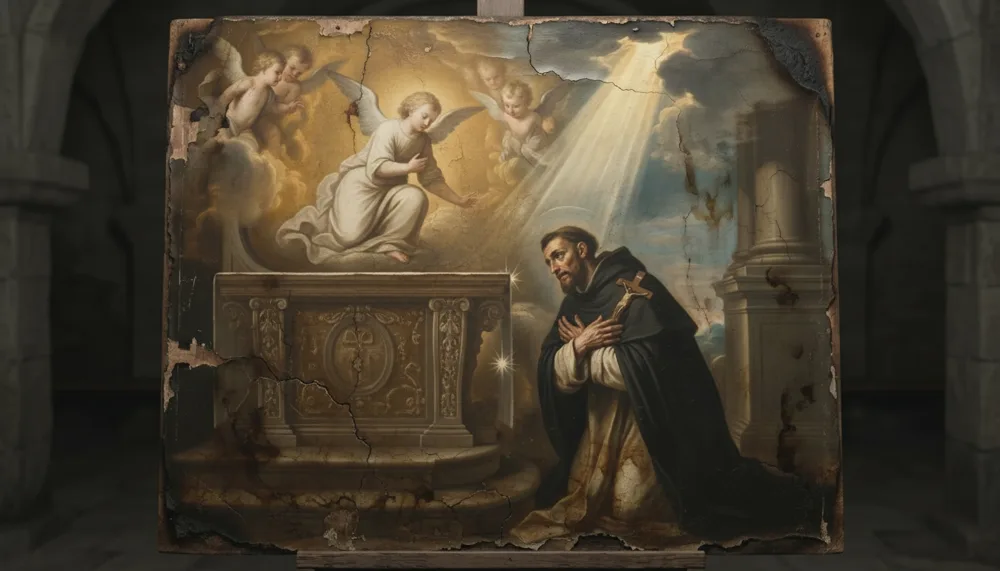
The novena to St Andrew Avellino is a nine-day prayer said to the Theatine priest who, in his eighty-eighth year, was struck down by apoplexy at the very foot of the altar as he began to say Mass. Because he died of that stroke — fortified by the Last Sacraments and delivered, tradition says, from the assaults of the devil by Our Lady and St Michael — he is honoured as the great patron against apoplexy, against a stroke, and above all against a sudden and unprovided death. His feast is kept on 10 November, and the novena is prayed most fittingly in the nine days leading up to it, beginning on 1 November. Below we give the full prayer, the variants the devout ask for, how to pray it, and the life of the saint himself.
The full novena to St Andrew Avellino
The heart of this devotion is a threefold prayer, each part answered by the same versicle and response, and each followed by an Our Father, Hail Mary, and Glory Be. It is said once a day for nine consecutive days, most often 1 through 9 November, with your own intention named at the close. It is the popular prayer of older prayer-books, a private devotion with no liturgical text and no approval of its own that we can cite; the prayer of the Church on his feast is the collect of 10 November, given on our page on St Andrew Avellino. If you are new to this form of prayer, our guide to what is a novena explains why the Church asks nine days.
Begin with the Sign of the Cross:
In the name of the Father, and of the Son, and of the Holy Ghost. Amen.
I.
O most glorious saint, whom God has made our protector against apoplexy, seeing that thou thyself didst die of that disease, we earnestly pray thee to preserve us from an evil so dangerous and so common.
Our Father. Hail Mary. Glory Be.
V. By the intercession of St Andrew, stricken with apoplexy,
R. From a sudden and unprovided death deliver us, O Lord.
II.
O most glorious saint, if ever by the just judgment of God we should be stricken with apoplexy, we earnestly beseech thee to obtain for us time enough to receive the Last Sacraments and die in the grace of God.
Our Father. Hail Mary. Glory Be.
V. By the intercession of St Andrew, stricken with apoplexy,
R. From a sudden and unprovided death deliver us, O Lord.
III.
O most glorious saint, who didst endure, before dying, a terrible agony through the assaults of the devil, from which the Blessed Virgin and St Michael delivered thee, we earnestly beseech thee to assist us in the tremendous moment of our death.
Our Father. Hail Mary. Glory Be.
V. By the intercession of St Andrew, stricken with apoplexy,
R. From a sudden and unprovided death deliver us, O Lord.
Then name your intention:
(Here mention the particular grace you ask for.)
Close with the invocation, said three times:
St Andrew, pray for us.
St Andrew, pray for us.
St Andrew, pray for us.
End with the Sign of the Cross. This same prayer is repeated on each of the nine days.
The prayer against a sudden death and against strokes
The core of the novena — the three petitions above with their versicle and response — is itself the Prayer to St Andrew Avellino against a sudden death and against strokes, found in older prayer-books apart from the nine-day form. Many keep it as a daily prayer through the year, not only during the novena, precisely because the danger it names is "so dangerous and so common."
Said each morning, it is a fitting act of that watchfulness Our Lord commanded: "Watch ye therefore, because you know not the day nor the hour" (Matthew 25:13). To pray it is to ask, day by day, that we may never be caught unready, and that whatever our last illness, we be granted time to be shriven, houseled, and anointed before the end. On the grace of that final anointing, see our account of the Last Rites.
The novena for a happy death
St Andrew Avellino is invoked not only against an evil death but for a good one. To ask him deliverance from a sudden and unprovided death is to ask, positively, for a happy death: to die in the state of grace, with the Sacraments received, the mind clear, and the soul at peace with God. Prayed to this end, the novena joins the great tradition of the Church's preparation for that hour — a devotion it shares with St Joseph, the patron of the dying, whose own novena for a happy death is prayed for the very same grace.
Where St Joseph is honoured because he died in the arms of Jesus and Mary, St Andrew is honoured because he died at the altar, in the act of offering the Holy Sacrifice, delivered from the devil's last assault. Together they are the two great intercessors a Christian may turn to when he thinks soberly, as he ought, on the Four Last Things.
The novena against apoplexy and stroke
Because St Andrew himself was "stricken with apoplexy" — the old name for a stroke — he is invoked with particular confidence by those who fear or suffer that affliction, or who care for the sick and aged. The novena is a natural recourse for anyone in danger of a stroke, for a loved one already stricken, or for the grace of a lucid and holy end should such a blow ever fall. The second petition asks exactly this: that if God in His just judgment permits the stroke, He grant "time enough to receive the Last Sacraments and to die in the grace of God." It is not a charm against illness but a plea for the one thing that finally matters — that the body's sudden weakness never rob the soul of its last preparation.
The role of St Michael in this novena
The third petition recalls a striking detail of the saint's death: that as he lay dying he endured "a terrible agony through the assaults of the devil, from which the Blessed Virgin and St Michael delivered" him. This is why the novena so naturally draws in the Archangel who defends souls at the hour of death. Many who pray it add the prayer to St Michael at the close, or keep alongside it the Chaplet of St Michael, begging the Prince of the heavenly host to stand by them in that last combat as he stood by St Andrew.
How to pray the novena to St Andrew Avellino
A novena is nine days of steady, trusting prayer, not a formula that binds God. To pray this one well:
- When to begin. The most fitting time is the nine days before his feast — 1 to 9 November, ending on the eve of 10 November. But the novena may be prayed at any time of year, and especially in time of illness, danger, or bereavement.
- The daily prayer. Say the full threefold prayer above once each day, ideally at a fixed hour, with the Our Father, Hail Mary and Glory Be after each part, and your intention named at the close.
- Disposition. Pray in submission to God's will. Ask plainly for the grace you seek — deliverance from sudden death, health, or a holy end for one you love — but ask above all for the grace to die well, which is the grace St Andrew most surely obtains.
- Join it to the Mass. As this is a devotion born at the altar, it is well joined to Holy Communion and, in November especially, to prayer for the holy souls in purgatory, whose month it is.
Who is St Andrew Avellino?
St Andrew Avellino was born in 1521 at Castronuovo, in the Kingdom of Naples, and christened Lancelot (Lancelotto). A gifted student of humanities, philosophy, and law, he took his doctorate in civil and canon law and was ordained a priest, serving as an advocate in the ecclesiastical court at Naples. His conversion came sharply: pleading a case one day, he defended his side with a lie — and, opening his breviary soon after upon the verse "The mouth that belieth, killeth the soul" (Wisdom 1:11), he was so pierced with sorrow that he abandoned the law entirely and gave himself to a life of penance.
His archbishop set him to reform a lax convent in Naples, a work so resented that he was attacked and wounded by those he had driven out. Sheltered afterwards by the Theatine Clerks Regular, he was drawn to their strict life and entered the Order at about thirty-five, laying aside the name Lancelot for Andrew, in memory of the Cross on which the Apostle died. To seal his new life he is said to have bound himself by a daily vow to advance in perfection and to war against his own self-will.
For the rest of a long life he was a tireless preacher, confessor, and reformer. He served as master of novices and superior, founded Theatine houses at Milan and Piacenza, and was the trusted friend of St Charles Borromeo. His zeal never cooled with age. On 10 November 1608, in his eighty-eighth year and so frail he could scarcely reach the altar, he rose to say Mass.
He had barely begun the prayers at the foot of the altar — the Breviary relates that he had three times repeated Introibo ad altare Dei, "I will go in to the altar of God" — when he was struck by apoplexy. He received the Last Sacraments and, tradition holds, was delivered in his last agony from the assaults of the devil by Our Lady and St Michael, dying the death of a saint. His relics were enshrined in the Church of St Paul at Naples.
He was beatified in 1624 by Pope Urban VIII, only sixteen years after his death, and canonized in 1712 by Pope Clement XI. He is honoured as one of the patrons of Naples, and invoked throughout the Church against apoplexy, stroke, and a sudden and unprovided death. His feast is kept on 10 November. For the wider company of intercessors, see the Litany of the Saints.
Frequently Asked Questions
What is the St Andrew Avellino novena for?
It is prayed chiefly for deliverance from a sudden and unprovided death — that is, from dying without warning and without the Sacraments — and for the grace of a happy death in the state of grace. Because the saint himself died of apoplexy, it is also invoked against strokes and sudden seizures, both for oneself and for the sick and aged one loves.
When is St Andrew Avellino's feast day?
His feast is 10 November. The novena is most fittingly prayed in the nine days leading up to it, beginning on 1 November and ending on the eve of the feast — a season that falls within November, the Church's month of prayer for the dead.
What is St Andrew Avellino the patron saint of?
He is the patron against apoplexy, stroke, and a sudden and unprovided death, and is invoked for a happy death. He is also honoured as one of the patrons of Naples, where his body rests. His patronage against sudden death flows directly from the manner of his own end, stricken at the altar as he began Mass.
How did St Andrew Avellino die?
On 10 November 1608, aged eighty-eight, he rose to celebrate Mass despite great weakness. He had just begun the prayers at the foot of the altar, repeating Introibo ad altare Dei, when he was seized by apoplexy — a stroke — at the altar. He received the Last Sacraments and died that same afternoon, honoured by tradition as having been delivered in his final agony from the devil's assaults by the Blessed Virgin and St Michael.
Why is he invoked against a sudden death?
Because he himself suffered exactly that danger — a stroke without warning — yet was granted time to receive the Last Sacraments and to die in God's grace. The faithful ask him to obtain the same mercy for them: that if such a blow should fall, they too be given time to be reconciled to God and never be taken unprepared. It is the sober prudence Our Lord urged in bidding us watch, "because you know not the day nor the hour."
Can I pray the novena at any time of year?
Yes. Though its natural season is the nine days before his feast on 10 November, the novena — and the shorter prayer against a sudden death drawn from it — may be prayed at any time, and is especially apt in illness, in danger, or when praying for the dying. Many keep the three-part prayer as a daily devotion throughout the year.
Is there a difference between the novena and the prayer against sudden death?
They share the same text. The prayer against a sudden death and against strokes is the threefold petition with its versicle and response; the novena is simply that prayer said once a day for nine consecutive days, with your intention named and the closing invocation to St Andrew. Pray the single prayer daily as a habit, or the full nine days when you wish to press a particular petition before his feast.
The Iter Fidei app carries this novena, with the Latin and your own language and day-by-day reminders and audio, so you can pray the nine days from your phone without a printed sheet. Join early access here.
Sources. Holy Scripture (Wisdom 1:11; Matthew 25:13); Butler's Lives of the Saints on St Andrew Avellino (born 1521, struck at the altar 10 November 1608); the Roman Breviary, lessons of Matins for 10 November; the acts of Pope Urban VIII (beatification, 1624) and Pope Clement XI (canonization, 1712); the Prayer to St Andrew Avellino against a sudden death and against strokes, as carried in older Catholic prayer-books (a private devotion); the Roman calendar of 1962, feast of St Andrew Avellino (III class), 10 November.