
Novenas
Novena to St Vincent De Paul
The full novena prayer to St Vincent de Paul — the great apostle of charity and patron of all works of mercy — with the daily prayer, a short version, and how to pray the nine days before his feast.
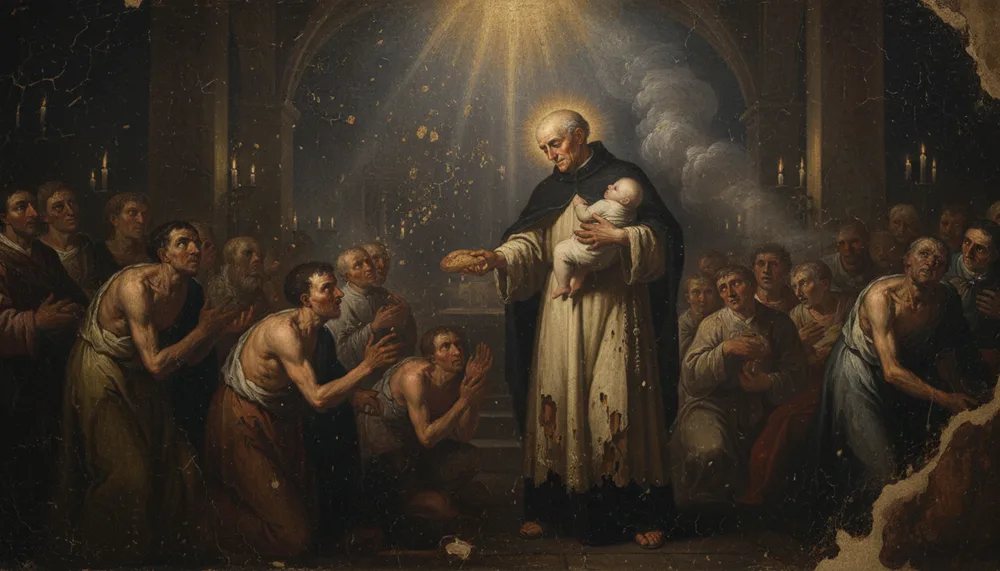
The novena to St Vincent de Paul is a nine-day prayer to the great apostle of charity — the priest who fed the starving, ransomed slaves, gathered the abandoned children of Paris, and founded the Congregation of the Mission and the Daughters of Charity. We pray it for the poor and those who serve them, for a spirit of generosity, and for any need we would place under the care of the tenderest almoner the Church has ever known. In the calendar of 1962 his feast is kept on 19 July, so the nine days are prayed from 10 to 18 July; below you will find the complete prayer, a short form, and how to make the novena well.
The full novena to St Vincent de Paul
The novena is made of two prayers said once on each of the nine days: the Vincentian prayer of intercession (a devotional composition, with no liturgical text and no approval of its own that we can cite), which gathers into one petition all the needs the saint spent his life relieving, and the Church's own prayer (collect) from the Mass of his feast in the Roman Missal of 1962. If you are new to this kind of devotion, our guide to what is a novena explains the nine days and where the custom comes from.
In the name of the Father, and of the Son, and of the Holy Ghost. Amen.
St. Vincent, patron of all charitable associations and father of those who are in misery, come to our assistance. Obtain from our Lord help for the poor, relief for the infirm, consolation for the afflicted, protection for the abandoned, a spirit of generosity for the rich, grace of conversion for sinners, zeal for priests, peace for the Church, tranquility and order for all nations, and salvation for them all. May we be united in the life to come, by your intercession, and experience joy, gladness, and everlasting happiness. Amen.
(Here pause and name the grace you ask.)
St. Vincent de Paul, pray for us.
Our Father … Hail Mary … Glory Be …
Then close each day with the collect of his feast:
Deus, qui, ad evangelizándum paupéribus et ecclesiástici órdinis decórem promovéndum, beátum Vincéntium apostólica virtúte roborásti: præsta, quǽsumus; ut, cujus pia mérita venerámur, virtútum quoque instruámur exémplis. Per Dóminum nostrum Jesum Christum.
O God, Who endowed St. Vincent with apostolic strength to preach the Gospel to the poor and to enhance the dignity of clerical life; grant, we beseech You, that we who honor his holy merits may also conform to the example of his virtues. Through Jesus Christ, thy Son our Lord, Who liveth and reigneth with thee, in the unity of the Holy Ghost, God, world without end. Amen.
The novena to St Vincent de Paul for the poor
Because St Vincent is, above every other title, the patron of charity and of the poor, the most fitting intention to carry through the nine days is exactly the one he lived for. When you pray the novena for the poor — for a particular person in need, for the hungry and homeless of your own city, for a charity or a Society that bears his name, or for grace to become generous yourself — name that intention in the pause, and add this short petition:
O Lord, who chose Saint Vincent de Paul to be the father of the poor and the servant of the afflicted, kindle in our hearts the same fire of charity, that we may love our neighbour not in word only but in deed and in truth, and find You in the least of our brethren. Amen.
This is the novena at its purest: to ask, through the intercession of the man who emptied himself for the poor, that we too may be emptied of self-love and filled with the charity of Christ. It pairs naturally with the Litany of the Sacred Heart, for the charity of Vincent was only the overflow of the Heart he served.
A short novena prayer to St Vincent de Paul
For those who want a brief form to say from memory — walking, working, or between the day's duties — this short invocation carries the whole devotion in a few lines. Say it nine days running:
O glorious Saint Vincent, model and patron of all who serve the poor, obtain for me a heart like your own — humble, merciful, and generous — and present to God the favour I now ask (name it). Teach me to see Christ in the poor and to serve Him there without counting the cost. Saint Vincent de Paul, pray for us. Amen.
How to pray this novena
A novena is nine days of prayer for a single intention, in imitation of the Apostles and Our Lady, who prayed nine days in the Upper Room between the Ascension and the coming of the Holy Ghost. To pray the novena to St Vincent de Paul well:
- Choose your nine days. Commonly the novena is prayed in the nine days leading up to his feast — from 10 to 18 July, so that the ninth day closes on the eve of 19 July (see the note on his feast below). But it may be begun on any day of the year for a pressing need.
- Name one intention and hold to it through all nine days. Bring St Vincent something he understands: a person in poverty, a work of mercy, a hardened heart in want of conversion, a priest, or your own need of a more generous spirit.
- Say the daily prayers above once each day, at a fixed hour if you can, with the Our Father, Hail Mary, and Glory Be. Where you are able, join it to Holy Mass or a Communion, or at least to a decade of the Rosary.
- Ask in submission. No novena binds God. We ask through St Vincent's intercession, and leave the outcome to the Providence he trusted so completely — content to receive either the favour we named or the better thing God chooses to send.
Who is St Vincent de Paul?
St Vincent de Paul was born in 1581 at Pouy, in Gascony, of poor peasant stock, and kept sheep as a boy before his quickness sent him to study at Dax and then theology at Toulouse. He was ordained priest in 1600. In 1605, sailing along the coast, he was seized by Barbary corsairs and carried off into slavery in Tunis, where he served three masters over two years; the last, a renegade Christian, he brought back to the faith, and with him escaped to France in 1607.
Returning to Paris, Vincent came under the direction of the saintly Pierre de Bérulle and served as tutor and chaplain to the great family of Gondi. A turning-point came when he was called to the deathbed of a poor countryman — and saw, in the neglected souls of the rural poor, a whole harvest with no labourers. From that hour he gave himself to them.
In 1625 he founded the Congregation of the Mission — the priests known ever since as Vincentians or Lazarists — to preach missions in the villages and to reform and train the clergy in seminaries and conferences. In 1633, with St Louise de Marillac, he founded the Daughters of Charity, the first congregation of women to leave the cloister and go out to the sick and the poor in their own homes, with, as he said, "the streets for a cloister and the fear of God for a grille."
No misery escaped his charity. He organised the Ladies of Charity among the great women of Paris; he sent his priests and sisters to nurse the plague-stricken and the wounded of the wars; he founded hospitals for foundlings, gathering in the abandoned infants of the city by the thousand; he ransomed some twelve hundred Christian slaves from Barbary; he poured relief into the provinces ravaged by war and famine. Through it all he remained a man of the deepest humility, calling himself the least and worst of men, and finding in the face of every beggar the face of Christ. He died in Paris on 27 September 1660, nearly eighty years old, worn out with labour and charity.
He was beatified by Pope Benedict XIII in 1729 and canonized by Pope Clement XII on 16 June 1737. Pope Leo XIII declared him the heavenly patron of all charitable societies, and his name is borne today by the Society of St Vincent de Paul, founded to continue his work among the poor. For another great servant of the sick and dying whose charity ran in the same channel, see our life of St Camillus; and for the intercession of Our Lady under whose protection Vincent placed all his works, the Miraculous Medal novena — for it was to a Daughter of Charity, St Catherine Labouré, that the Medal was revealed.
St Vincent de Paul, patron saint of the works of mercy
St Vincent de Paul is the patron saint of all charitable works and associations — of hospitals, of volunteers and charity workers, of prisoners, of the abandoned, of foundlings and orphans, and of those who spend themselves in relieving the poor. Because his whole life was one long corporal and spiritual work of mercy, the Church holds him up as the model of Christian charity in action. To pray his novena is to place a work of mercy, or a soul in need of one, under the patronage of the saint who did the works of mercy better than almost any man since the Apostles.
Frequently Asked Questions
When is the feast day of St Vincent de Paul?
In the traditional Roman calendar of 1962, the feast of St Vincent de Paul is kept on 19 July — while his death-day, 27 September, is in that calendar the feast of Saints Cosmas and Damian. The 1969 reform of the calendar moved his feast to 27 September, the anniversary of his death, and that is the date now used in the newer books. Those attached to the 1962 calendar keep 19 July and pray the novena from 10 to 18 July; those following the modern calendar keep 27 September and pray it from 18 to 26 September. Either way, the prayer is the same.
What is St Vincent de Paul the patron saint of?
He is the patron of all charitable works and associations, of hospitals, of charity workers and volunteers, of prisoners and the abandoned, and of foundlings and orphans. Pope Leo XIII named him patron of all societies of charity, and the worldwide Society of St Vincent de Paul, which serves the poor, is placed under his name.
How do you pray the novena to St Vincent de Paul?
Say the two daily novena prayers above once a day for nine days, naming one intention and holding to it throughout, and closing each day with the Our Father, Hail Mary, and Glory Be. Pray at a fixed hour if you can, join it to Mass or the Rosary where possible, and ask in submission to God's will. Commonly the nine days lead up to his feast, but the novena may be begun any time for a pressing need.
What did St Vincent de Paul do?
He founded the Congregation of the Mission (the Vincentians) to preach to the rural poor and train the clergy, and, with St Louise de Marillac, the Daughters of Charity to serve the sick and poor in their homes. He gathered abandoned children into foundling hospitals, ransomed some twelve hundred slaves from Barbary, organised relief for provinces ruined by war, and directed the charity of half of France — all while calling himself the least of men.
Why is St Vincent de Paul called the apostle of charity?
Because charity was the whole shape of his life. He saw in every poor man, every prisoner, every abandoned infant the person of Christ Himself, and called the poor "our lords and masters." His works of mercy touched every misery of his age, and the movements he founded still serve the poor across the world. The Church honours him as the very model of Christian charity in action.
Can I pray the St Vincent de Paul novena at any time of year?
Yes. The most fitting time is the nine days before his feast, but a novena may be begun on any day for any worthy intention — a person in need, a work of charity, a conversion, a priest, or grace to grow generous yourself. What matters is not the date but the faith and perseverance of the nine days. For other sure intercessors in trouble and need, see the novena to St Jude and the novena to St Anthony.
The Iter Fidei app carries this novena — with the daily prayer, day-by-day reminders, and audio in Latin and your own language — so you can pray the nine days from your phone. Join early access here.
Sources. Butler's Lives of the Saints (St Vincent de Paul, 19 July); the conferences and letters of St Vincent de Paul; the Vincentian prayer St. Vincent, patron of all charitable associations; the Roman Missal of 1962 (collect of 19 July); the Bull of canonization of St Vincent de Paul by Pope Clement XII (16 June 1737); the proclamation of St Vincent de Paul as patron of all charitable societies by Pope Leo XIII (1885); the Roman Calendar of 1962 (feast of St Vincent de Paul, 19 July).