
Novenas
The Three Hail Marys Novena
The efficacious Three Hail Marys novena — the daily devotion revealed to St Mechtilde and praised by St Alphonsus, with the three invocations to Our Lady's Power, Wisdom, and Mercy, prayed for purity, a happy death, and any pressing need.
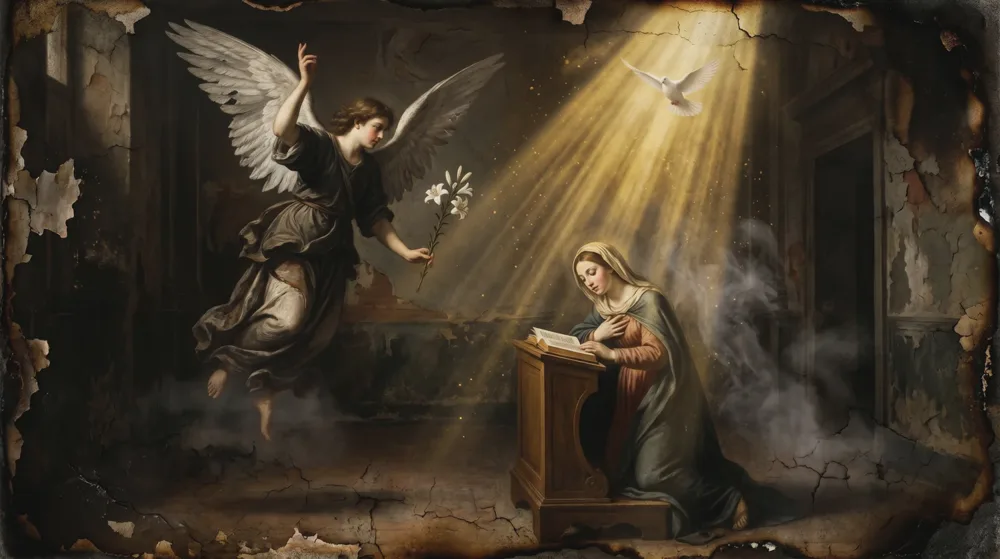
The Three Hail Marys novena is the practice of praying three Hail Marys each day — one in honour of Our Lady's Power, one of her Wisdom, and one of her Mercy — asking the Blessed Virgin to obtain purity of heart, a holy life, a happy death, and the particular grace we need. It rests on a devotion the Church has carried since the thirteenth century, when Our Lady is said to have revealed it to St Mechtilde and promised her special protection to all who keep it. Below we give the full novena in its authentic wording, the daily "efficacious" form the saints recommended, its history, and how to pray it well.
A note on this devotion
The three Hail Marys are genuinely old. The daily practice — three Hail Marys with the plea "O my Mother, preserve me this day from mortal sin" — was, according to her Revelations, made known to St Mechtilde of Hackeborn in the thirteenth century, taken up by St Anthony of Padua, warmly promoted by St Leonard of Port-Maurice, and made famous by St Alphonsus Liguori in The Glories of Mary. It carried real indulgences from Pope Leo XIII and Pope Benedict XV and the Apostolic Benediction of Pope St Pius X, so the devotion belongs squarely to the Church's traditional treasury.
What is more recent is the arrangement of the three Hail Marys into a structured nine-day novena with the three invocations to Our Lady's Power, Wisdom, and Mercy printed below. That form is modern in its wording, but wholly orthodox, and it simply dresses the ancient daily practice in novena clothes. We give it in full because it is widely sought and sound; those attached strictly to the old books may prefer to keep the plainer daily devotion the saints actually taught, which we also set out. If you are new to this kind of prayer, our guide to what is a novena explains the nine-day custom and why the Church prays it.
The Three Hail Marys novena — full text
Begin by naming the grace you are asking for, then pray the three invocations in order. It is prayed once each day for nine consecutive days.
Opening. In the name of the Father, and of the Son, and of the Holy Ghost. Amen. O Mary, my Mother, I place before thee this day my particular intention (here name your request), trusting in thy Power, thy Wisdom, and thy Mercy.
In honour of Our Lady's Power
O Immaculate Mary, Virgin most powerful, I beseech thee, through that immense power which thou hast received from the Eternal Father, obtain for me purity of heart, strength to overcome all the enemies of my soul, and the special favour I now implore in my present necessity. (Name your request.)
To obtain this grace, I honour thy Power by reciting:
Hail Mary, full of grace, the Lord is with thee; blessed art thou amongst women, and blessed is the fruit of thy womb, Jesus. Holy Mary, Mother of God, pray for us sinners, now and at the hour of our death. Amen.
In honour of Our Lady's Wisdom
O Virgin Mary, my Mother, through that ineffable wisdom bestowed upon thee by the Incarnate Word of God, I humbly beseech thee, obtain for me meekness and humility of heart, a perfect knowledge of the Divine Will, and strength to accomplish it always. O Mary, Seat of Wisdom, as a tender Mother lead me in the path of Christian virtue and perfection; enlighten and enable me to do what is most pleasing to thy beloved Son, and obtain my petition.
To obtain this grace, I honour thy Wisdom by reciting:
Hail Mary, full of grace, the Lord is with thee; blessed art thou amongst women, and blessed is the fruit of thy womb, Jesus. Holy Mary, Mother of God, pray for us sinners, now and at the hour of our death. Amen.
In honour of Our Lady's Mercy
O Mother of Mercy, Mother of penitent sinners, I have recourse to thee, sinful and sorrowful as I am; I beseech thee, through that immense love which the Holy Ghost bears to thee, obtain for me true and perfect contrition for my sins, which I detest with all my heart because by them I have offended my God, who is infinitely good. In thee, O Mother of Mercy, I place all my hope; abandon me not at the hour of my death, but obtain for me the grace of a happy passage from this life, that I may praise and love thee, with the Most Holy Trinity, for ever in heaven. Amen.
To obtain this grace, I honour thy Mercy by reciting:
Hail Mary, full of grace, the Lord is with thee; blessed art thou amongst women, and blessed is the fruit of thy womb, Jesus. Holy Mary, Mother of God, pray for us sinners, now and at the hour of our death. Amen.
Closing. O Mary, conceived without sin, pray for us who have recourse to thee. Amen.
The three Hail Marys honour the three Persons of the Blessed Trinity through their masterpiece: Our Lady's power from the Father, her wisdom from the Son, her mercy and love from the Holy Ghost. That is why so many call this the efficacious novena — not because it works like a charm, but because it commends every need to the Mother of God under the three gifts by which she is mightiest.
The efficacious daily devotion (the original form)
Long before the nine-day arrangement above, the saints taught the simplest form of all — and this is the "efficacious" practice properly so called. Say three Hail Marys in the morning and three in the evening in honour of Our Lady's Immaculate purity, adding the short plea:
In the morning: O my Mother, preserve me this day from mortal sin.
In the evening: O my Mother, preserve me this night from mortal sin.
St Leonard of Port-Maurice had this said morning and evening to obtain the grace of avoiding every mortal sin, and promised in a special manner eternal salvation to all who kept it faithfully. St Alphonsus adopted it, recommending it "to the devout and to sinners, to the young and old," and repeating his great maxim: a devout servant of Mary shall never perish. Kept every day without fail, this is the surest and most portable Marian devotion in the Church's treasury — and it is the seed from which the nine-day novena grew. It pairs naturally with the daily Hail Holy Queen and with the Litany of the Blessed Virgin Mary.
The Three Hail Marys "never known to fail"
Many search for the three Hail Marys novena "never known to fail." The phrase is devout, not magical. No prayer binds God, and to recite words as though they compelled an answer would be superstition, which the Church condemns. What the old writers meant is soberer and surer: that Our Lady, having received power, wisdom, and mercy from the Holy Trinity, never fails to obtain for her faithful children what is truly best for their souls — and above all the grace they most need, a good death in the state of grace. Pray it, then, with confidence but in submission: Thy will be done.
The Three Hail Marys chaplet
Some keep the devotion as a small chaplet — three beads, or simply three Hail Marys counted on the fingers — recited slowly morning and night with the plea for preservation from sin. This is the same devotion in its barest and most ancient form, and needs no beads at all; it is the reason the three Hail Marys can be prayed anywhere, at any moment of temptation or need. For the wider family of these bead-prayers, see our note on what is a chaplet.
For a specific intention
The novena is prayed for any pressing need — health, work, a troubled family, a return to the sacraments, a hopeless affair. Name the grace plainly at the opening and again in the invocation to Our Lady's Power, where the words "the special favour I now implore in my present necessity" are set aside for exactly this. Ask first, though, for the graces the devotion was made to obtain — purity of heart, knowledge of God's will, contrition, and a happy death — and add your temporal request within that. So ordered, the three Hail Marys never return empty.
How to pray the Three Hail Marys novena
The devotion is simple; keeping it faithfully is the whole art.
- Choose your form. For a focused nine-day petition, pray the three invocations (Power, Wisdom, Mercy) once daily for nine consecutive days. For a lifelong safeguard, keep the daily practice — three Hail Marys morning and evening with the plea against mortal sin.
- Pick a start date. Any day will do, but many begin so the ninth day falls on a Marian feast — the Immaculate Conception (8 December), the Assumption (15 August), or a Saturday, Our Lady's day. A novena to the Immaculate before 8 December is a favourite; see our Immaculate Conception novena.
- Name one intention and hold to it through all nine days.
- Pray at a fixed hour, morning and night if you can, and add it to Mass or a decade of the Rosary where possible.
- End in trust. Ask in submission to God's will, content to receive either the favour you named or the better thing He chooses to send.
The story of the Three Hail Marys
The devotion reaches back to the High Middle Ages, the same age that gave the Church the Rosary. Tradition holds that St Mechtilde of Hackeborn, a Benedictine nun of Helfta and one of the great mystics of the thirteenth century, feared for her salvation and begged Our Lady to assist her at the hour of death. The Blessed Virgin answered that she would — but asked in return that Mechtilde say three Hail Marys to her every day: the first honouring the power given her by the Eternal Father, the second the wisdom given by the Son, and the third the mercy and love given by the Holy Ghost. So the three Hail Marys took the shape they still keep.
St Anthony of Padua practised the three Hail Marys to honour the spotless virginity of Mary and to keep himself pure in mind, heart, and body. Centuries later St Leonard of Port-Maurice, the great preacher of the Holy Name and the Stations of the Cross, spread it tirelessly; and St Alphonsus Liguori, Doctor of the Church and author of The Glories of Mary, gave it his most ardent support, urging every soul to say the three Hail Marys morning and evening and never to omit them for a single day. The Popes crowned the devotion with indulgences — two hundred days from Leo XIII, three hundred for the members of the Archconfraternity of the Three Hail Marys from Benedict XV — and Pope St Pius X blessed it with his Apostolic Benediction.
The reason the saints loved it is its simplicity. It asks almost nothing of time or memory, and yet it hands the whole day, and the whole soul, over to the Mother of God — begging her especially to be present at the one hour when we shall most need her, the hour of our death, which is why the devotion has always been bound up with the grace of final perseverance and a happy passage. For the wider truths it keeps before the soul, see our reflection on the last things, and for the mystery honoured in the morning plea, the Immaculate Conception.
Frequently Asked Questions
How do you pray the Three Hail Marys novena?
Name your intention, then pray three Hail Marys — one honouring Our Lady's Power, one her Wisdom, and one her Mercy — using the three invocations given above, once each day for nine consecutive days. In its older daily form you simply say three Hail Marys in the morning and three in the evening, adding "O my Mother, preserve me this day (or night) from mortal sin."
How long do you say the Three Hail Marys novena?
A novena is nine days, from the Latin for "nine" — so the novena form is prayed once a day for nine days running. The underlying devotion, however, is meant to be kept every day of one's life, morning and evening; St Alphonsus urged that it never be omitted for a single day.
Why is it called the "efficacious" Three Hail Marys?
Because the saints and Popes attached great promises and indulgences to it, and because it commends the soul to Our Lady under the three gifts by which she is most powerful before God — her Power, Wisdom, and Mercy. "Efficacious" means it truly obtains grace; it does not mean it forces God's hand, which no prayer can do.
What are the promises of the Three Hail Marys?
Tradition holds that Our Lady promised those faithful to the three Hail Marys her special protection at the hour of death — that she would assist them and keep them from perishing. St Leonard of Port-Maurice promised eternal salvation in a special way to all who kept the practice constantly, and St Alphonsus repeated that a devout servant of Mary shall never perish. The great grace sought is a happy death in the state of grace.
Is the Three Hail Marys devotion approved by the Church?
Yes. It was enriched with indulgences by Pope Leo XIII and Pope Benedict XV, blessed by Pope St Pius X, and recommended by St Anthony of Padua, St Leonard of Port-Maurice, and St Alphonsus Liguori, a Doctor of the Church. It is entirely orthodox.
What is the difference between the novena and the daily devotion?
The daily devotion is the ancient practice — three Hail Marys morning and evening for purity and preservation from sin, kept for life. The novena is a modern nine-day arrangement of the same three Hail Marys, expanded into the three invocations to Our Lady's Power, Wisdom, and Mercy and prayed for a particular intention. Both are sound; choose the novena for a focused petition, the daily practice as a lifelong safeguard.
Is there a printable version of the Three Hail Marys novena?
The complete text is given in full above — the three invocations with their Hail Marys and the daily form — so you may copy it to keep beside you for the nine days. The Iter Fidei app also carries the whole devotion with day-by-day reminders and audio, so it can be prayed from a phone without a printed sheet.
The Iter Fidei app carries the novenas, chaplets, litanies and prayers — including the Three Hail Marys and the Rosary — in Latin and your own language, with audio and day-by-day reminders. Join early access here.
Sources. The three Hail Marys devotion, attributed to the revelations of St Mechtilde of Hackeborn (c. 1270); St Alphonsus Liguori, The Glories of Mary; the recommendation of St Leonard of Port-Maurice and the practice of St Anthony of Padua; indulgences granted by Pope Leo XIII and Pope Benedict XV (Archconfraternity of the Three Hail Marys) and the Apostolic Benediction of Pope St Pius X; the Ave Maria (cf. Luke 1:28, 42); on superstition and the worship of God alone, Catechism of St Pius X on the First Commandment.