
The Faith
Was Jesus a Jew? What Religion Was Jesus?
Was Jesus Christ a Jew? Yes — born of the line of David, circumcised the eighth day, He kept the Law of Israel. The Catholic answer to what religion Jesus was, stated plainly and charitably.
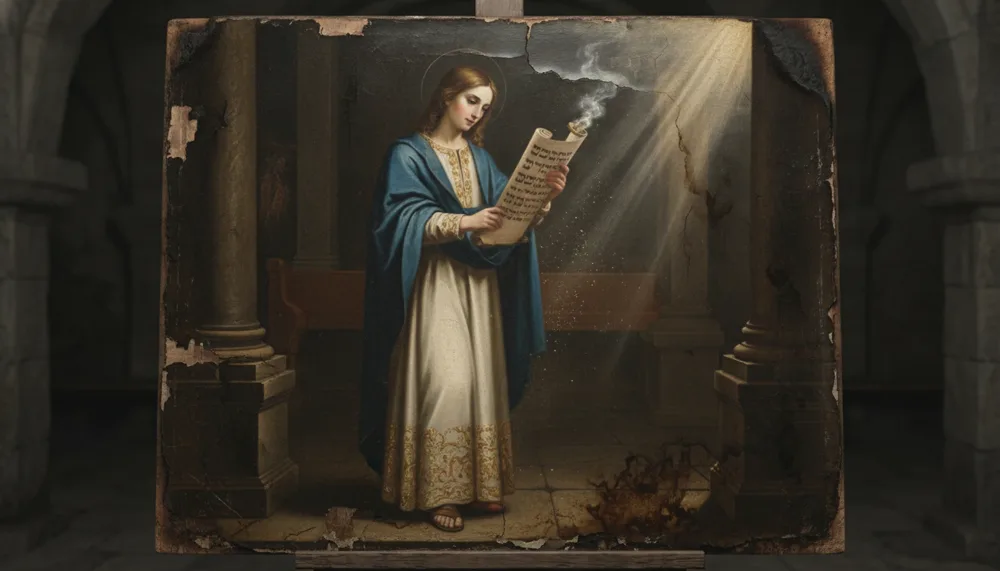
Yes — Jesus was a Jew. He was born of the line of David, circumcised the eighth day, presented in the Temple, and He kept the Law and the feasts of Israel. St. Paul states it without qualification: when the fulness of time was come, God sent His Son, "made of a woman, made under the law" (Gal 4, 4). So the plain answer to was Jesus Christ a Jew is yes; but the Catholic answer does not stop there, for the same Jesus is the Messiah promised to Israel, who came not to abolish the Law but to fulfil it.
To ask what religion was Jesus is therefore to ask a question that opens onto the whole of the Faith. He was born within the religion of Israel and observed it perfectly. Yet He did not found a new religion alongside Himself, as a teacher founds a school: He is Himself the One to whom Israel pointed, and in His Blood the Old Covenant is completed and the New begun.
Was Jesus Jewish? The plain facts of His life
The Gospels record His Jewishness in concrete acts of the Law, not as a label. On the eighth day "the child should be circumcised, his name was called JESUS" (Lk 2, 21), the rite by which a male child was made a son of the covenant of Abraham. When the days of purification were accomplished, His parents "carried him to Jerusalem, to present him to the Lord," and offered the sacrifice prescribed, "a pair of turtledoves, or two young pigeons" (Lk 2, 22-24). He was reared in the observance of Israel, went up to Jerusalem for the feasts, taught in the synagogues and the Temple, and kept the Pasch.
His descent was Jewish in the strict sense the prophets had foretold. He is of the tribe of Juda and the house of David, "the son of David, the son of Abraham" (Mt 1, 1) — which is why the people cried to Him as "Son of David." The land of His birth, His mother, His worship: all were of Israel. On the historical question we have written separately, for Jesus of Nazareth is no myth but a man who walked in Galilee and Judea under Tiberius; and the tongue He spoke was the Aramaic of the Jews of His day, the language in which the Gospel records His own words — Talitha cumi (Mk 5, 41) and Eloi, Eloi, lamma sabacthani upon the Cross (Mk 15, 34).
What religion was Jesus? Born under the Law of Israel
The religion into which Jesus was born is the religion of the Old Covenant — the worship of the one God of Abraham, Isaac, and Jacob, ordered by the Law given through Moses. That He kept this Law was no accident of birth but the fulfilment of a divine plan. The Catechism of St. Pius X teaches that men knew of Christ before His coming "through the promise of the Messias which God made to our first parents Adam and Eve, and which He renewed to the holy Patriarchs, and through the prophecies and the numerous figures which signified Him" (Pius X, Catechism, I, ch. 3). Israel was the people of that promise, and its whole religion was a long preparation, a tutor leading to Christ.
So when we ask what religion was Jesus Christ, we answer: He was born and lived as an observant Jew of the Old Covenant. This is no embarrassment to the Catholic but the very ground of the Faith, for the Church does not reject the Old Testament but receives it whole as the inspired word of God. The relation between the two is set out in our study of the Old Covenant and the New. The God Israel adored is the God the Catholic adores at every Mass.
Not to destroy the Law, but to fulfil it
If Jesus kept the Law, why are Catholics not bound to circumcision and the Sabbath and the dietary rules of Israel? Because He came to bring the Law to its appointed end. He said it Himself: "Do not think that I am come to destroy the law, or the prophets. I am not come to destroy, but to fulfil" (Mt 5, 17). To fulfil is neither to keep unchanged nor to cancel; it is to bring to completion the reality at which the figure pointed.
The whole apparatus of the Old Law — its priesthood, its sacrifices, its paschal lamb — was a shadow of the One to come. The Catechism of St. Pius X names these figures of the Redeemer: "the innocent Abel, the high priest Melchisedech, the sacrifice of Isaac, Joseph sold by his brethren, the prophet Jonas, the paschal lamb, and the brazen serpent raised up by Moses in the desert" (Pius X, Catechism, I, ch. 3). A figure is fulfilled when the reality arrives.
The Lamb of the Passover prefigured the Lamb of God; Melchisedech, the priest-king who offered bread and wine, prefigured the eternal Priest of the Mass. When the substance came, the shadow had done its work — which is why the Apostles, in council, freed the Gentiles from the yoke of the ceremonial Law while keeping the moral Law that abides forever. The mystery by which the eternal Son took our flesh to accomplish this is treated in the Incarnation, the sacrifice that fulfilled every figure in His Passion.
The Messiah promised to Israel
The deepest answer to was Jesus a Jew is that He is the Jew Israel had awaited — the Messiah, the Anointed One. The word Christ is not a surname but a title. The Catechism of St. Pius X teaches that the Son of God made man is called Christ, "which means anointed and consecrated, because in former times kings, priests, and prophets were consecrated by anointing, and Jesus is the King of kings, the sovereign Priest, and the first of the prophets" (Pius X, Catechism, I, ch. 3). To say Jesus Christ is to confess Jesus the Messias.
On what ground does the Church make this claim? Not on assertion, but on the prophecies fulfilled in Him: "We know that Jesus Christ is truly the Messias and the promised Redeemer, because in Him was accomplished all that the prophets announced and all that the figures of the Old Testament represented" (Pius X, Catechism, I, ch. 3). The prophets had fixed in advance the tribe and family from which He would come, the place and time of His birth, the manner of His passion and death, and His resurrection from the dead. The patriarchs believed in this Messiah as still to come; the Apostles preached Him as already come. Who this promised One is, in His Person, we set out in who Jesus Christ is.
Did Jesus found a religion?
It follows that Christ did not found a "religion" beside Himself, as men found philosophies. He is Himself the term to which the religion of Israel pointed. The New Covenant is not one more code of observances but a Person and His Blood: "This is the chalice, the new testament in my blood, which shall be shed for you" (Lk 22, 20). Where Israel awaited, the Church possesses; she is the new Israel, gathered no longer by descent from Abraham according to the flesh but from all nations by faith and Baptism.
The same prophecies announced "His spiritual kingdom, universal and perpetual, which is the holy Catholic Church" (Pius X, Catechism, I, ch. 3). This is why we hold that Catholics are Christians in the fullest sense, and why the Catholic Church is the fulfilment of the very Israel He was born into, not its rival. The modern slogan that Jesus "was a Jew, not a Christian," meaning to set Him against His own Church, mistakes the whole matter: He is the Jewish Messiah.
Charity toward the Jewish people
To say all this is no licence for contempt. The Jewish people are the kin of Christ after the flesh, heirs of the patriarchs and prophets through whom the Promise was first given. St. Paul, himself a Hebrew of the Hebrews, wrote of his own people that "to them belong the adoption, and the covenants, and the law, and the promises; whose are the fathers, and of whom is Christ according to the flesh" (Rom 9, 4-5). He loved them and longed for them to receive their own Messiah. That is the Catholic posture: love of the Jewish people, and clarity that the Promise given to them is kept, not annulled, in Christ. We owe them the truth in charity, never insult.
Frequently Asked Questions
Was Jesus Christ a Jew?
Yes. Jesus was born of the line of David, circumcised the eighth day, presented in the Temple, and He kept the Law and the feasts of Israel. St Paul states it without qualification: God sent His Son "made of a woman, made under the law" (Gal 4, 4). He was an observant Jew of the Old Covenant — and at the same time the Messiah promised to Israel, who came not to abolish the Law but to fulfil it.
What religion was Jesus?
He was born into and lived the religion of the Old Covenant — the worship of the one God of Abraham, Isaac, and Jacob, ordered by the Law given through Moses. This is no embarrassment to the Catholic but the very ground of the Faith, for the Church receives the Old Testament whole as the inspired word of God. Christ did not found a religion beside Himself; He is the fulfilment to which the whole religion of Israel pointed, completing the Old Covenant in the New sealed in His Blood.
Was Jesus born a Christian or a Jew?
He was born a Jew, under the Law of Israel; the word "Christian" did not yet exist and would later name His followers (Acts 11, 26). The modern slogan that Jesus "was a Jew, not a Christian," used to set Him against His own Church, mistakes the matter: He is the Jewish Messiah, and the Church He founded is the new Israel, the fulfilment of the very people He was born into, not its rival.
Did Jesus keep the Jewish Law?
He kept it perfectly, yet He came to bring it to its appointed end: "I am not come to destroy, but to fulfil" (Mt 5, 17). The ceremonial Law — its priesthood, sacrifices, and paschal lamb — was a shadow of the One to come; when the reality arrived, the figure had done its work. This is why the Apostles, in council, freed the Gentiles from the ceremonial Law while keeping the moral Law that abides forever.
What language did Jesus speak?
He spoke the Aramaic of the Jews of His day, the language in which the Gospels record His own words — Talitha cumi (Mk 5, 41) and Eloi, Eloi, lamma sabacthani upon the Cross (Mk 15, 34). As an educated Jew He would also have known the Hebrew of the Scriptures read in the synagogue. We treat this more fully in what language did Jesus speak.
Was Jesus a Jew? Yes — born under the Law, of the line of David, He kept the feasts of Israel and is the Messiah Israel awaited. He came not to destroy that Law but to fulfil it, sealing in His Blood the New and eternal Covenant in which the Old is completed. He founded no religion beside Himself: He is the fulfilment to which all of Israel pointed, and His Church is the new Israel.
The Iter Fidei app carries the Douay-Rheims Bible, the catechism, and the prayers of the Church. Get the app link by email here.
Sources. Holy Bible (Douay-Rheims): Gal 4, 4; Mt 1, 1; Mt 5, 17; Lk 2, 21; Lk 2, 22-24; Lk 22, 20; Mk 5, 41; Mk 15, 34; Rom 9, 4-5. Catechism of St. Pius X (1908), Part I, ch. 3 (the second article of the Creed — Jesus Christ, the Messias, and the figures of the Old Testament).