
News
The prefect of Divine Worship mocks the faithful of the traditional Mass — tradition turns his « unity » argument against him
The prefect of Divine Worship mocks the faithful attached to the traditional Mass and rules out any reversal; measured against the Catechism of Trent, the « unity » argument turns against him.
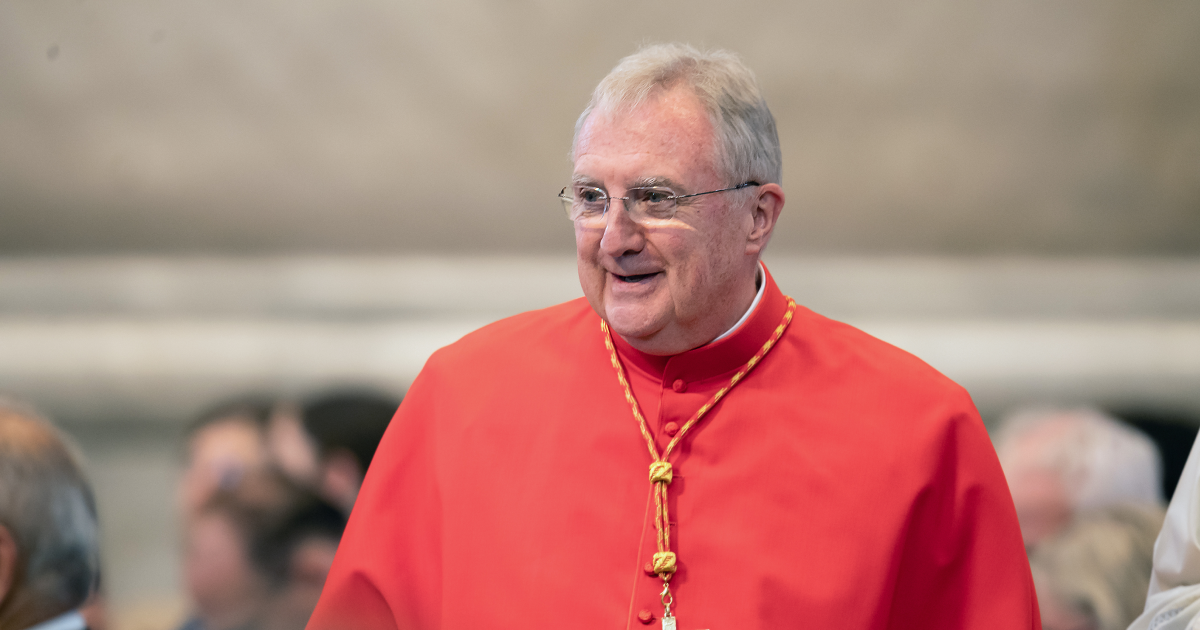
Cardinal Arthur Roche, prefect of the Dicastery for Divine Worship, has stated that Pope Leo XIV does not intend to lift the restrictions on the traditional Mass: neither to reverse Traditionis custodes, nor to restore Summorum pontificum. Asked about the faithful who seek wider access to the older rite, he mocked their complaint: « But then they go away and say they are still being persecuted. Persecuted in what way? Why is the band still playing a tune that is discordant with the life of the Church? » He justifies the refusal in the name of the Eucharist, the « sacrament of unity » which, if it divides, would show that « something is seriously amiss ».
What the Church teaches
The Catechism of the Council of Trent calls the Eucharist precisely « the Sacrament of Peace and of Charity ». It teaches that this sacrament « unites us in Him, so as to make of us all but one body », and draws from it a moral conclusion without evasion: « unworthy of the name of Christians are those who entertain enmities one against another ». Eucharistic unity is wrought by charity and peace — « we wish above all to preserve Peace and Charity » — not by contempt. And the rite in question is no « discordant tune »: it is the Sacrifice the Church has received and offered down the centuries.
The measure
Measured against that rule, the argument turns back on itself. Unity is invoked to restrict; but tradition teaches that unity is born of charity, and gives the name of discord — « hatreds, dissensions, and discords » — to precisely what public contempt for the faithful produces. To mock as a discordant « band » those attached to the immemorial rite of the Roman Church is to confuse the unity of the faith with the uniformity of a reform, and to fix the name of discord upon those who asked only to pray as their fathers did. We pronounce nothing on the person or the office of the cardinal; we observe only that the act — the refusal joined to the mockery — accords ill with what the Sacrament of Peace requires of charity.
What it means for the faithful
The course to hold is simple and ancient: keep the faith and the worship as the Church has always handed them down, without bitterness and without schism. Attachment to the traditional Mass is not rebellion; it is fidelity to the Sacrifice received. One answers contempt with the charity that same sacrament commands, preserving « Peace and Charity » and praying for the shepherds. No sedevacantist conclusion, no theatrical « resistance »: only perseverance.
Sources. Catechism of the Council of Trent (1566), On the Eucharist — the Eucharist « the Sacrament of Peace and of Charity », which « unites us in Him, so as to make of us all but one body »; and On the Sacrament of the Eucharist (continued) — on Communion and the Sacrifice of the Mass.