
News
Knife attack at the Jarosław abbey: priests killed before Mass
A man stabbed five people, including three priests, at the Benedictine abbey in Jarosław shortly before Mass; at least one priest is dead.
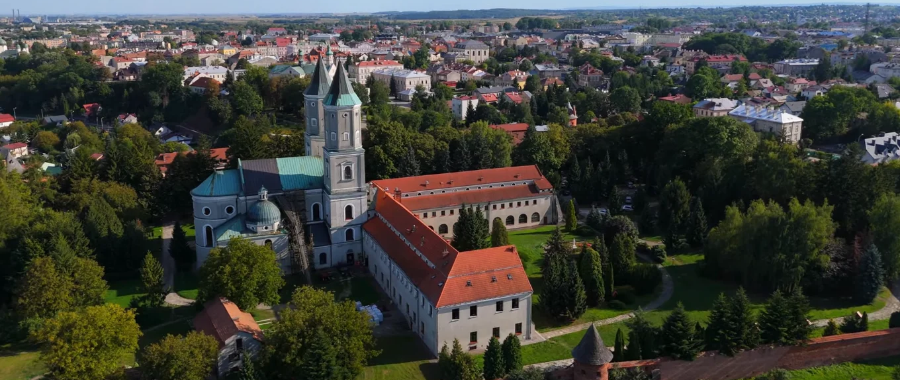
On 24 September 2026, at around 9:30 a.m., a man armed with a knife attacked five people on the grounds of the Benedictine abbey in Jarosław, Poland, shortly before the ten o'clock Mass. Among the wounded were three priests and two lay people — four men and one woman. At least one priest died; according to later updates, a second priest died as well, while another victim remained in danger of death. The toll remains disputed: some accounts report only one priest killed and two others in critical condition, others two priests dead. We report both versions without deciding between them. The assailant, a thirty-one-year-old Ukrainian national, was arrested at the scene; at the sight of the police he is said to have thrown down his weapon and raised his hands. The motive has not been established.
According to a nun of the community, it began with a verbal altercation: they tried to calm the man, the situation escalated, and then he drew a knife. The superior spoke of a blade eighty centimetres long. The abbey houses a centre of Christian culture and formation, as well as a shelter for refugees, mostly Ukrainian; investigators are seeking to establish whether the assailant had been living there. The Metropolitan of Przemyśl called for prayer for the deceased priest, for the wounded, for the community and the families, and also for the conversion of the perpetrator.
What the tradition teaches
The fifth commandment is without appeal: "Thou shalt not kill." The Catechism of the Council of Trent teaches that wilful murder is one of the sins that cry to heaven for vengeance, and that the life of man, made to the image of his Creator, belongs to its Author alone. The fault is graver when the blood shed is that of consecrated ministers, and when it is shed in a place dedicated to God, at the hour when the holy Sacrifice was about to be offered: to homicide is then added sacrilege.
But the same law that condemns murder commands us to pray for our enemies. "Love your enemies: do good to them that hate you: and pray for them that persecute and calumniate you," teaches Our Lord. And for the dead, the Church has always held, with Scripture, that "it is therefore a holy and wholesome thought to pray for the dead, that they may be loosed from sins."
The measure
The act is what tradition names without evasion: a homicide, and — striking priests within the walls of an abbey at the threshold of Mass — a sacrilege. No circumstance invoked — disturbance, drunkenness or other, none of which has in fact been established — changes the nature of what was done or effaces the duty of justice toward the victims. The motive, which the investigation has not determined, is not for us to conjecture; it belongs to the judges and, in the last resort, to God.
The call to pray for the conversion of the guilty is therefore not weakness, but obedience to the Gospel itself: tradition hates the sin and wills the salvation of the sinner. For the fallen priests, the charity of the faithful is to pray for the repose of their souls; for the wounded, their healing; for the stricken community, consolation. This is the whole measure: to condemn the act with the firmness of the fifth commandment, and to pray for the living as for the dead with the mercy that Christ commanded.
Sources. Catechism of the Council of Trent (1566), on the fifth commandment "Thou shalt not kill"; Exodus 20:13; Gospel according to St. Matthew 5:44; Second Book of Machabees 12:46, according to the Vulgate.