
News
Fulton Sheen beatified: he prayed for the freedom of his persecutors
Beatified in Saint Louis, Archbishop Fulton Sheen leaves the witness of a biritual pastor turned toward the persecuted Churches of the East.
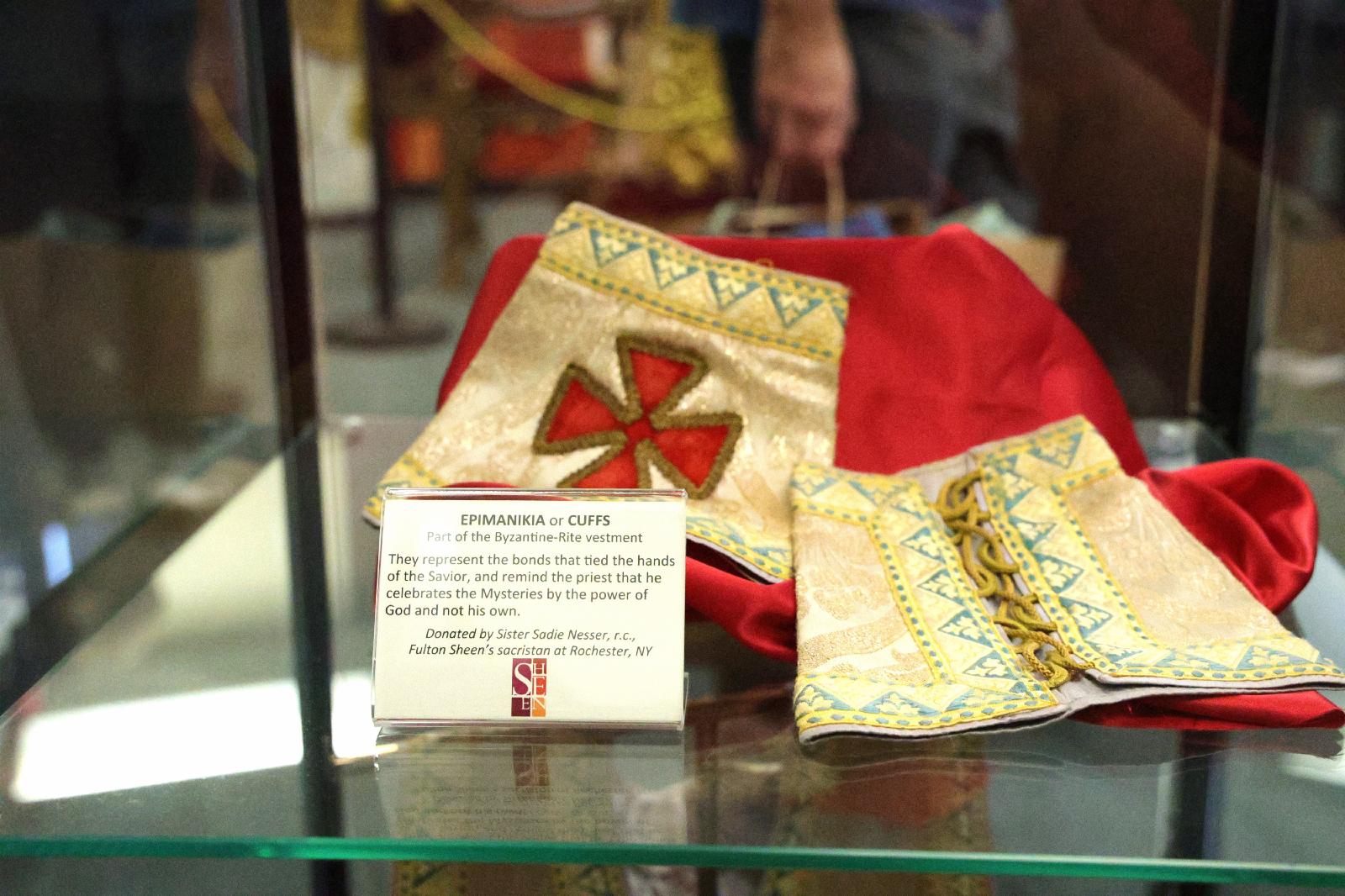
On 24 September 2026, in Saint Louis, beneath the vault of the America Center, Archbishop Fulton J. Sheen was proclaimed Blessed. His beatification portrait was unveiled there, and great screens replayed his televised preaching of the 1950s and 1960s. On 25 and 26 September, seven Masses of thanksgiving were sung at the cathedral of Peoria; on the 26th, Bishop Robert M. Pipta, of the Ruthenian eparchy of Parma, celebrated the Byzantine Divine Liturgy there.
For Sheen was biritual, and that bond was not ornamental. On 3 September 1955, at a Marian pilgrimage in Uniontown, Pennsylvania, he celebrated the Byzantine Divine Liturgy for the first time, by a permission he held from Pope Pius XII. He had that liturgy recorded and broadcast behind the Iron Curtain, in English rather than Slavonic: one of the first times the Divine Liturgy reached the ears of the captive Churches in this way.
To their oppressors he said: “We do not hate you. We do not want to destroy you. We pray for your freedom.” An icon written by Father Thomas Loya was enthroned at Peoria in witness of his biritual state: it shows him wearing both the Roman mitre and the Byzantine episcopal crown, a blackboard at his side, and bears these words: “In these troubled times, we must become saints.”
The rule is not from this month. The Lord commanded: “Orate pro persequentibus et calumniantibus vos” — pray for them that persecute and calumniate you. To pray for the persecutor’s freedom, and not for his ruin, is to obey the letter. And the Church has never held her Eastern rites as decoration: she holds them as her own, one faith under diverse liturgies. Pius XII, in the encyclical Orientales omnes Ecclesias (1945), mourned Catholic Ruthenia handed over to oppression and recalled that these Churches belong to the whole body of Christ.
By this measure the man is judged. What he did in 1955 — carrying the Divine Liturgy in a living tongue to the captives — was an act of charity toward the suffering Church, not a calculation of audience. “That is why he aligned himself with us, that is why he became one of us, biritual,” said Father Loya. And Bishop Pipta, at Peoria: “He thinks with us, he feels with us, he prays with us, he weeps with us. He recognizes better than we do the turbulence of our time, and he never ceases to call us to embrace the fullness of our baptismal vocation and to be holy; yes, to be saints.” Holiness is not a reserved state: it is the common precept, and it holds still.
Sources. Gospel according to St Matthew, V, 44 (Douay-Rheims; Vulgate); Catechism of the Council of Trent (1566), on the fifth commandment, concerning love of enemies; Pius XII, encyclical Orientales omnes Ecclesias (1945), on the Eastern Catholic Churches under persecution.