
News
Kenya Confirms Its First Case of Ebola After a Man from Congo Dies in Nairobi
Kenya has confirmed its first case of Ebola after the death in Nairobi of a national who arrived from the Democratic Republic of the Congo, buried under protocol and followed by quarantines.
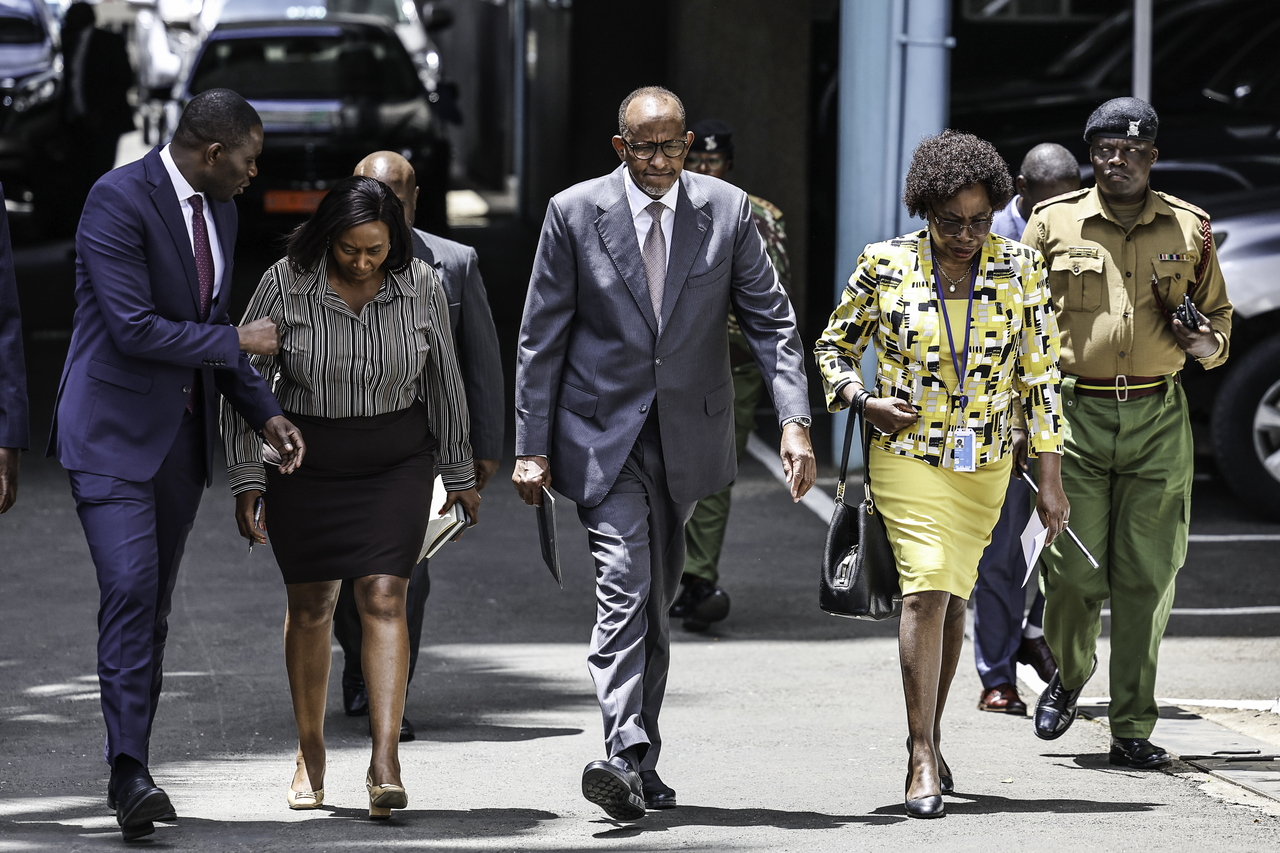
Kenya confirmed its first case of Ebola on Tuesday, after the death in Nairobi of one of its nationals who had arrived from the Democratic Republic of the Congo. According to the Health Minister, Aden Duale, the man had lived seven years in Congo, had been ill for nearly a month, had reached Kampala by road, then boarded a plane on Saturday for Nairobi.
Screened at Nairobi's international airport, he was driven by a relative to a hospital in the city, admitted with fever, chills and subcutaneous bleeding, and placed at once in isolation. Patrick Amoth, director general of the Health Ministry, suggests that medicines may have masked his symptoms at the moment of the check. He died shortly afterwards, and his body was buried within twenty-four hours, following protocols meant to prevent any contagion.
The office of President William Ruto states that eight members of his family and twenty-one caregivers who had tended him have been quarantined and placed under surveillance; twenty-eight contacts in all have been reported and isolated for twenty-one days. The authorities are seeking twenty-three passengers and four crew members from his flight. Kenya becomes the fourth country reached by the outbreak in eastern Congo, the second largest ever recorded with more than eight thousand cases; declared in mid-May and caused by the rare Bundibugyo strain, it is held responsible for more than four thousand deaths. Africa CDC has announced the immediate dispatch of a high-level team, and the director general of the World Health Organization, Tedros Adhanom Ghebreyesus, said he supports the Kenyan and Ugandan governments while advising against any travel restriction.
How the sick man crossed the border between Congo and Uganda, closed since May, remains obscure. The Ugandan Health Ministry maintains that the man showed a normal temperature at Entebbe airport, and the government spokesman, Alan Kasujja, denies any presence of Ebola in the country: « Leave Uganda out of this; we have no Ebola here. » Africa CDC, for its part, states that he had spent a night in Uganda before taking the plane. We report the dispute without settling it: tradition judges acts, not probabilities.
The Church has never ranked the fear of contagion among the dispensations from charity. The Catechism of the Council of Trent, expounding the fifth commandment, teaches that no man is master of his own life nor of his neighbour's, and that man is bound to ward off what destroys it: to set a sick man apart is not to despise his person, but to defend the life God has entrusted.
And the corporal works of mercy, to visit the sick and to bury the dead, are the very measure of the last judgment: « Sick, and you visited me. » Tobias buried the dead of his people at the peril of his liberty and his life, and it was for this that he received his praise. Those who tended this man, then buried him in haste and under precaution, accomplish, perhaps without knowing it, this twofold work.
A man ill for a month, dead far from his own land, buried before the fall of a single day: tradition sees in it neither a news item nor a statistic, but the Memento mori addressed to all. He lived seven years in exile; it matters above all that he died there neither without succour nor without burial.
Sources. Catechism of the Council of Trent (1566), on the fifth commandment and the corporal works of mercy; Book of Tobias, i-ii (Vulgate); Ecclesiasticus xxxviii, 1-15; Gospel of St Matthew xxv, 36 (Vulgate).