
News
Pakistan: a Church report documents the murder, blasphemy and abduction of Christians in 2025
A report by the Church in Pakistan documents the murder, blasphemy charges and abduction of Christians in 2025; tradition measures it by the fifth commandment.
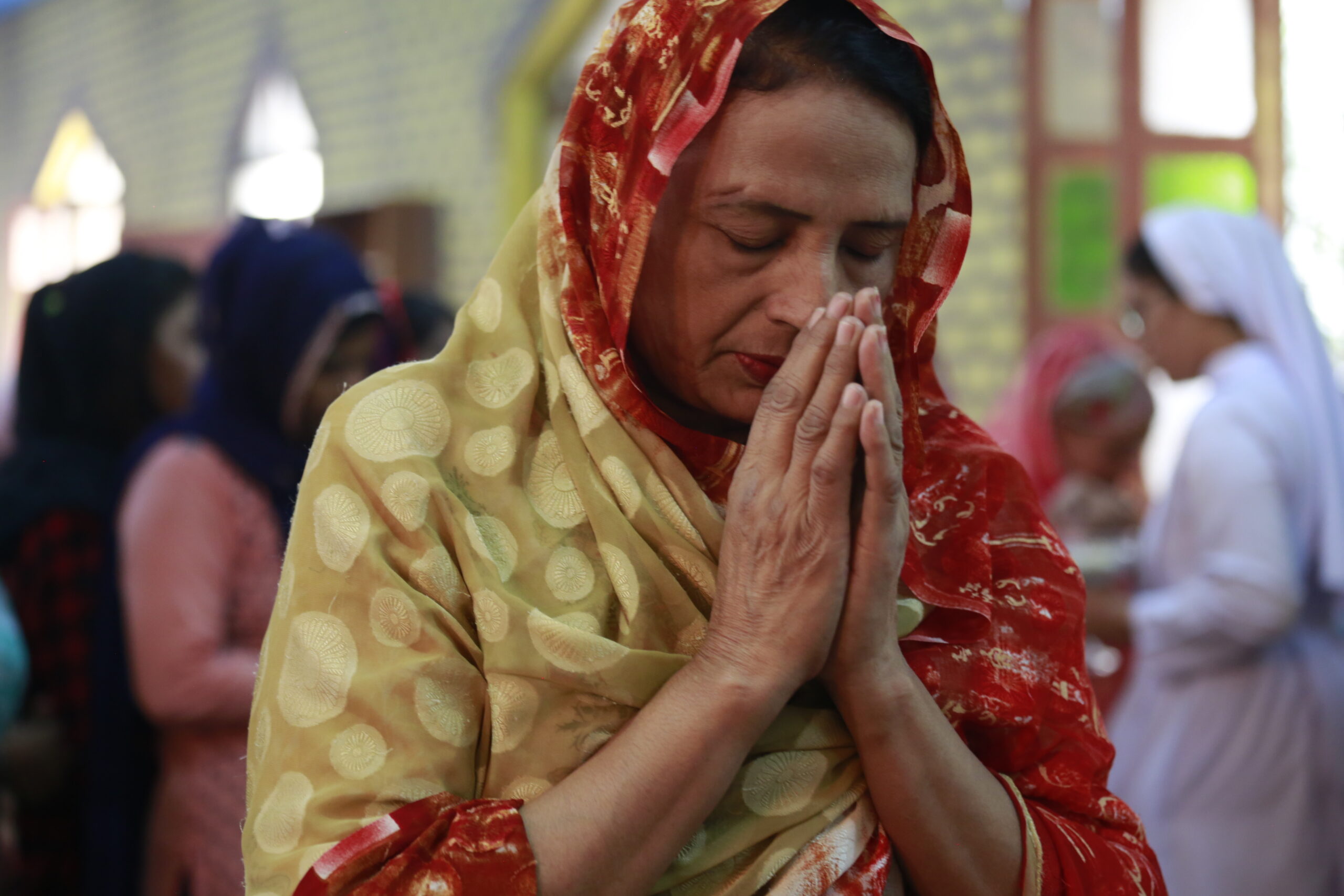
The Justice and Peace Commission of the Catholic Bishops' Conference of Pakistan has released a report documenting grave human-rights violations suffered by the country's Christians in 2025. The preface is signed by Bishop Samson Shukardin of Hyderabad, who chairs the Commission. "Pakistan is a country richly blessed with varied cultures and a deep religious heritage. Yet at its very heart there lies a troubling contradiction," he writes, reporting that politicians and Muslim clerics present the country as "a land of Muslims, for Muslims."
The report records the murder of two Christians. Kashif Masih, a Catholic farm labourer, died on 12 May 2025 in the Sialkot district of Punjab after being severely beaten; his employer and other men had accused him of stealing a mobile phone. On 7 September 2025, Afzal Masih was shot dead as he travelled on pilgrimage to the Marian shrine of Mariamabad with a group from Lahore: assailants had first harassed women in the group, beaten Masih when he intervened, then opened fire on the pilgrims; his cousin was gravely wounded.
The judicial handling of the Jaranwala violence of 16 August 2023 remains inadequate: after blasphemy accusations against two Christians, mobs had looted and burned 26 churches and some 80 Christian homes. In 2025, eight Christians were charged with alleged blasphemy, two were released on bail after earlier accusations, and eight were acquitted. Pakistan's blasphemy laws carry penalties up to life imprisonment and death; their low standard of proof invites abuse, including against Muslims.
The report further records 35 cases of violence against women and girls from religious minorities, including abductions followed by forced conversion and marriage. In some cases, authorities took the abductors' side and refused to register the parents' complaints; elsewhere, judges refused to hand minors over to their supposed husbands and allowed them to return to their families. Of some 248 million inhabitants, fewer than 2 percent are Christian. The report also notes favourable signs: the announcement of new government measures against abuse of the blasphemy laws; a provincial minister who called the Christian community's contribution "exemplary"; a court that in 2025 banned the wording "Christians only" in job advertisements for sanitation workers.
What tradition teaches
The fifth commandment, "Thou shalt not kill," makes no exception of persons. The Catechism of the Council of Trent teaches that "the law forbids murder to all the world. It excepts no one," and that "there is no one, whatever be the lowliness of his condition, who is not protected by it." God Himself, after the flood, made this His first prohibition: "I will require the blood of your lives at the hand of every one that shall have shed it." And because man is created in the image of God, whoever kills him "does Him a signal injury." The same Catechism names hatred a "diabolical sin," for "the devil is a murderer from the beginning."
As for marriage, the same Catechism teaches that "it is the consent which is the efficient cause of Matrimony," and that "the consent of the two parties is needed." A bond extorted from a child by abduction and coercion is not a marriage: it lacks precisely the one thing that makes a marriage.
The measure
Measured by this rule, the facts are clear. To kill Kashif Masih on a suspicion of theft, to shoot down Afzal Masih on the road to a shrine — these are homicides that the law of God condemns without reserve and that cry to Him for vengeance. To tear a minor from her family to convert her and "marry" her by force establishes no conjugal bond; it is an abduction, and the authority that shields the abductor makes itself his accomplice. A law whose standard of proof is so low that it delivers a man to death on a mere accusation is an instrument of injustice, whoever it strikes.
The other half of the truth must also be told. To ban the words "Christians only" in the humblest employment, to acknowledge publicly the worth of the Christian community, to return a child to her parents: these are just acts, and we salute them as such. Tradition is not a machine for condemning; it is a rule, and the rule approves the good wherever it is found.
For the faithful
These Christians suffer and die for the name they bear. Our Lord foretold it: "Blessed are they that suffer persecution for justice' sake: for theirs is the kingdom of heaven." Their portion is not oblivion but prayer, and the memory of what the Church has always held: blood shed for Christ is never lost. To us who live in peace it falls not to look away, to carry them in our intentions, and to hold firmly the faith for which they give their lives.
Sources. Catechism of the Council of Trent (1566), on the fifth commandment and the sacrament of Matrimony; Genesis IX, 5; Gospel according to Saint Matthew, V, 10.