
News
The Traditional Latin Mass: the last word belongs to the pope, not the prefect
The president of the US bishops holds that the last word on the restrictions striking the traditional Latin Mass belongs to the pope, still silent, against a prefect who called them settled.
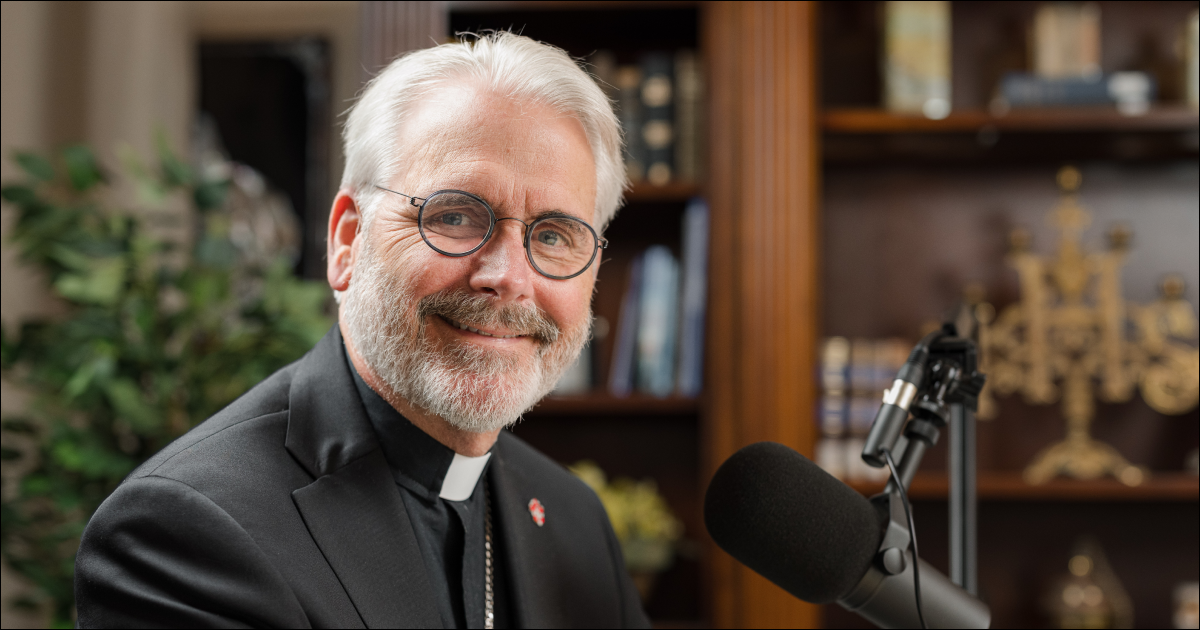
The president of the United States bishops' conference has publicly contradicted a statement by Cardinal Arthur Roche, prefect of the Dicastery for Divine Worship, who had claimed that the reigning pope does not intend to alter the restrictions imposed on the traditional Latin Mass. In a televised interview, the archbishop of Oklahoma City, who has led the conference since November 2025, held that the last word belongs to the pope, who has not yet spoken: “I'm not sure we've heard the last word of this pontificate on Traditionis Custodes. Cardinal Roche has spoken, but until Pope Leo has spoken, I'm not sure we know for certain what the path forward will be.”
Cardinal Roche had said, in a press interview, that “no, Pope Leo is not going to change Traditionis Custodes, and he will not go back to Summorum Pontificum.” His five-year term at the head of the dicastery expired in May 2026, and his replacement is being discussed.
On the same question, the voices diverge: a cardinal, a former prefect of the same dicastery, has publicly asked Pope Leo to return to the situation of Summorum Pontificum; the archbishop of San Francisco has doubted that the restrictions can hold against the young people the traditional Mass draws; another cardinal invites the faithful to “make known to their bishops, and above all to the Holy Father, their desire to celebrate according to this form, without calling into question the validity of the Second Vatican Council.” The archbishop of Oklahoma City noted that a diocese in Texas had, that same week, eased its restrictions, and he thinks other bishops may follow.
He also spoke of the “dilemma” of faithful who are forbidden to attend the liturgies of the Society of St Pius X: after the episcopal consecrations it conferred on 1 July 2026, he had himself warned his archdiocese against those liturgies, directing the faithful to the Priestly Fraternity of St Peter. The pope, for his part, has not spoken publicly on the traditional Mass; his most recent appeal on liturgical matters, on 14 August 2026, concerned fidelity to the approved rites.
What tradition teaches
The traditional Latin Mass is not a taste or a sensibility: it bears the holy sacrifice, the unbloody renewal of that of the Cross, which the Council of Trent defined in its twenty-second session against the innovators, striking with anathema whoever denies it. The rite that serves it was given to endure: St Pius V, promulgating the Roman Missal in 1570, granted its use to every priest “in perpetuity,” forbidding that anyone ever be troubled for holding to it. And the question of who decides in the last resort is not open: Christ built His Church upon Peter, and to Peter alone were the keys given. The Vatican Council, in 1870, defined that the successor of Peter receives the primacy of jurisdiction over the whole Church: not a dicastery, not a prefect, but the pope.
The measure
On the point of law, tradition sides with those who recall that the last word belongs to the pope. The expectation of a prefect, however assured he may be and however high his office, is not a pontifical act: no motu proprio, no decree, no rescript has been issued since Traditionis Custodes. To say “the pope will not change it” and “he will not go back” describes a forecast, not a settled decision; and an expired mandate does not bind the pontiff who has yet to speak.
We pronounce nothing on the intentions of the Holy Father, who keeps silent: we observe only that the debate is open, not closed, and that those who call it closed anticipate a sentence no text carries. There remains the underlying conflict, which is not first between men but between acts: where Quo primum willed the use of the Roman rite perpetual, a recent restriction treats it as a revocable privilege. That tension remains, whoever, tomorrow, speaks the last word.
For the faithful
To await the word of the pope is not indifference, and to hold to the Mass of all ages is not revolt. The faithful formed in tradition asks for this liturgy where it may lawfully be obtained, from priests and communities in full communion, and he forms his children in this treasure without calling into question the authority of the Church. The “dilemma” of liturgies celebrated outside that communion is real and painful; it is resolved neither by contempt of authority nor by rupture, but by patient fidelity to what the Church has always believed and prayed. It is there, and not in agitation, that the deposit is kept.
Sources. Council of Trent, session XXII (1562), doctrine and canons on the Holy Sacrifice of the Mass; St Pius V, bull Quo primum tempore (1570); Vatican Council, dogmatic constitution Pastor æternus (1870), on the primacy of the Roman Pontiff; Gospel according to St Matthew XVI, 18-19 (Douay-Rheims).