
Prayer
The Litany of Humility
The Litany of Humility, long attributed to Cardinal Merry del Val — its full text, the petitions to be delivered from the desire of esteem and the fear of humiliation, and how to pray it.
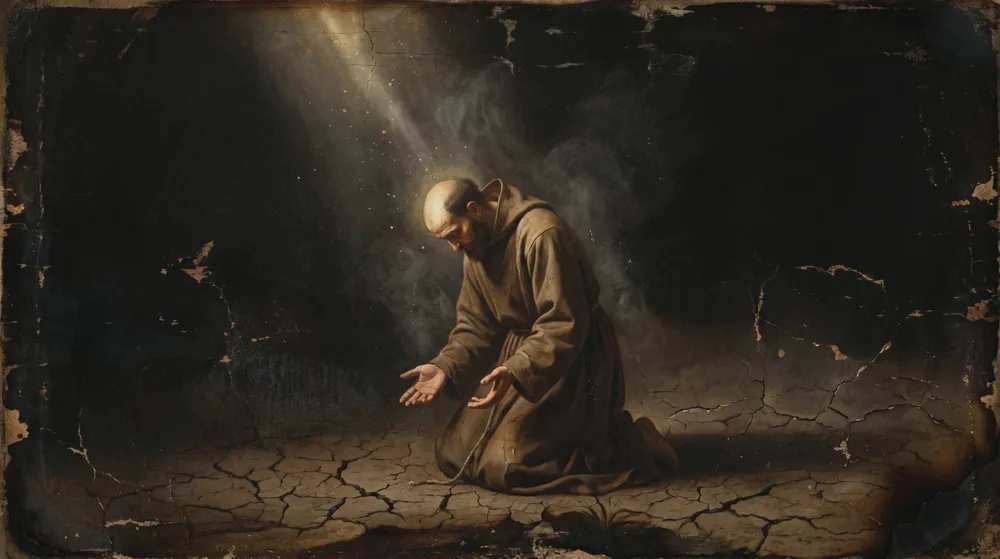
The Litany of Humility is a prayer for the hardest of the virtues: to be freed from the love of one's own esteem and the fear of one's own abasement, and to desire that others be preferred. It is commonly attributed to Cardinal Rafael Merry del Val (1865-1930), Secretary of State under Pope St Pius X, though its true author is unknown: very similar litanies of humility were already in print in the nineteenth century, before he could have written it. It is a severe prayer — it asks for exactly what nature resists — and for that reason it has been loved by those serious about the interior life. Here is the full text.
The Litany of Humility
O Jesus, meek and humble of heart, hear me.
From the desire of being esteemed, deliver me, Jesus.
From the desire of being loved,
From the desire of being extolled,
From the desire of being honoured,
From the desire of being praised,
From the desire of being preferred to others,
From the desire of being consulted,
From the desire of being approved,From the fear of being humiliated, deliver me, Jesus.
From the fear of being despised,
From the fear of suffering rebukes,
From the fear of being calumniated,
From the fear of being forgotten,
From the fear of being ridiculed,
From the fear of being wronged,
From the fear of being suspected,That others may be loved more than I, Jesus, grant me the grace to desire it.
That others may be esteemed more than I,
That, in the opinion of the world, others may increase and I may decrease,
That others may be chosen and I set aside,
That others may be praised and I unnoticed,
That others may be preferred to me in everything,
That others may become holier than I, provided that I may become as holy as I should.
What the prayer asks
The litany moves in three movements, each harder than the last:
- Deliverance from the desire of esteem — to be freed from wanting to be praised, honoured, preferred.
- Deliverance from the fear of abasement — to be freed from dreading humiliation, contempt, being forgotten.
- The positive desire — not merely to be free of these, but to want others to be preferred, praised, and chosen above oneself.
The last petition is the most exacting, and the most honest: that others may become holier than I — provided that I may become as holy as I should. It does not ask for mediocrity, but for the death of vanity.
The Catholic Litany of Humility
The Litany of Humility belongs to the Catholic tradition of private devotion rather than to the liturgy. Unlike the great public litanies — the Litany of the Saints, the Litany of Loreto, the Litany of the Holy Name, the Litany of the Sacred Heart, the Litany of St Joseph — it is not among the litanies approved for public chanting and indulgenced for that use.
It is a personal prayer of the nineteenth century, made widely known through the cardinal who loved it, and handed on for the use of any Catholic who wishes to wage war on his pride. Because it is a private devotion, it may be prayed in any words a person finds aiding, alone or in a small group, with no fixed rubric. Souls drawn to the modern Litany of Trust will find in this older litany the same confidence in God, asked with a severer honesty.
How to pray it
The Litany of Humility is well suited to be prayed slowly, after Communion or in time of retreat, when the soul can bear to look at its own attachments. It is not a prayer to rush. Each petition is a small surgery on pride; prayed honestly and often, it works. The Church asks the same grace in the collect of St Francis of Paola, founder of the Minims, "the least" of all religious.
It takes its place among the many private devotions that borrow the form of the Catholic litanies without being liturgical.
Litany of Humility prayer card
Many keep the Litany of Humility on a small prayer card, tucked in a missal or breviary, so it can be prayed after Communion or in the moment a slight or a humiliation is felt. The whole text fits on a single card, and its brevity is part of its strength: it can be prayed in two or three minutes, yet it touches every corner of vanity. A card kept where it will be seen — in a wallet, on a prie-dieu, beside the bathroom mirror — turns the prayer into a daily discipline rather than an occasional one. A printed card serves that purpose well for those who prefer paper.
Litany of Humility PDF and printable text
We do not offer a PDF. The full text given above is complete and prints as it is; if you print it, keep the three movements, the desires, the fears and the positive petitions, on a single page, so that the eye moves through all three without turning over, which is how the prayer is meant to be prayed: as one unbroken act. English wordings vary slightly from one printing to another (some say humbled where others say humiliated), but the petitions and the three movements are the same.
Rather than a loose printout, install the Iter Fidei app: the traditional prayers and litanies of the Church, the 1962 Missal and Breviary, offline, in Latin and in English. Join early access here.
Frequently Asked Questions
What is the Litany of Humility?
The Litany of Humility is a Catholic prayer that asks Our Lord to free the soul from the love of its own esteem and the fear of its own abasement, and to grant the grace to desire that others be preferred. It moves in three movements: deliverance from the desire of esteem, deliverance from the fear of humiliation, and the positive desire that others may increase as we decrease. It is a severe prayer, asking for exactly what fallen nature resists.
Who wrote the Litany of Humility?
It is commonly attributed to Cardinal Rafael Merry del Val (1865-1930), Secretary of State under Pope St Pius X, and it is through him that it became widely known. Its true author is unknown: litanies of humility very close to the present text were already in print in the nineteenth century.
How do you pray the Litany of Humility?
It is best prayed slowly, after Communion or in time of retreat, when the soul can bear to look honestly at its own attachments. The first petitions answer "deliver me, Jesus," the final petitions answer "Jesus, grant me the grace to desire it." It is not a prayer to rush; each petition is a small surgery on pride, and prayed honestly and often it does its work, in keeping with Our Lord's words, "Learn of me, because I am meek, and humble of heart" (Matthew 11:29, Douay-Rheims).
Is the Litany of Humility a Catholic prayer?
Yes. It is a Catholic private devotion of the nineteenth century, commonly attributed to Cardinal Rafael Merry del Val (1865-1930), Secretary of State under Pope St Pius X. It is not part of the liturgy and is not among the litanies approved for public chanting, but it is firmly within the Catholic tradition of personal prayer and has long been prayed by priests, religious, and laity seeking to grow in humility.
Can I get the Litany of Humility as a PDF or prayer card?
We do not offer a PDF, but the full text given above is complete and prints as it is, on a single page or a small card. Many keep it on a card in a missal or wallet to pray after Communion. Better still, install the Join early access here.: the traditional prayers and litanies of the Church, offline, always in your pocket.
Why do versions of the Litany of Humility differ?
The prayer was printed in several English forms in the nineteenth century, and wordings still vary slightly from one card to another (humbled or humiliated, freed or delivered). The petitions and the three movements are the same in all of them.
The Iter Fidei app carries the traditional prayers and litanies of the Church with the 1962 Missal and Breviary, in Latin and English. Join early access here.
Sources. Holy Scripture (Matthew 11:29, Douay-Rheims); the Litany of Humility as printed in nineteenth-century English prayer books, commonly attributed to Cardinal Rafael Merry del Val (1865-1930).