
Novenas
Novena to St John Of God
The novena to St John of God, heavenly Patron of the Sick — the full nine-day prayer for healing, prayed before his feast on 8 March, with the life of the saint who founded the Brothers Hospitallers.
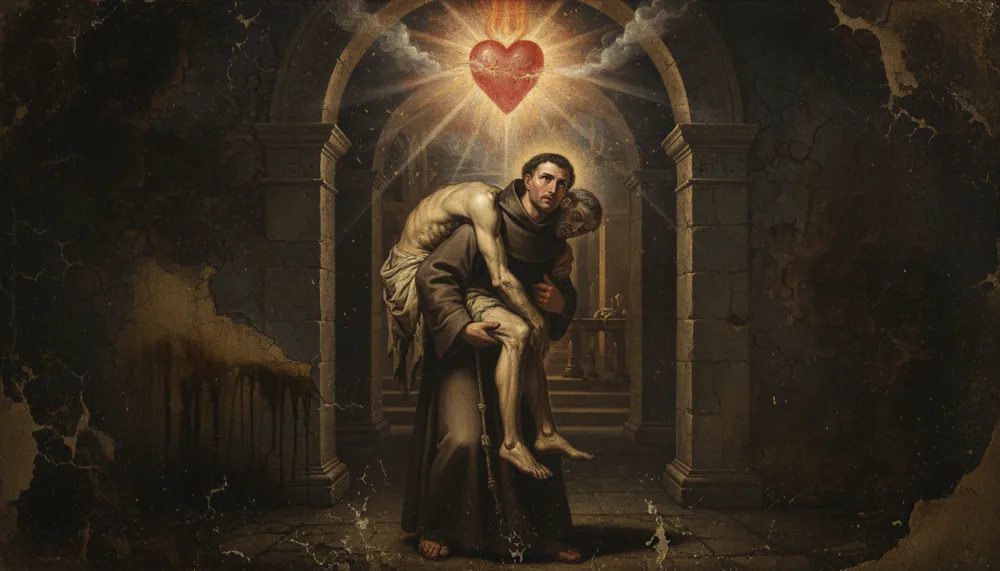
The novena to St John of God is the nine-day prayer to the great Patron of the Sick, said above all for healing of body and soul — for oneself or for someone ill — and prayed most fittingly in the nine days before his feast on 8 March.
St John of God was the beggar-turned-nurse of sixteenth-century Granada who gave his whole life to the poor and the dying, founded the Brothers Hospitallers, and is honoured by the Church as the patron of hospitals, of nurses, of the sick, and of the dying. Below we give the complete novena, the way to pray it, and the life of the saint whose name — John of God — the Church herself gave him. If you are new to this form of prayer, see first our guide to what is a novena.
The novena to St John of God (full text)
This is the novena to St John of God, Patron of the Sick, as carried in Catholic prayer-books; it is a devotional composition, with no liturgical text and no approval of its own that we can cite, and the Church's prayer for his feast is the collect of 8 March (a feast of the third class in 1962). It is one prayer, said once on each of the nine days, with your own intention named in the place marked. It asks, through his intercession, for healing "if this should be according to the Will of God" — the disposition of every sound Catholic prayer for a cure.
Saint John of God, heavenly Patron of the Sick,
I come to you in prayer to seek your help in my present sickness.
Through the love which Jesus had for you
in choosing you for the sublime vocation of serving the sick,
and through the tender affection
with which the Blessed Virgin Mary placed upon your head
a crown of thorns as a symbol of the sufferings
you would undergo in the service of the sick
to attain to your crown of glory,
I beg you to intercede for me to Jesus and Mary
that They may grant me a cure,
if this should be according to the Will of God.How patiently you bore the sufferings of your own disease!
Teach me to carry with cheerful resignation
the cross that God has given me.
Let me never complain or lose courage.
Help me to understand that suffering
is a very important means of sanctifying my soul,
of atoning for my many sins,
and of reaping a plentiful harvest of merit for Heaven.
I trust in your great love for the sick
and in the power of your intercession to help them.
Help me, good St John,
and beg the God whose name you bear to touch me
as He touched the sick while on earth,
that through His almighty power
health may return to my body.
And as you derived strength
in your own sufferings from the crucifix,
so may I be able to say what you did to Jesus Crucified:
"Lord, Thy thorns are my roses and Thy sufferings my paradise."Good Saint John,
lover of those who suffer
and special Patron of the Sick,
I confidently place before you my earnest petition.(Here mention your intention.)
I beg you to recommend my request to Mary,
the Mother of Sorrows and Health of the Sick,
that both Mary and you may present it to Jesus,
the Divine Physician.Saint John of God,
patron of the Sick and beloved of Jesus and Mary,
pray to Them for me
and obtain my request. (Three times.)
Then, in honour of St John of God, say:
One Our Father, one Hail Mary, and one Glory Be.
Saint John of God, Patron of the Sick, pray for us.
That is the whole novena. It is repeated, unchanged, on each of the nine days, with the intention named afresh each time.
The novena prayer for healing
Because St John of God is before all else the Patron of the Sick, this novena is prayed most often for healing — for the recovery of a sick person, for strength to bear a long illness, for the dying, or for those who nurse them. Notice how the prayer itself teaches the right way to ask: it begs plainly for "a cure," but it adds "if this should be according to the Will of God," and it asks first for the grace to carry the cross "with cheerful resignation." That is the pattern St John lived.
He did not despise the body — he spent himself day and night tending it — but he had learned from the crucifix that suffering, offered up, "is a very important means of sanctifying my soul." Pray this novena for the cure you long for, and pray at the same time for the greater grace: that whether health returns or not, the sick soul may say with the saint, Thy thorns are my roses. For other sure intercessors in sickness, see the novenas to St Peregrine, the patron of cancer sufferers, and to Our Lady of Lourdes, Health of the Sick.
A shorter daily prayer to St John of God
If the full novena cannot be said on a given day, the heart of the devotion can be kept in a few words. St John of God may be invoked briefly with the closing petition of the novena:
Saint John of God, Patron of the Sick and beloved of Jesus and Mary, pray to Them for me and obtain my request. (Name it.) One Our Father, one Hail Mary, one Glory Be.
This is not a substitute for the nine full days where they can be prayed, but it lets the sick, the busy, and those keeping vigil at a bedside carry the intercession through the day.
The nine-day meditations on his life
Some modern forms of the novena add, for each of the nine days, a short meditation drawn from the life of St John of God — his conversion, his charity to the poor, his care for the sick and the mentally afflicted, his begging through the streets of Granada for his patients, his rescue of the sick from fire, and his own holy death. These are a worthy help to prayer, but the substance of the devotion is the single prayer given above, said with faith for the nine days. Whichever form you use, the intention and the trust are the same. To feed the meditation, read the life of the saint further down this page.
How to pray the novena to St John of God
A novena is nine consecutive days of prayer, from the Latin novem, "nine." To pray this one:
- Choose your nine days. The classic time is the nine days leading to his feast, beginning 27 February (28 February in a leap year) and ending 7 March, so that the ninth day closes on the eve of his feast on 8 March. But the novena may be begun on any day when there is need — most often at the onset of a serious illness.
- Begin and end with the Sign of the Cross. Open each day In the name of the Father, and of the Son, and of the Holy Ghost. Amen, and close the same way, as with every Catholic prayer.
- Pray once each day, at a fixed hour if you can, saying the full prayer above and naming your intention.
- Name one intention and keep to it through all nine days — a particular sickness, a particular person, a grace of healing or of holy resignation.
- Add it to the Mass or the Rosary where you are able; a novena joined to Holy Communion or to a decade of the Rosary has a strength of its own.
- Ask in submission. Say the words the prayer itself gives you — if this should be according to the Will of God — and mean them. The novena that is heard is the one prayed by a soul resigned to God's wisdom, content to receive either the cure it named or the better thing He sends.
Who was St John of God?
St John of God was born at Montemor-o-Novo in Portugal on 8 March 1495, of devout parents. His early life was restless and wandering: he worked as a shepherd, served as a soldier in the armies of the Emperor Charles V in the wars against France and against the Turks, and afterward drifted through Spain, Africa, and Gibraltar, at last earning his bread by selling holy books and pictures in Granada.
His conversion came suddenly, in his forties. In Granada, on the feast of St Sebastian in the year 1537, he heard a sermon preached by the great Blessed John of Ávila. So pierced was he by grief for his wasted years that he ran through the streets crying for mercy, beating his breast, tearing his hair, and giving away all he had — behaviour so violent that he was taken for a madman and shut up in an asylum, where he was treated with the harsh discipline then dealt out to the insane. It was there, tasting the cruelty shown to the sick and the mad, that his true vocation was born. Blessed John of Ávila visited him and counselled him to turn his fervour to the service of the suffering rather than against himself.
Restored to his senses and resolved, John rented a house in Granada and began to gather into it the sick, the poor, the homeless, and the abandoned — begging through the streets by night for their needs with his famous cry, "Do good to yourselves, my brothers, for the love of God!" — and tending them by day with his own hands. He asked nothing of a patient's creed or condition; he took in all.
From this house grew the great work of his life and the religious order that still bears his name, the Brothers Hospitallers of St John of God, who carry his charity into hospitals across the world to this day. It was the Bishop of Tuy who, seeing the man's holiness, clothed him in a religious habit and gave him the name by which the Church has known him ever since: John of God.
Of the many wonders told of him, the most famous is his rescue of the sick from fire. When the Royal Hospital of Granada caught alight, John rushed into the flames again and again to carry out the helpless patients on his own back, and passed through the burning building unharmed — a miracle honoured in the Office of his feast and the reason he is also remembered as a patron of firefighters.
His death was of a piece with his life. Worn out by thirteen years of ceaseless labour and mortification, he fell mortally ill after plunging into a river in a heroic, futile attempt to save a drowning young man from the flood. He died at Granada on 8 March 1550, the very day of his birth, having reached the age of fifty-five, kneeling before a crucifix.
He was beatified by Pope Urban VIII in 1638 and canonized by Pope Alexander VIII on 16 October 1690. Pope Leo XIII declared him, together with St Camillus, patron of hospitals and of the dying, and Pope Pius XI named the two of them patrons of all nurses and nursing associations. His feast is kept on 8 March. Those drawn to his charity to the sick will find a brother in St Camillus, the other great patron of the sick, and in the Novena to St Gerard Majella.
What St John of God is the patron of
Because he gave his life to the ill and the destitute, St John of God is the patron of the sick, of hospitals, of nurses and the whole nursing profession, and of the dying. From the trade of his years before conversion he is also honoured as the patron of booksellers and printers, and from his rescue of patients from the flames, of firefighters. Above these particular titles stands the one the novena repeats: heavenly Patron of the Sick. It is to that St John — who knew hunger, madness, poverty, and long illness from the inside, and answered them all with charity — that the sick and those who love them bring their prayer.
Frequently Asked Questions
When do you pray the novena to St John of God?
The novena may be prayed at any time of need, especially at the onset of an illness. Commonly it is prayed as a preparation for his feast, beginning on 27 February (28 February in a leap year) and ending on 7 March, so that the ninth day falls on the eve of his feast on 8 March.
What is the novena to St John of God prayed for?
It is prayed above all for healing — the cure of a sickness, strength to bear a long illness, help for the dying, and grace for those who care for them. St John of God is the Patron of the Sick, so any need of body or soul touching illness is rightly brought to him. The prayer asks for a cure "if this should be according to the Will of God," and asks also for patience and holy resignation in suffering.
Why is he called "John of God"?
He was not baptized with that name. After his conversion, the Bishop of Tuy, moved by the man's extraordinary charity and holiness, clothed him in a religious habit and gave him the name John of God — and the Church has kept it ever since. It marks a life that belonged wholly to God and to God's poor.
When is the feast of St John of God?
His feast is kept on 8 March — the day of both his birth in 1495 and his death in 1550. This is why the novena is usually timed to end on its eve.
How did St John of God die?
Already worn out by years of labour, he took a fatal chill after throwing himself into a swollen river to try to save a drowning young man. He died at Granada on 8 March 1550, aged fifty-five, kneeling in prayer before a crucifix — the same crucifix from which, in life, he had learned to say, "Thy thorns are my roses and Thy sufferings my paradise."
Is St John of God the patron saint of heart patients?
Yes. Among his many patronages he is invoked for heart ailments and by those with heart disease, alongside his broader patronage of the sick, of hospitals, and of the dying. His novena is often prayed for such intentions.
Can I pray this novena for someone else who is ill?
Yes — indeed that is one of its most common uses. Name the sick person in the place marked for the intention, and beg St John of God to present their cause to Mary, Health of the Sick, and to Jesus, the Divine Physician. Praying a novena for another is an ancient work of mercy; you may also join it to the Litany of the Blessed Virgin Mary, in which Our Lady is hailed as Health of the Sick.
Is there a set prayer for each of the nine days?
In this novena, no — the same prayer is said on each of the nine days, with the intention renewed. Some newer versions add a short daily meditation on an episode from the saint's life, but these are an optional help; the substance of the devotion is the one prayer, prayed faithfully for nine days.
Pray the novena to St John of God with day-by-day reminders, the life of the saint, and audio in the Iter Fidei app. Join early access here.
Sources. The devotional Novena to St John of God, Patron of the Sick, as carried in Catholic prayer-books; Butler, Lives of the Saints (8 March, St John of God); the Roman Martyrology and the Office of his feast (8 March); and the papal acts of his beatification by Urban VIII (21 September 1638), his canonization by Alexander VIII (16 October 1690), and the declaration of Leo XIII naming him, with St Camillus, patron of hospitals and the dying.