
Novenas
Novena to the Immaculate Heart of Mary
A nine-day novena to the Immaculate Heart of Mary, refuge of sinners, joined to the First Saturdays asked at Fatima — with the prayers to pray it.
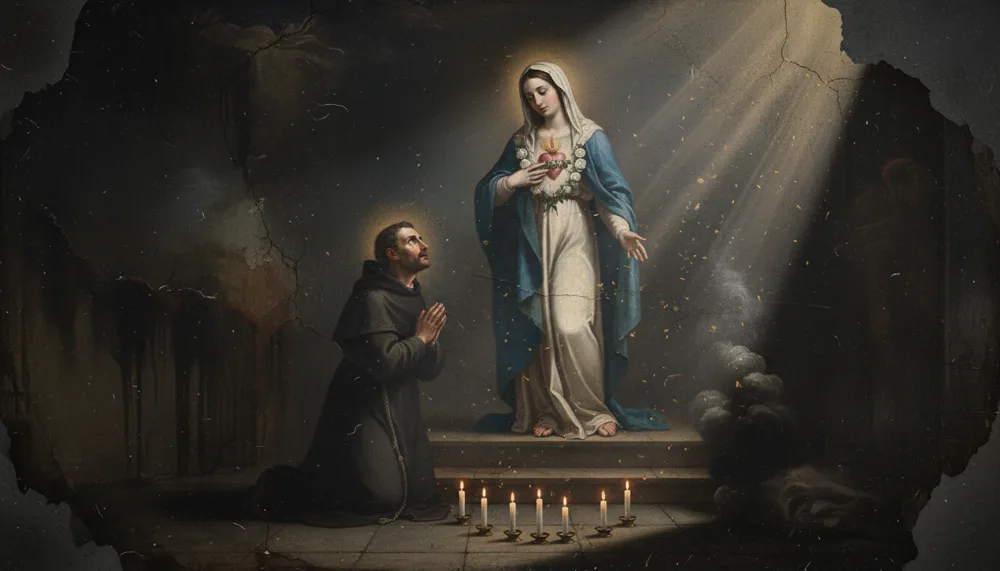
The novena to the Immaculate Heart of Mary is a nine-day prayer by which we have recourse to our Lady, refuge of sinners, asking through her Heart the graces we need and offering reparation for sin. It is prayed over nine consecutive days, in the spirit of consecration and reparation, and is joined naturally to the devotion of the First Saturdays that the Mother of God herself asked at Fatima.
We pray this novena because the Most Blessed Virgin is, as the Catechism of Saint Pius X teaches, "our most powerful Advocate with Jesus Christ," and she is so powerful "because she is the Mother of God, and it is impossible that He should not hear her" (Catechism of St Pius X, On the Hail Mary). To go to her Heart is to go by the surest road to her Son.
What this novena is
A novena is nine days of continued prayer for a particular grace, made in imitation of the nine days the Apostles persevered with our Lady between the Ascension and Pentecost. If the form of the practice is new to you, we have set it out plainly in our guide to what a novena is, which stands among our wider collection of Catholic devotions. This one is addressed to the Immaculate Heart of Mary — that Heart "full of grace," conceived without stain, wholly turned toward God.
The Church does not pray to the Heart of Mary as to a separate power, but venerates under that image the love and holiness of the Mother of God, and through it asks her intercession. The Catechism of the Council of Trent notes that "it is not without reason that the holy Church hath added, to this thanksgiving, Prayers and invocations to the most holy Mother of God" (Roman Catechism, On Prayer). The novena is one such invocation, gathered over nine days.
Mary, refuge of sinners
We call the Immaculate Heart the refuge of sinners because it is a title dear to the poor and the fallen. The whole ground of the devotion is the doctrine of her intercession: the Saints teach, says the Catechism of Saint Pius X, that her true devotees "are loved by her, that she protects them with the love of the most tender of Mothers, and that through her they are certain to find Jesus and to obtain heaven" (Catechism of St Pius X, On the Hail Mary).
This is why the novena is no mere multiplying of words. We come to the Heart of Mary as sinners come to a mother — to be heard, sheltered, and led to Christ. The Heart of the Mother does not keep us for herself; it gives us to her Son.
The link with Fatima and the First Saturdays
At Fatima, according to the account of Sister Lucia (the apparitions were declared worthy of belief by the Bishop of Leiria in 1930), our Lady asked for the consecration of the world to her Immaculate Heart and for the devotion of the First Saturdays as reparation. The promises and the form of that devotion belong to the same spirit as this novena, and we treat them together in our account of our Lady of Fatima. The First Saturdays ask, on the first Saturday of five consecutive months, for confession, Holy Communion, the recitation of five decades of the Rosary, and fifteen minutes of meditation on its mysteries — all offered in reparation to the Immaculate Heart.
The novena is well prayed in the days leading up to a First Saturday, or in preparation for a feast of our Lady. It carries the same two notes the Fatima devotion carries: consecration — giving ourselves wholly to God through Mary's Heart — and reparation — making amends, by our prayer, for the sins by which that Heart is wounded. The same logic of reparation animates the First Fridays made to the Sacred Heart of Jesus, to which the novena to the Sacred Heart is the companion of this one; the two devotions are sisters, the Heart of the Mother turned always toward the Heart of the Son.
How to pray the novena to the Immaculate Heart of Mary
Pray on nine consecutive days, ideally before Holy Communion on a First Saturday or before a Marian feast. Each day, after a moment of silence, make the act of consecration, say the daily prayer, and add the petition for which you are praying.
The consecration and the daily prayer below are a devotional composition, with no liturgical text and no approval of their own; the Church's prayer is the collect of the feast of the Immaculate Heart (22 August). Begin each day with the sign of the Cross and this consecration:
O Immaculate Heart of Mary, refuge of sinners, we consecrate to thee our whole being: our body and soul, our thoughts, words, and works, our life and our death. Take us as thine own, and obtain for us from thy Son the grace we ask in this novena, that, kept under thy protection, we may serve God faithfully and come at last to behold Him with thee. Amen.
Then say the prayer of each day:
Most holy Virgin Mary, Mother of God and our Mother, we fly to thy Immaculate Heart in our necessities. Thou art our most powerful Advocate with thy Son, who can refuse thee nothing. Look upon us, sinners as we are, and obtain for us pardon for our sins, amendment of our lives, and final perseverance. Through thy Immaculate Heart we offer to God all our prayers, works, and sufferings this day, in reparation for the offences committed against thee and against the Sacred Heart of thy Son. Amen.
Conclude each day with this short act and three Hail Marys:
O Mary conceived without sin, pray for us who have recourse to thee.
(Three times: Hail Mary, full of grace, the Lord is with thee; blessed art thou among women, and blessed is the fruit of thy womb, Jesus. Holy Mary, Mother of God, pray for us sinners, now and at the hour of our death. Amen.)
The Hail Mary closes the novena fittingly, for, as the Catechism teaches, by its last words "we ask the protection of the Most Blessed Virgin during this life and especially at the hour of death, when we shall have the greatest need of it" (Catechism of St Pius X, On the Hail Mary).
The Rosary, the heart of the devotion
The devotion the Church recommends above all in honour of our Lady is the Rosary: it is, says the Catechism of Saint Pius X, "the devotion that the Church recommends in a most special way in honour of the Most Blessed Virgin" (Catechism of St Pius X, On the Hail Mary). It was a Rosary in the hand that our Lady asked for at Fatima, and the daily Rosary is part of the First Saturdays.
We therefore counsel praying at least five decades of the Rosary each day of this novena. If the manner of saying it is unfamiliar, our guide on how to pray the Rosary sets out the mysteries and the order. The novena and the Rosary are not two devotions competing for the same nine days; the Rosary is the daily bread of the novena, and the appointed prayers its frame. Those who wish to widen this Marian devotion will find related forms among our Catholic prayers and in the kindred novena to St Joseph, guardian of the same Holy Family.
The spirit in which we pray it
A novena is answered not by the count of its days but by the disposition of the heart that prays it. We come to the Immaculate Heart not to extract a favour but to be conformed to it — to hate sin as that Heart hates it, to love God as that Heart loves Him. The petition we bring is real, and we may bring it with confidence; but the deeper grace we seek is conversion, our own and that of sinners, for whom this Heart is the refuge.
So pray these nine days simply, without straining after feeling. Make the consecration meaning it, offer the reparation meaning it, and leave the outcome to the Mother of God, who never closed the gates of the divine Mercy against any who prayed from the heart.
Frequently Asked Questions
What is the Immaculate Heart of Mary?
The Immaculate Heart of Mary is the physical Heart of the Blessed Virgin, venerated as the symbol of her perfect love for God and for us, and of her interior holiness. It is called immaculate because Mary was conceived without original sin, so that her Heart was, from the first instant, wholly turned toward God and free from every stain. To honour her Immaculate Heart is to honour the love and holiness of the Mother of God and, through that image, to ask her intercession. We treat it more fully in the Immaculate Heart of Mary.
What does the Immaculate Heart of Mary mean?
It means the inner life of love and grace of the sinless Mother of God, set before us under the sign of her Heart. The Church does not worship the Heart of Mary as a separate power — adoration belongs to God alone — but venerates her charity and union with God and begs her prayers. The devotion is bound to Fatima, where our Lady asked for the consecration of the world to her Immaculate Heart and for the reparation of the First Saturdays.
How do you pray the novena to the Immaculate Heart of Mary?
Pray on nine consecutive days, ideally before a First Saturday or a Marian feast. Each day, make the Sign of the Cross, say the act of consecration to the Immaculate Heart, then the daily prayer with your intention, and close with O Mary conceived without sin, pray for us who have recourse to thee and three Hail Marys. It is well to add at least five decades of the Rosary each day, for the Rosary is the daily bread of the novena.
Is the novena to the Immaculate Heart the same as the First Saturdays?
They are distinct but kindred. The First Saturdays, asked at Fatima, are a devotion of confession, Communion, the Rosary, and meditation made on the first Saturday of five consecutive months in reparation to the Immaculate Heart. The novena is nine consecutive days of prayer for a particular grace. They share the same two notes — consecration and reparation — and the novena is fittingly prayed in the days leading up to a First Saturday.
For more, see the immaculate heart of mary.
The Iter Fidei app carries the novenas, chaplets, litanies and prayers in Latin and your own language, with audio. Join early access here.
Sources. Catechism of St Pius X, On Prayer in General and On the Hail Mary (the Angelic Salutation; Mary our most powerful Advocate, powerful because she is the Mother of God; her protection at the hour of death; the Rosary as the devotion the Church most specially recommends). Catechism of the Council of Trent (Roman Catechism), On Prayer (the Church's invocations to the most holy Mother of God; recourse to the Saints; the divine Mercy never shut against earnest prayer). The Angelic Salutation (Hail Mary). The devotion of the First Saturdays of reparation to the Immaculate Heart of Mary.