
Novenas
Our Lady of the Snows Novena: 9 Days of Prayer
The full novena to Our Lady of the Snows — nine days of meditations and novena prayers to the Virgin of St Mary Major, prayed 28 July to 5 August for healing, for a household without children, and for God's will in hard decisions.
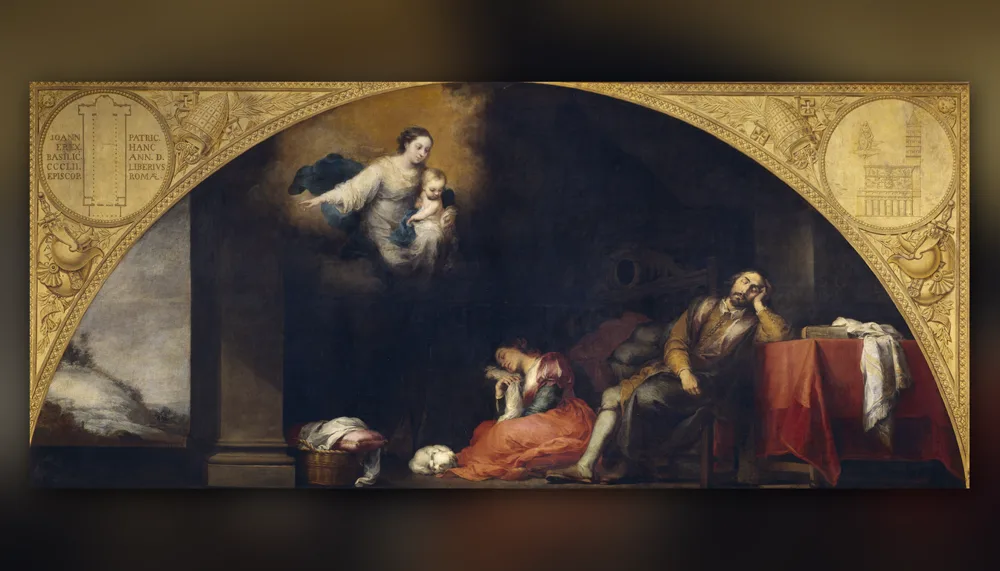
The novena to Our Lady of the Snows is nine days of prayer to the Blessed Virgin under the title she bears at Rome, in her oldest church — the basilica of St Mary Major on the Esquiline, where tradition says snow fell in the heat of August to mark the ground she had chosen.
It is prayed above all for healing and for hope: for the sick, for households longing for a child, for decisions in which we no longer know God's will, and for those trials where nothing seems possible any more. It is traditionally begun on 28 July and ended on 5 August, the feast of the dedication of St Mary Major, though it may be prayed at any time of year. If this form of prayer is new to you, see first our guide to what a novena is.
The novena to Our Lady of the Snows: the full nine days of prayers
Each day has the same shape: the Sign of the Cross, the daily invocation with your intention named, then the meditation and petition proper to the day, and the Our Father, three Hail Marys and the Glory Be. Keep the same intention from the first day to the ninth.
In the name of the Father,
and of the Son,
and of the Holy Ghost.
Amen.
Recollect thyself a moment in silence, then say the daily invocation, which is recited on each of the nine days before the meditation proper to the day.
Our Lady of the Snows, Mother of God and our Mother, thou who didst cover the burning hill of the Esquiline with snow to make thy will known, I come to thee with confidence. Obtain for me of thy Son the spirit of docility to the designs of God, and the coolness of His grace amid the heats of this life; and vouchsafe to obtain for me also, if it please God and if it be good for my soul, the grace I so ardently ask in this novena.
Here name, simply and plainly, the intention thou entrustest to Our Lady of the Snows — the same throughout the nine days.
Our Lady of the Snows, Salvation of the Roman People, pray for us. Amen.
Day 1 — The miracle of the snow
Under the pontificate of Pope Liberius, in the fourth century, in the heat of a Roman August, snow fell during the night upon the summit of the Esquiline. The Virgin had appeared that same night to the Sovereign Pontiff, to make known that she willed a church upon the place she would cover with snow. Rome awoke and beheld the hill white beneath the summer sun: a gentle and astonishing sign of a will come down from Heaven.
Our Lady of the Snows, thou didst choose a sign so gentle and so marvellous to make thy desire known: obtain for us eyes attentive to the signs that God gives us, and a heart docile to follow them, never preferring our own views to His.
Our Father, who art in heaven,
hallowed be Thy name.
Thy kingdom come.
Thy will be done
on earth as it is in heaven.
Give us this day
our daily bread.
And forgive us our trespasses,
as we forgive
those who trespass against us.
And lead us not into temptation,
but deliver us from evil.
Amen.
Then three Hail Marys:
Hail Mary, full of grace;
the Lord is with thee.
Blessed art thou amongst women,
and blessed is the fruit of thy womb, Jesus.
Holy Mary, Mother of God,
pray for us sinners,
now and at the hour of our death.
Amen.
Glory be to the Father, and to the Son,
and to the Holy Ghost.
As it was in the beginning,
is now, and ever shall be,
world without end.
Amen.
Day 2 — The patrician John and his wife
There lived at Rome a nobleman named John and his wife, rich but without children. Not knowing to whom to leave their goods, they resolved to make the Mother of God their heir, and besought her to show them how she willed their fortune to be employed. The Virgin answered their prayer, and made known to them, the same night as to the pope, her will upon the snow-covered hill.
Our Lady of the Snows, thou didst hear the childless couple who placed all things in thy hands: look with kindness upon the households that long for a child, and obtain for all the grace to entrust everything to God — goods, plans, and life itself — that He may dispose of them according to His good pleasure.
Then the Our Father, three Hail Marys and the Glory Be, as on the first day.
Day 3 — The basilica traced in the snow
On the morning of the fifth of August, the pope went up in procession to the Esquiline and, with his own hand, traced upon the snow the outline of the church that the Virgin had asked. The patrician John built the basilica at his own cost, upon the very plan that Heaven had drawn. What Mary had asked, Rome accomplished with joy.
Our Lady of the Snows, the Pontiff and the patrician hastened to fulfil thy desire as soon as they knew it: obtain for us not to put off till the morrow the good that God asks of us, but to build without delay, by a holy life, the dwelling He wills to make of our souls.
Then the Our Father, three Hail Marys and the Glory Be, as on the first day.
Day 4 — St Mary Major, Mother of God
Shortly after the Council of Ephesus had proclaimed, in the year 431, that Mary is truly the Mother of God, Pope Sixtus III raised up and magnified the basilica of the Esquiline in honour of that great mystery. St Mary Major thus became the first and most venerable of the churches of the West dedicated to the Mother of God, guardian of the relics of the holy crib of Bethlehem.
Our Lady of the Snows, the Church honours thee as the true Mother of God, and therein is thy glory and our hope: strengthen in us the faith in that mystery, and grant that, honouring thee on earth, we may deserve to behold thee in Heaven with thy divine Son.
Then the Our Father, three Hail Marys and the Glory Be, as on the first day.
Day 5 — Salvation of the Roman People
In this basilica is venerated the ancient image of the Virgin, called the Salvation of the Roman People. Before it the popes have prayed down the centuries, and the people of Rome have borne it in procession to implore deliverance from plague, war, and famine. Many a time has Mary shown that she watched over the City which honours her as its Queen.
Our Lady of the Snows, Salvation of the Roman People, thou art the refuge and protection of all who call upon thee: guard the Church, the Sovereign Pontiff, and our families from every evil of body and soul, and be our salvation in the day of trial.
Then the Our Father, three Hail Marys and the Glory Be, as on the first day.
Day 6 — Help in the impossible
God delights to work where man least expects it: snow in the depth of August. So the help of Mary often comes at the moment when all seems most barren, in those seasons of the soul when one would think no grace could flower any more. Nothing is impossible to Him who makes snow fall in summer.
Our Lady of the Snows, thou canst obtain of God what we no longer dare to hope: sustain our confidence when all seems lost, and make us believe that where man can do nothing more, thine intercession can still do all.
Then the Our Father, three Hail Marys and the Glory Be, as on the first day.
Day 7 — Coolness and shelter of the soul
The snow that fell upon the burning hill is an image of Mary herself: refreshment amid the fires of temptation, gentle shade over the soul that the sun of trial oppresses. Whoever takes refuge beneath her mantle finds there a great calm, as the weary traveller finds coolness in the shelter of the rock.
Our Lady of the Snows, refuge of sinners, calm within us the ardour of the passions and the fever of our cares: be our shade and our peace, that, refreshed by thy grace, we may walk without fainting toward the Heaven where thou awaitest us.
Then the Our Father, three Hail Marys and the Glory Be, as on the first day.
Day 8 — Mother of the whole Church
For sixteen centuries pilgrims of every nation have climbed the Esquiline to lay their sorrows at Mary's feet in her great basilica. She is not the Mother of Rome only, but the Mother of the whole Church, and beneath her roof meet the tears and the thanksgivings of all the peoples of the earth, united in one same love for her.
Our Lady of the Snows, Mother of the whole Church, gather beneath thy mantle all thy scattered children, bring back to unity those who are divided, and obtain for the whole world the peace that comes from thy Son, that all peoples may call upon thee with one same heart.
Then the Our Father, three Hail Marys and the Glory Be, as on the first day.
Day 9 — Our confident petition
We are come now to the end of these nine days, drawn to thee as the patrician came of old: not knowing how our need shall be met, yet certain that she who covered a hill with snow in the height of summer can answer the prayer we bring her. Thou dost never cast off those who put their trust in thee.
Our Lady of the Snows, present to thy Son the intention I have entrusted to thee throughout these nine days; obtain for me, if it please God and if it be good for my soul, the grace I ask, and in any case the more precious grace of always willing what God wills. I abandon myself to His will, in peace and confidence, as a child into thy hands.
Then the Our Father, three Hail Marys and the Glory Be, as on the first day.
The closing prayers
These close each day of the novena, after the vocal prayers.
V. Pray for us, O holy Mother of God.
R. That we may be made worthy of the promises of Christ.
Let us pray.
Grant, we beseech Thee, O Lord God, unto us Thy servants, that we may rejoice in continual health of mind and body; and, by the glorious intercession of blessed Mary ever Virgin, may be delivered from present sorrow and enter into joy eternal. Through Christ our Lord. Amen.
In Latin, as it stands in the Missal:
Concede nos famulos tuos, quaesumus, Domine Deus, perpetua mentis et corporis sanitate gaudere: et, gloriosa beatae Mariae semper Virginis intercessione, a praesenti liberari tristitia, et aeterna perfrui laetitia. Per Christum Dominum nostrum. Amen.
In the name of the Father,
and of the Son,
and of the Holy Ghost.
Amen.
The Our Lady of the Snows healing novena
Many search for this devotion as a "healing and hope" novena, and rightly: its closing collect is the oration of the Missal for the feast of 5 August, and it asks in so many words for continual health of mind and body and deliverance from present sorrow. That is the whole of healing and the whole of hope in one sentence, and it is the Church's own wording, not a modern composition. Pray it for the sick you love, naming them at the daily invocation; the sixth day, on help in the impossible, is where the hardest cases belong. It pairs naturally with a simple prayer for healing said at the bedside, or with the sacrament the Church gives the seriously ill, Extreme Unction, which no novena replaces.
Praying it for a particular intention
The story behind this novena is the story of a couple who did not know what God wanted of them, and asked Mary to show them. That gives the devotion its three classic uses.
For a household without children. The patrician John and his wife are the reason so many childless couples come to Our Lady of the Snows. The second day is theirs. Those who wish a fuller devotion for this intention may join it to the novena to conceive a child.
For an uncertain decision. Snow on a hill in August was an answer given to people who had asked which way to go. Pray it when a vocation, a move, a marriage or a work must be decided, and let the daily invocation — the spirit of docility to the designs of God — be the thing you actually want. Our guide to the prayer for discernment says more on how to read such answers.
For a trial with no visible way out. Debt, estrangement, a case that has gone against you. The sixth day is the heart of the novena here, and it makes no promises the Church does not make: Mary obtains what God wills to give, in His hour.
How to pray the nine days
Begin on 28 July and the ninth day falls on 5 August, the feast of the dedication of St Mary Major, which is the natural way to keep it. If you want to finish on a different day, simply count back eight days from it. Any nine consecutive days will do outside that season — a novena is nine days of asking, not a season of the calendar.
Pray it at the same hour each day if you can; ten minutes suffice. Name one intention and do not change it. If a day is missed, take it up where you left off the next day rather than starting over — the perseverance God asks is of the heart, not of a stopwatch. And if you can, hear Mass on 5 August and go to Confession during the nine days: a novena prayed in the state of grace is a different thing from a novena prayed at a distance from God. There is no indulgence attached to this novena as such; the vocal prayers within it, such as the Hail Mary, carry the Church's ordinary encouragements of their own.
There is no official printed booklet for this text and no PDF we can point you to; the nine days above are complete as they stand, and may be printed from this page or followed day by day in the app.
St Mary Major and the snow: what is history, what is legend
The feast of 5 August celebrates the dedication of the third of the patriarchal basilicas within the walls of Rome. It was first called the Liberian Basilica, because it was founded in the time of Pope Liberius (352–366), in the middle of the fourth century. It was restored and consecrated under the title of the Virgin Mary by Pope Sixtus III about the year 435, shortly after the Council of Ephesus (431) had defined that Mary is truly the Mother of God — which is why the fourth day of the novena turns on that mystery.
It is called St Mary Major, Great St Mary's, because in age and dignity it is the first church of the City among those dedicated to God in honour of Our Lady. It has also been known as St Mary ad Praesepe, from the relic of the crib of Bethlehem it guards, and it is the home of the ancient image of the Salus Populi Romani, the Salvation of the Roman People, carried through Rome in time of plague and war.
The name ad Nives, "of the Snow", comes from the tradition told in the first three days above: a fall of snow in summer and a vision granted to the patrician John, marking the site on the Esquiline. Honesty requires saying plainly what the best traditional scholarship says. No mention of this miracle is found until some hundreds of years later, and Butler's Lives of the Saints records that it is now everywhere recognised as a myth; Sixtus III's own dedicatory inscription, whose text survives in copy, says nothing of any snow. A commission for the reform of the Breviary recommended to Benedict XIV in 1742 that the feast recover its older name, the Dedication of St Mary — a change never made in the Roman calendar, though the Benedictines adopted it in 1915.
Does that unmake the devotion? Not in the least, and this is worth being clear about. What the Church celebrates on 5 August is not the snow but the dedication of Our Lady's first basilica in the West and the divine Maternity it enshrines — facts of the fourth and fifth centuries, not of legend. The snow is a pious tradition, beloved and beautifully expressive of Mary's power to obtain the unlikely, which the Church has never proposed as an article of faith and which we may hold or not hold as we please.
Praying this novena, we ask the intercession of the Mother of God honoured at St Mary Major; and that intercession stands on ground far older and far firmer than the story of the snow. Other Marian devotions are anchored the same way, in the Virgin herself rather than in the details of a legend — see our account of Our Lady of Perpetual Help.
Frequently Asked Questions
When do you pray the novena to Our Lady of the Snows?
Traditionally from 28 July to 5 August, ending on the feast of the dedication of St Mary Major. It may be prayed at any time of year for a pressing cause; nine consecutive days is the only requirement.
What is the Our Lady of the Snows novena prayed for?
For healing of mind and body, for hope in a trial with no visible outcome, for households without children, and for light in an uncertain decision. Its collect asks explicitly for health and for deliverance from present sorrow.
Is the miracle of the snow true?
The Church has never required belief in it. It is a pious tradition unattested for several centuries after the events; Butler's Lives treats it as legendary, and the dedicatory inscription of Sixtus III does not mention it. The feast itself commemorates the dedication of the basilica, which is solid history.
What is the Shrine of Our Lady of the Snows?
The title has been given to churches and shrines in many countries, and several of them keep a novena of their own. All of them borrow the name from one place: the basilica of St Mary Major on the Esquiline, Sancta Maria ad Nives, where the devotion began and where the feast of 5 August is kept. The nine days given above are that Roman novena, drawn from the tradition of the snow and closed with the Missal's own oration for the feast.
Who was the patrician John?
A wealthy Roman nobleman who, with his wife, was childless and resolved to make the Mother of God the heir of his fortune. Tradition holds that he founded and endowed the basilica in the pontificate of Liberius on the site marked by the snow. He is why the devotion is associated with childless households.
Is there a short version of the novena?
The shortest faithful form is the daily invocation, your intention, and the day's petition, closed with an Our Father, three Hail Marys and a Glory Be — about three minutes. Do not drop the day's proper petition; it is what makes each of the nine days different.
Can I pray this novena for someone else?
Yes. Name them at the daily invocation and keep the same intention through the nine days. Intercessory prayer for the sick and the sorrowing is among the spiritual works of mercy, and the novena's collect is worded for it.
What if I miss a day?
Continue the following day where you left off rather than beginning again. A broken novena is not void; God asks perseverance of the heart, not an unbroken tally.
Pray the novena to Our Lady of the Snows with day-by-day reminders and audio in the Iter Fidei app. Download it here.
Sources. Holy Scripture (Douay-Rheims); the Roman Missal, In Dedicatione S. Mariae ad Nives, 5 August; the Roman Martyrology; Butler's Lives of the Saints, 5 August; the Roman Breviary.