
Novenas
St Luke Novena for Healing: The Full Nine Days
The complete St Luke novena — the daily prayer, the nine days, and the novena to St Luke for healing and for surgery, prayed to the beloved physician and patron of doctors and artists before his feast on 18 October.
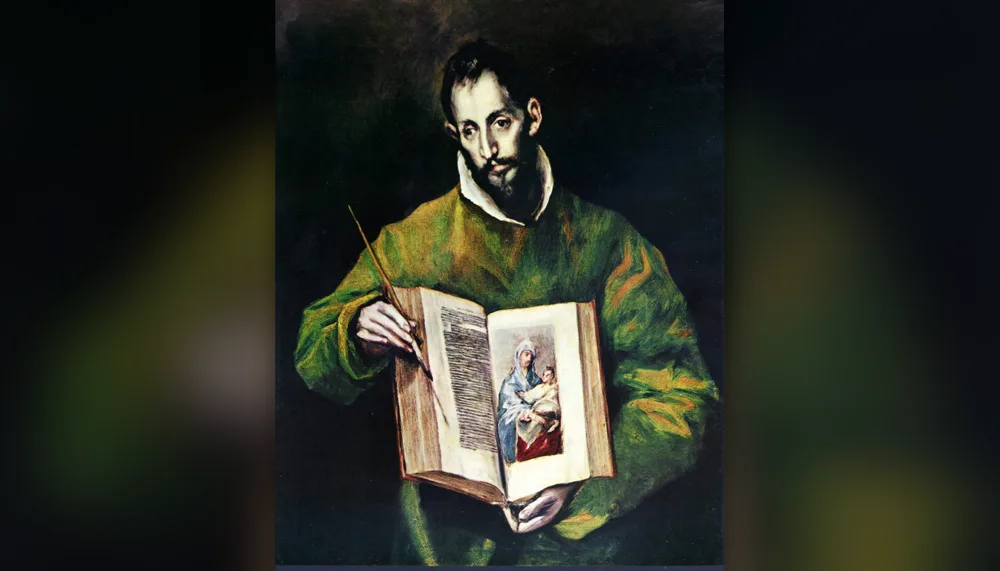
The novena to St Luke is a nine-day prayer to the Evangelist whom St Paul calls "the beloved physician" — a Greek doctor of Antioch who gave his learning, his pen and, tradition says, his brush to the Gospel. It is prayed for the sick and for those who care for them, for surgeons and nurses and artists, and for the grace to know Our Lord's word as Luke knew it; a man who spent his life healing bodies is a natural friend to bring our bodies and our souls before God. It is traditionally begun on 10 October and closed on 18 October, the day of his feast, though it may be said whenever a pressing cause demands it.
Below is the full text as the Iter Fidei app prays it: the daily invocation, the nine days with their meditations and proper prayers, and the closing versicle and Collect of the Roman Missal. If you are new to this form of prayer, our guide to what a novena is explains why the Church prays for nine days and no fewer.
The St Luke novena: how the nine days are built
The shape is the same every day. Begin with the Sign of the Cross, recollect yourself a moment, and say the daily invocation, naming your intention. Then read the meditation proper to the day — one feature of St Luke's life or of his Gospel — and say the prayer that follows from it. Each day closes with the Our Father, three Hail Marys, and the Glory Be; on the ninth you add the versicle and the Collect of his feast.
Each day takes about five minutes, and the nine meditations move through Luke's whole figure — the physician, the companion of the Apostle, the evangelist, the historian, and the witness faithful to the end.
The daily prayer of the novena
Begin each of the nine days with the Sign of the Cross.
In the name of the Father,
and of the Son,
and of the Holy Ghost.
Amen.
Recollect thyself a moment in silence, then say the daily invocation, which is recited on each of the nine days before the meditation proper to the day.
St Luke, evangelist and beloved physician, who didst gather from the very lips of the Virgin and the Apostles the mysteries of the Saviour's life, I trust in thy powerful intercession before the Lord. Thou who didst so faithfully serve the Gospel of mercy, obtain for me of God the health of soul and body, the love of His word, and the spirit of prayer; and I earnestly beseech thee to obtain for me also, if it please God and if it be good for my soul, the grace I so ardently ask in this novena.
Here name, simply and plainly, the intention thou entrustest to St Luke — the same throughout the nine days.
St Luke, evangelist of mercy, pray for us. Amen.
Day 1 — The physician of Antioch
Luke was born at Antioch in Syria, a great city of Greek culture, of a heathen family. He learned medicine and letters, and practised the art of healing bodies. Touched by grace, he came to know Christ and embraced the faith; alone of the four evangelists, he came not of the Jewish people. His human learning was no hindrance, but a gift he laid down whole at the feet of the Lord.
St Luke, thou didst set thy learning and thy calling at the service of God and of souls: obtain for all who labour and study that they may hallow their profession, and make of their talents an offering to the Lord who gave them.
Our Father, who art in heaven,
hallowed be Thy name.
Thy kingdom come.
Thy will be done
on earth as it is in heaven.
Give us this day
our daily bread.
And forgive us our trespasses,
as we forgive
those who trespass against us.
And lead us not into temptation,
but deliver us from evil.
Amen.
Then three times:
Hail Mary, full of grace;
the Lord is with thee.
Blessed art thou amongst women,
and blessed is the fruit of thy womb, Jesus.
Holy Mary, Mother of God,
pray for us sinners,
now and at the hour of our death.
Amen.
Glory be to the Father, and to the Son,
and to the Holy Ghost.
As it was in the beginning,
is now, and ever shall be,
world without end.
Amen.
Day 2 — The companion of St Paul
Luke attached himself to the Apostle of the nations and followed him in his journeys and his labours. St Paul calls him the beloved physician; and when all had forsaken him in his prison at Rome, he could write that Luke alone remained with him. Faithful to the end, he shared the perils, the sea, the chains, and the preaching of the Gospel to the heathen.
St Luke, faithful and devoted companion of the Apostle amid dangers and trials: obtain for us fidelity in friendship, constancy in upholding those who bear the burden of the day, and the courage never to forsake those whom God hath entrusted to our love.
Then the Our Father, three Hail Marys, and the Glory Be, given in full on the first day.
Day 3 — The evangelist of mercy
It is to St Luke that we owe the sweetest parables of mercy: the prodigal son whom the father runs to embrace, the good Samaritan who binds the wounds of the stranger, the lost sheep borne upon the shoulders, Zacchaeus come down from his tree, and the good thief to whom Christ opens paradise. His Gospel shows the Saviour as the friend of sinners and the physician of ailing souls.
St Luke, thou who didst so well portray the mercy of God towards sinners: obtain for us a boundless trust in His pardon, a heart merciful to those who have offended us, and the grace never to despair of the goodness of the Father.
Then the Our Father, three Hail Marys, and the Glory Be.
Day 4 — The evangelist of the Virgin
St Luke alone hath kept for us the account of the Annunciation, the Visitation, the canticle of the Magnificat, and the hidden mysteries of the childhood of Jesus. These things he could have had only from the very lips of the Virgin, who kept all these words and pondered them in her heart. An ancient tradition holds that he painted the first likeness of Our Lady, and for this he is named the painter of the Virgin.
St Luke, who didst gather from the lips of Mary the mysteries of the Saviour's birth, and didst honour her by thy pen and, as they say, by thy brush: obtain for us a tender devotion to the Mother of God, and the grace to ponder, as she did, the words and works of her Son.
Then the Our Father, three Hail Marys, and the Glory Be.
Day 5 — The evangelist of prayer
More than any other, St Luke shows us the Saviour at prayer: at His baptism, before choosing the Apostles, upon the mountain of the Transfiguration, and through the night in the garden. To him alone we owe the parables of the importunate friend, of the widow who presses the judge, and of the publican who smites his breast. His Gospel teaches that we must always pray and never grow weary.
St Luke, who didst gather Christ's teaching on persevering prayer: obtain for us a spirit of prayer that loseth not heart, the confidence to knock unceasingly at the door of the Father, and the humility of the publican who found grace before God.
Then the Our Father, three Hail Marys, and the Glory Be.
Day 6 — The historian of the infant Church
After his Gospel, St Luke wrote the Acts of the Apostles, wherein he recounts the descent of the Holy Ghost at Pentecost, the first steps of the Church, the preaching of Peter, and the apostolic journeys of Paul. An attentive witness, he had followed all things carefully from the beginning, that he might hand down to us a sure and true history of salvation.
St Luke, faithful historian of the wonders of God and of the beginnings of the Church: obtain for us the love of truth, reverence for holy Scripture, and the grace to recognize in all our life the working of the Holy Ghost who buildeth the Church.
Then the Our Father, three Hail Marys, and the Glory Be.
Day 7 — The symbol of the ox
Among the four living creatures that surround the throne of God, the Church hath given to St Luke the ox, the animal of sacrifice. For his Gospel opens in the Temple, beside the priest Zacharias offering incense, and it dwells more than the others upon the priesthood of Christ and the oblation of the Cross. Luke teaches us that the whole life of the Saviour is a sacrifice offered for our salvation.
St Luke, whose Gospel sings the sacrifice of the Saviour and the eternal priesthood of Christ: obtain for us to unite our pains and our labour to the oblation of the Cross, and to make of all our life an offering pleasing to God.
Then the Our Father, three Hail Marys, and the Glory Be.
Day 8 — The patron of physicians and artists
Because he was a physician and, according to tradition, a painter of the Virgin, St Luke is honoured as the patron of physicians, surgeons, and artists. He teaches those who heal that to cure the body is a work of charity, and those who paint or carve that beauty is made to lift the soul toward God. In him, science and art become servants of the Gospel.
St Luke, patron of physicians, of those who nurse the sick, and of artists: obtain for the sick their healing or their patience, for those who tend them gentleness and skill, and for those who create the grace to serve by their art the truth and the beauty of God.
Then the Our Father, three Hail Marys, and the Glory Be.
Day 9 — The witness to the end
After the death of St Paul, tradition tells that Luke preached the Gospel in Greece, remained unmarried for the Kingdom, and served the Lord in fasting and prayer. He died at the age of eighty-four in Boeotia; and many of the ancients call him a martyr, hanged upon an olive tree for the name of Christ. Thus he bore ever in his body the mortification of the Cross, for the honour of that name which he had preached to the nations.
St Luke, who didst bear all thy life the mortification of the Cross for the honour of the name of Christ and wast faithful to Him even unto death: intercede for us before the Lord, obtain for us the grace we ask in this novena, and the happiness of joining thee one day in Heaven with all the holy evangelists.
Then the Our Father, three Hail Marys, and the Glory Be.
The closing of the novena
On the ninth day, and fittingly on each day, add the versicle and the Collect of St Luke's feast.
V. Pray for us, O holy Luke.
R. That we may be made worthy of the promises of Christ.
Let us pray.
May Thy holy evangelist Luke intercede for us, we beseech Thee, O Lord, he who continually bore in his body the mortification of the Cross, for the honour of Thy name. Through Our Lord Jesus Christ, Thy Son, who liveth and reigneth with Thee in the unity of the Holy Ghost, God, world without end. Amen.
In Latin, as the Missal gives it on 18 October:
Intervéniat pro nobis, quǽsumus, Dómine, sanctus tuus Lucas Evangelísta: qui crucis mortificatiónem iúgiter in suo córpore, pro tui nóminis honóre, portávit. Per Dóminum nostrum Iesum Christum, Fílium tuum, qui tecum vivit et regnat in unitáte Spíritus Sancti Deus, per ómnia sǽcula sæculórum. Amen.
Close with the Sign of the Cross.
In the name of the Father,
and of the Son,
and of the Holy Ghost.
Amen.
The novena to St Luke for healing
Most who come to St Luke come with a sickness — their own, or one they carry for somebody they love. Nothing in the text needs changing: the novena is already a healing novena. The daily invocation asks for "the health of soul and body," and the eighth day asks outright "for the sick their healing or their patience." What you add is your intention, named plainly at the place marked and kept the same for nine days: this person, this diagnosis, this fear.
Two things are worth saying honestly. The order of the petition is not accidental: soul before body. St Luke, who recorded Our Lord forgiving the paralytic before He told him to take up his bed, will not obtain for us a cure that costs us our soul.
And "healing or patience" is the true form of the request: God answers every novena, but not always by removing the illness, and a novena prayed with the reservation if it please God and if it be good for my soul is not a weaker prayer but a stronger one. If you are praying beside a sick bed, our prayers for healing and our prayers for the sick give shorter forms for the days between; and where the illness is grave, remember that the Church's own remedy is a sacrament — see the anointing of the sick.
The novena to St Luke for surgery
For an operation, count backwards: begin nine days before the date, so that the ninth day falls on the eve or the morning of the surgery. St Luke is asked here in a double capacity — as the physician who knows what a scalpel is, and as the patron of surgeons, for whom the eighth day asks "gentleness and skill." Name in your intention both the patient and the surgeon; it is an old and very sane instinct to pray for the hands that will do the work.
If the date moves, do not restart out of scruple: finish the nine days and go on praying. If the surgery falls mid-novena, the remaining days are prayed for the recovery. Many add a prayer before surgery on the morning itself, and some join to St Luke the intercession of St Peregrine for cancer, or of St Raphael the Archangel, whose name means "God heals."
Other ways this novena is prayed
For physicians, nurses and students of medicine. Made in the nine days before 18 October, this is the traditional novena of the medical professions, and the first and eighth days are written for them: that they may hallow their profession, and make of their talents an offering.
For artists and painters. Because of the tradition that Luke painted Our Lady, guilds of painters took him for their patron from the Middle Ages onward. Any work of sacred art begun in October is fittingly begun with these nine days.
For the love of Scripture. A quieter use, and perhaps the best: read each day a chapter of Luke's own Gospel alongside the meditation. Nine days will not carry you through all twenty-four chapters, but they will carry you through the infancy narrative, and the Magnificat will never sound the same afterwards.
A short form. If you cannot manage the full text on a given day, the irreducible minimum is the daily invocation, your intention, and one Our Father, three Hail Marys and a Glory Be. Better a short novena prayed all nine days than a long one abandoned on the fourth.
A printable copy. People often look for a St Luke novena PDF to carry to a hospital; this page prints cleanly from any browser.
How to pray the St Luke novena
When to begin. Counting is the only thing people get wrong: the last day is the feast, so nine days back from 18 October inclusive gives 10 October. In the 1962 calendar the feast is kept as a Double of the Second Class.
Where and how. Anywhere, aloud or silently, alone or with the family. Before a crucifix or an image of Our Lady is better than nothing before your eyes, but St Luke's own Gospel was written for people on the road, and this novena has been prayed in waiting rooms more often than in chapels.
If you miss a day. Do not restart out of anxiety — take it up the next day and carry the novena to its ninth. Perseverance is the whole point; St Luke is precisely the evangelist who recorded Our Lord's command that we ought always to pray and not to faint.
Who was St Luke? A traditional account
It is from St Paul himself that we learn most of what we know. Luke is not named among the helpers whom Paul lists as Jews, so he was a gentile; he was a fellow worker — "Mark, Aristarchus, Demas and Luke, who share my labours" — and a medical man, "Luke, the most dear physician," who doubtless had the care of Paul's much-tried health. According to Eusebius his home was Antioch, and he was almost certainly a Greek.
He first speaks in his own name in the Acts when the Apostle sailed from Troas into Macedonia; from that hour he seems never to have left him, save at his order for the service of the churches, and he was with him in both Roman imprisonments. In the last letter, after those famous words to Timothy — "I have fought a good fight: I have finished my course: I have kept the faith" — the Apostle adds four words that are St Luke's whole eulogy: Only Luke is with me.
He wrote his Gospel, as he explains himself, that Christians might know the verity of the words in which they had been instructed: he was in the first place a historian and a recorder, writing for Greeks. His sources he names — those "who from the beginning were eye-witnesses and ministers of the word" — and it seemed good to him also, "having diligently attained to all things from the beginning," to set them out in an ordered narrative. His alone is the full account of the Annunciation and of the Visitation; he relates six miracles and eighteen parables found in no other Gospel. The Acts he wrote as an appendix, and from its thirteenth chapter he almost confines himself to St Paul, of whose actions he had been an eye-witness.
Of what befell him after St Paul's martyrdom there is no certain knowledge, and the later statements are hard to reconcile. But an early and widespread tradition holds that he was unmarried, wrote his Gospel in Greece, and died at the age of eighty-four in Boeotia. St Gregory Nazianzen (d. 390), who speaks of Greece as the chief field of Luke's evangelism, is quoted as the first to say that he was martyred, and the later accounts add the olive tree on which he was hanged — though Gregory's words do not certainly bear that sense, and the martyrdom is more than doubtful.
The ninth day of the novena follows the received account, as the older books do, and the reader may hold it as the tradition holds it. Not in doubt is that the Emperor Constantius II (d. 361) had his reputed relics translated from Boeotian Thebes to Constantinople.
Two things the tradition gives him beside. The ox, or calf, of the four symbolic living creatures of Ezechiel was assigned to Luke, and St Irenaeus explains the choice by the sacrificial element at the opening of his Gospel — the priest Zacharias at the altar of incense. And the painter's brush: a writer of the earlier sixth century states that the Empress Eudokia had sent to St Pulcheria an image of Our Lady painted by St Luke, and other pictures were afterwards attributed to him.
Here the older tradition is candid with us — St Augustine says plainly that nothing was known of the bodily appearance of the Blessed Virgin. What is certain, and greater, is that no man has suggested more subjects to more artists than the evangelist who described the Annunciation; and it is on these grounds that he is honoured as patron of physicians, of surgeons, and of painters, and stands among the saints of the Church.
Frequently Asked Questions
What is the St Luke novena?
A nine-day prayer to St Luke the Evangelist: a daily invocation in which you name your intention, a meditation and proper prayer for each day, and the Our Father, three Hail Marys and Glory Be, closing with the versicle and the Collect of his feast from the Roman Missal.
When do you pray the novena to St Luke?
Traditionally from 10 to 18 October, so that the ninth day falls on his feast. It may also be prayed at any time of need — before surgery, at a diagnosis, or when beginning a work of medicine or of art.
Is there a novena to St Luke for healing?
Yes — this is it. The daily invocation already asks "the health of soul and body," and the eighth day asks for the sick "their healing or their patience." Nothing need be changed: name the sick person as your intention and keep it the same for nine days.
How do you pray the St Luke novena for surgery?
Count nine days back from the operation so that the ninth day falls on its eve or its morning, and name in your intention both the patient and the surgeon. If the date changes, finish the nine days regardless and pray the remainder for the recovery.
Why is St Luke the patron saint of physicians?
Because he was one. St Paul calls him "the most dear physician" in the Epistle to the Colossians, and the Church has honoured him from antiquity as patron of doctors, surgeons and nurses — and, on the tradition that he painted Our Lady, of artists as well.
Was St Luke an apostle or an evangelist?
An evangelist, not one of the Twelve. He did not see Our Lord in the flesh; he wrote, as he says himself, from those "who from the beginning were eye-witnesses," above all from St Paul and — for the infancy of Christ — almost certainly from the Blessed Virgin herself.
What is St Luke's novena prayer?
The invocation beginning "St Luke, evangelist and beloved physician, who didst gather from the very lips of the Virgin and the Apostles the mysteries of the Saviour's life…" — given in full above, and followed each day by the proper prayer of that day.
Can I pray the St Luke novena for someone else?
Yes, and it is one of the commonest uses. Name the person on the first day and keep the same intention throughout. Praying for another is an ordinary work of mercy and one of the surest fruits of the communion of saints.
Pray the novena to St Luke with day-by-day reminders and audio for each of the nine days in the Iter Fidei app. Download it here.
Sources. Holy Scripture, Douay-Rheims version (Gospel according to St Luke; Acts of the Apostles; Colossians iv, 14; II Timothy iv, 6-11); Butler's Lives of the Saints, 18 October; the Roman Missal and the Roman Martyrology, feast of St Luke the Evangelist, 18 October; St Irenaeus, Adversus Haereses, III; St Gregory Nazianzen; St Augustine, De Trinitate, VIII.