
News
Livestreamed execution at Fort Hood: the military archbishop refuses the spectacle
A U.S. military archbishop opposes the livestreamed firing-squad execution at Fort Hood; tradition judges the sword, not the spectacle.
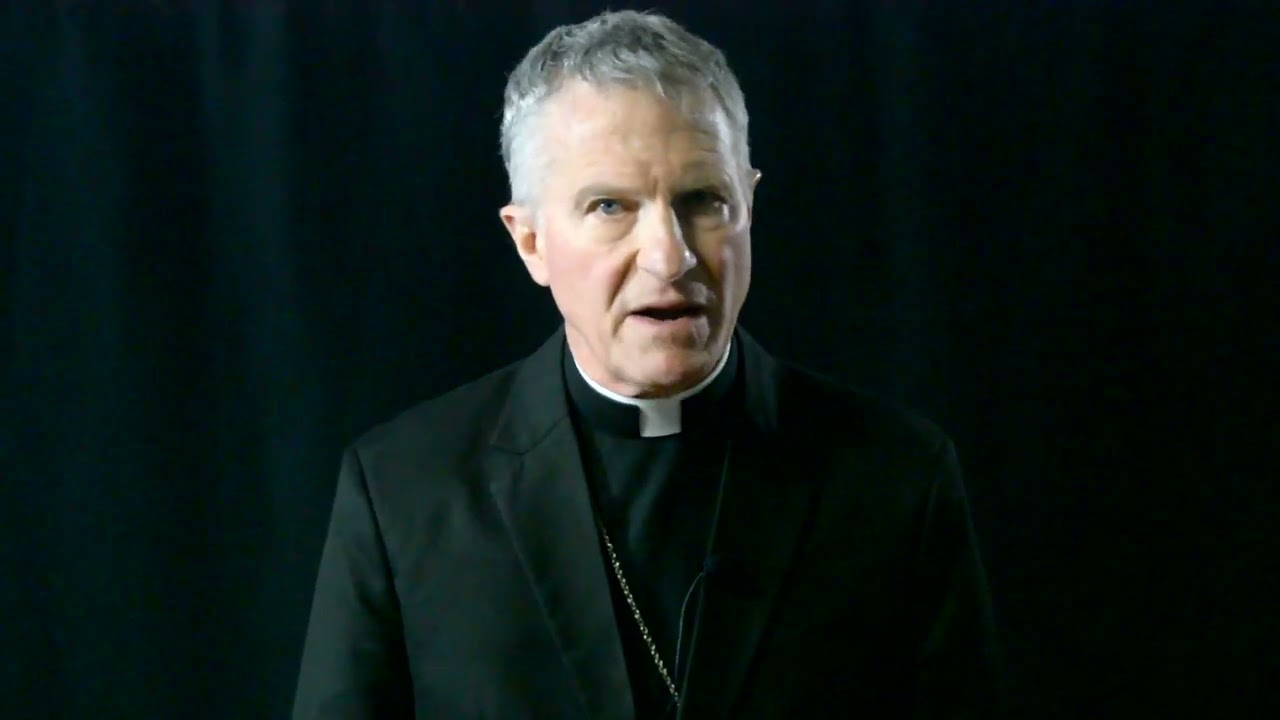
On October 12, 2026, Archbishop Timothy P. Broglio, head of the Archdiocese for the Military Services, USA, made public a statement opposing the execution of Nidal Malik Hasan. A former Army psychiatrist, Hasan was convicted of killing thirteen people and wounding thirty-two others in the 2009 Fort Hood shooting; he now uses a wheelchair. President Donald Trump approved execution by firing squad; Defense Secretary Pete Hegseth announced on October 8 that it would be held at Fort Hood on December 3 and made public, with these words: "We'll make sure that people are able to watch it, that it's public." Were it livestreamed, it would be the first execution broadcast to the public in the United States; the country's last public execution dates to 1937. Legal observers note, however, that appeals could push the date past December 3.
The archbishop, who has led the military ordinariate since 2008, spoke hours after an audience with Pope Leo XIV. He obliges any Catholic assigned to the firing squad to request to be excused: "As I would in the case of a procured abortion, I oblige any Catholics assigned to the firing squad to request to be excused from this action contrary to the teaching of the Church." He asks: "do we really want to imitate the terrorists of this world and make a public spectacle of barbarically killing our adversaries?" and "Has the potential moral injury, which the members of the firing squad might experience, been considered?" "The dignity of the human person is again at stake," he concludes, invoking the Church's opposition to the death penalty and a recent clarification of doctrine.
What the Church Has Always Taught
Tradition does not number capital punishment among the killings forbidden by the fifth commandment. The Catechism of the Council of Trent teaches that the magistrate, the lawful bearer of the sword, may punish the guilty with death: far from violating the precept "Thou shalt not kill," he obeys it, for the end of this commandment is the protection of human life. Scripture says it plainly: "Whosoever shall shed man's blood, his blood shall be shed" (Genesis 9:6); and the prince "beareth not the sword in vain. For he is God's minister: an avenger to execute wrath upon him that doth evil" (Romans 13:4). Saint Thomas Aquinas confirms it: to take the life of a malefactor belongs to public authority, for the common good, and not to the private hand.
The Measure
On one point the archbishop meets tradition, and squarely. The sword is an act of justice, never an entertainment. To make it a broadcast spectacle is to substitute cruelty for justice and to imitate the very barbarism one claims to punish. Tradition has always distinguished the penalty inflicted for the order and safety of men from a killing handed over as a show; the livestream serves neither reparation nor defense, but curiosity. On this ground, the statement holds.
Two supports, however, give way under examination. To present capital punishment as such as "contrary to the teaching of the Church" and to lean on a recent clarification of doctrine is to set a novelty against the constant teaching: Trent, Scripture, and the doctors recognize in lawful power the right of the sword, and no authority before 1958 withdrew it. And to compare the execution of a convicted murderer to a procured abortion erases the very distinction on which the fifth commandment rests: that of the innocent and the guilty. Abortion kills an innocent; the capital sentence strikes a condemned man. To hold them for one and the same act is to lose the thread tradition never let go.
Let the faithful hold both parts. That a soldier should recoil from serving a degrading spectacle is just, and the moral injury invoked is real; but its cause is the cruelty of the staging, not a refusal of the State's right to punish. One can condemn the livestream without denying justice; one must hold both.
Sources. Catechism of the Council of Trent (1566), on the fifth commandment, on the right of the magistrate to punish the guilty with death. Saint Thomas Aquinas, Summa Theologica, IIa-IIae, q. 64, aa. 2 and 3. Genesis 9:6; Epistle to the Romans 13:4 (Douay-Rheims, Vulgate).