
News
The Church in Spain unveils a “guide for the care of the abuser”
The Church in Spain's child-protection offices unveil a “guide for the care of the abuser” and an institutional “pact” with him.
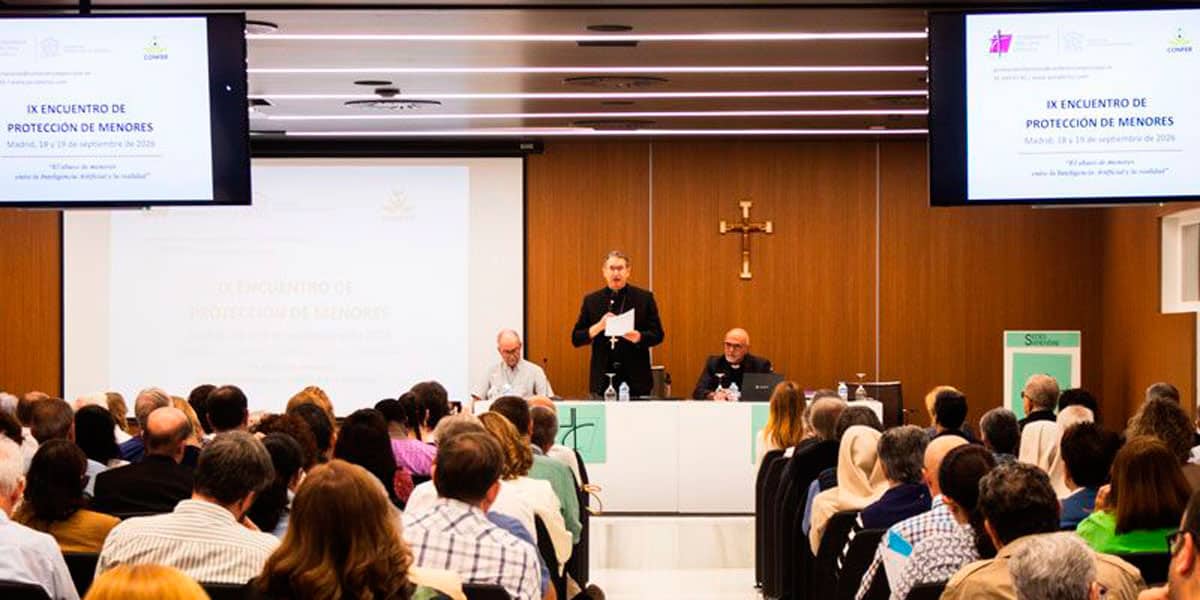
The Church in Spain's Offices for the Protection of Minors presented, at their ninth meeting held in Madrid on 18 and 19 September 2026, two new instruments: a “Guide for the care of the perpetrator of sexual abuse against minors or vulnerable adults within the Church” and a “Dictionary of Restoration and Healing.” The guide, still being edited, was drawn up by a study group of ten — laity, religious men, religious women and priests — and is addressed to dioceses, institutes of consecrated life and societies of apostolic life, for the accompaniment of those who have committed abuse or who present risk factors for committing it.
The Lord fixed the measure of this crime in a single sentence: “It were better for him that a millstone were hanged about his neck and he cast into the sea, than that he should scandalize one of these little ones.” Before the sin that destroys the innocent, tradition knows first neither psychodiagnosis nor prognosis, but justice: the punishment of the guilty, the reparation owed, the guarding of the flock against the wolf.
The Catechism of the Council of Trent teaches that to punish the guilty according to the law is not to break the fifth commandment but to keep it, for the magistrates are “the legitimate avengers of crime,” and public justice avenges the order that has been wounded and protects the innocent. Charity toward the sinner is real, but it does not suspend justice, nor does it return the sheep to the predator's pasture.
The guide's central contribution is an “Institutional Pact with the perpetrator,” presented as “a collegial instrument allowing the measures agreed in each accompaniment process to be made concrete, supervised and evaluated,” and not the decision of a single superior or bishop. According to a draft text, “this pact comprises a psychodiagnosis, a treatment or therapeutic process, a prognostic orientation and a plan of security and care,” the whole “in a perspective of responsibility, prevention and care.”
The meeting also set aside time for the testimonies of victims who had carried through processes of integral reparation. The displacement can be measured: the diagnosis and prognosis of the perpetrator occupy the center of the apparatus, where the received discipline placed first the expiation of the crime and the safety of the little ones. A lexicon of “restoration” and “healing” names the process in the register of care; it remains for justice to name its own.
Sources. Catechism of the Council of Trent (1566), on the fifth commandment and the public power to punish crime; Gospel according to Saint Luke (XVII, 2) and Saint Matthew (XVIII, 6), Douay-Rheims version of the Vulgate.