
News
Before 49 mission bishops: a warning against liturgical experimentation
In Rome, an under-secretary for Divine Worship warns forty-nine mission bishops against liturgical experimentation, syncretism, and the folklorization of worship; tradition, stricter still, reserves the received rites to the Church alone.
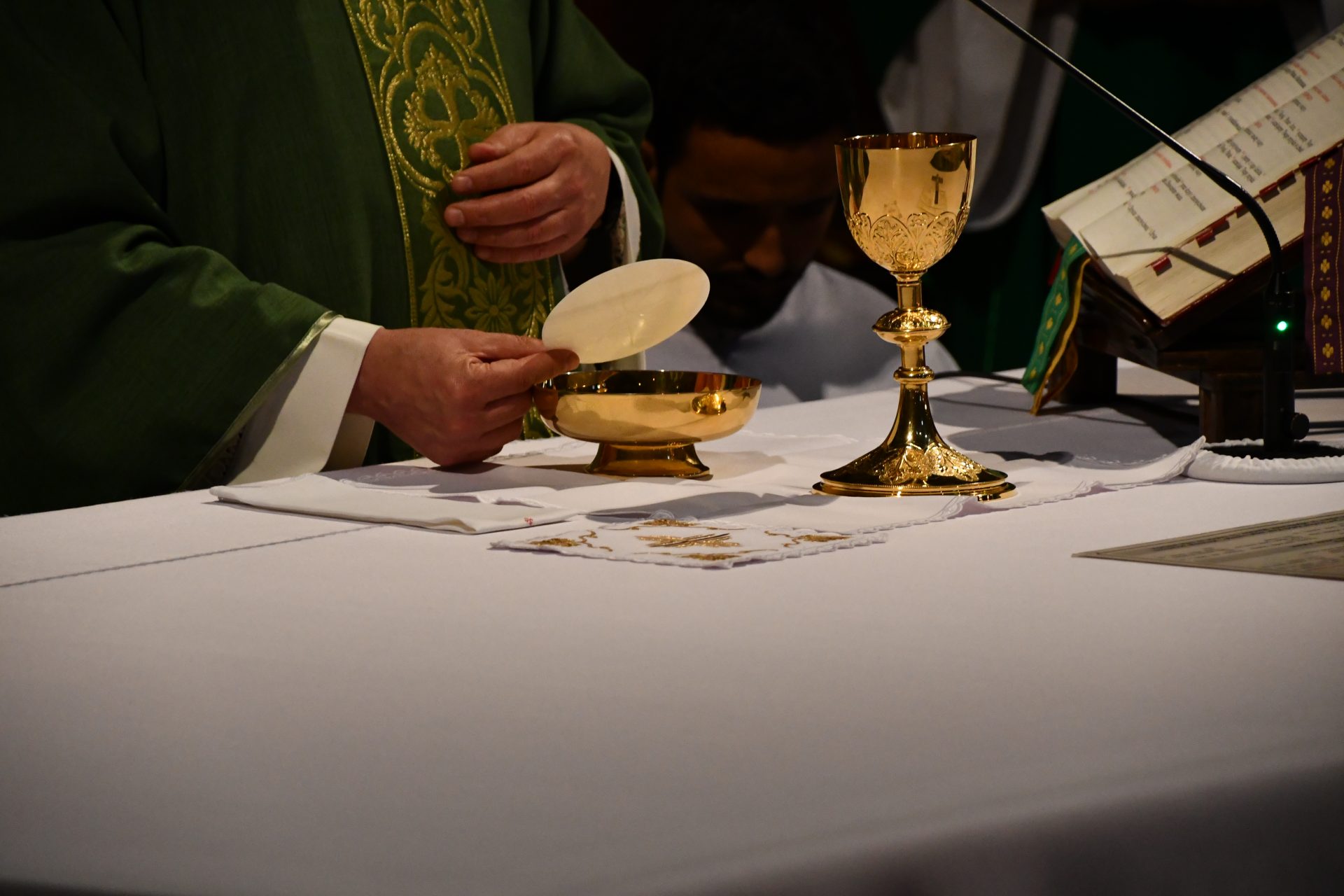
In Rome, forty-nine newly appointed bishops, all from mission territories, followed a formation course during which the under-secretary of the Dicastery for Divine Worship and the Discipline of the Sacraments, Msgr. Aurelio García Macías, warned them against three perils: useless innovations, syncretism, and folklore. Inculturation, he cautioned, cannot be reduced to mechanically grafting local songs, dances, or instruments onto worship: « no culture is the Gospel », culture bearing at once « seeds of the Word » and « wounds of sin ». To blend Christian worship with traditional religions, or to treat the liturgy as a spectacle: this is what a bishop must set aside. « The liturgy belongs to Christ and to the Church. »
He recalled that no change should be introduced without « a true and certain benefit for the Church », that inculturation is not improvised and does not bend to the ideas of a single bishop, priest, or group, but requires study, prayer, experience, and discernment. The bishop, he added, is not a « liturgical policeman » but the « liturgist of his diocese ». And he concluded: « in the last analysis, the liturgy is not our own work; it is Christ who continues to act in his Church. » These words reach us through concordant reports but in a single language, and the phrases in quotation marks are restitutions, not the exact words spoken.
The rule the Church has always held
This reminder says nothing new; it restates, in more cautious terms, a law the Church fixed under pain of anathema. Public worship has never been the property of the celebrant. The Council of Trent struck with anathema anyone who holds that the received and approved rites of the Catholic Church, used in the solemn administration of the sacraments, may be despised, or omitted without sin, or changed into other, new ones, by any pastor whatever according to his own judgment.
The principle invoked before these bishops — to introduce nothing without « a true and certain benefit for the Church » — was not born at the council that formulated it: it is the weakened translation of that Tridentine rule, which Pius XII had again imposed in Mediator Dei by reserving to the authority of the Church alone the governance of the liturgy, and forbidding anyone to introduce the least novelty on his own initiative.
The measure
On the essential, the warning rejoins tradition and deserves to be welcomed without reserve: syncretism corrupts worship, spectacle profanes it, and the liturgy is « neither a museum of unchanging forms nor a permanent laboratory ». The word is right against the laboratory. But tradition goes further than the frame in which this reminder is set. Where one speaks of « inculturation » to be led by « study and discernment », Trent knows only one door, and it closed it: the received rites are not adapted at the discretion of a bishop, a priest, or a group, however prudently.
What the speaker reproaches in improvisation, the perennial law already refused to innovation, even authorized, once it touches what has been received. To acknowledge, as he did, that « the liturgy belongs to Christ and to the Church » and that « it is not our own work », is to name the principle that condemns in advance every laboratory, permanent or provisional. The faithful formed in the Roman rite of 1962 need not look elsewhere for their rule: it holds entire in these words, and it is older than those who today rediscover it.
Sources. Council of Trent, session VII, On the Sacraments in General, canon 13, on the received and approved rites. Pius XII, encyclical Mediator Dei (1947), on the governance of the sacred liturgy. Catechism of the Council of Trent (1566), on the ceremonies of the holy Sacrifice.