
News
Chongqing consecrates an archbishop: Rome appoints, Beijing erases the pope
Andrea Ding Yang was consecrated archbishop of Chongqing on 8 September 2026 under the Sino-Vatican agreement: Rome foregrounds the pope's appointment, Beijing omits it.
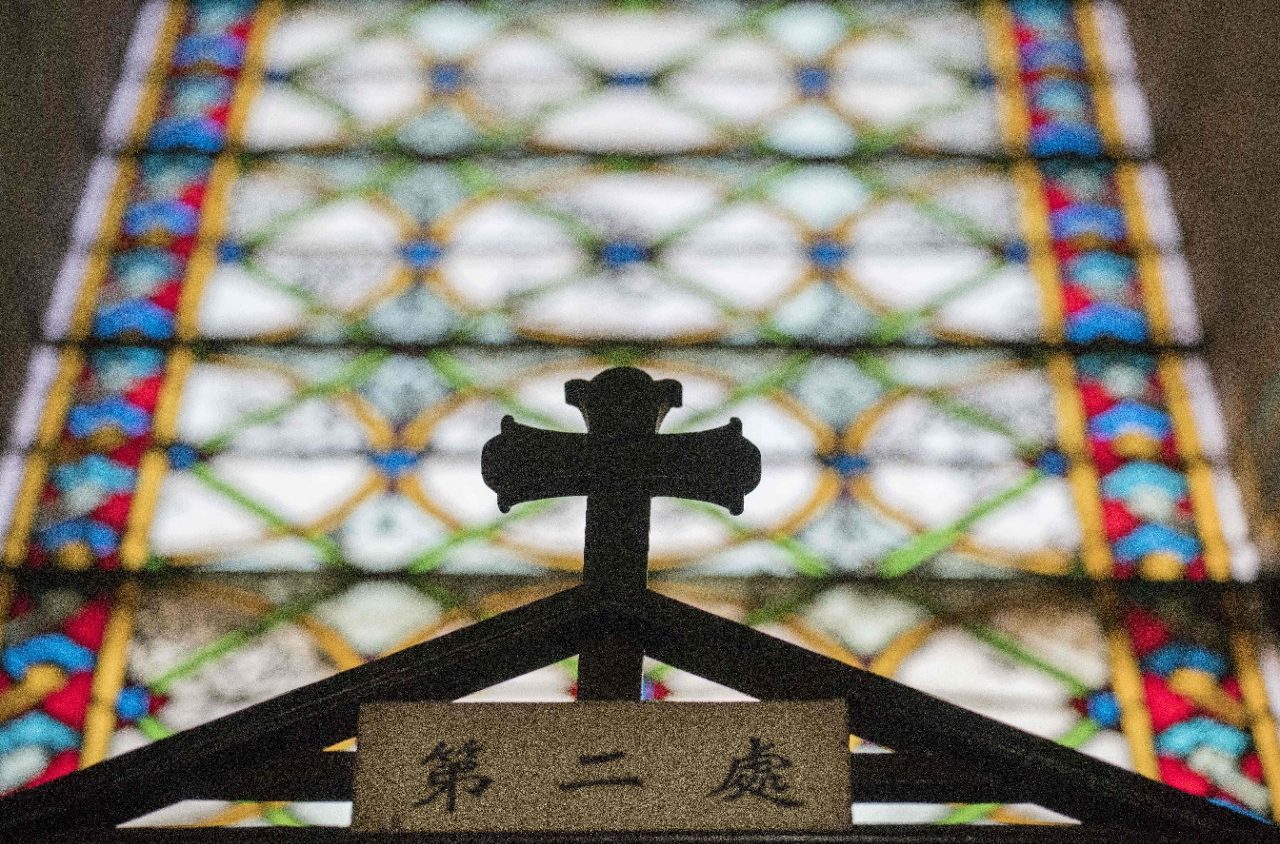
On 8 September 2026, the feast of the Nativity of the Most Blessed Virgin Mary, Andrea Ding Yang was consecrated archbishop of Chongqing, a see left vacant since 26 March 2001 — nearly twenty-five years. The principal consecrator was Joseph Li Shan, bishop of Beijing and president of the Patriotic Association of Chinese Catholics, joined by six co-consecrators, before some three hundred and fifty priests, religious, seminarians, and faithful.
According to the bulletin of the Holy See Press Office, Pope Leo XIV had appointed Ding Yang archbishop of Chongqing on 28 July 2026, "having approved his candidacy within the framework of the Provisional Agreement between the Holy See and the People's Republic of China." Born on 16 September 1981 in the district of Hechuan, Ding Yang had been designated a candidate for the episcopate on 15 April 2026 by the official structures of Chinese Catholicism. He is the eighteenth bishop ordained or recognized since the Sino-Vatican agreement of 2018, and the eighth episcopal ordination of the pontificate of Leo XIV.
But the two accounts of the event do not coincide. The Holy See's communiqué foregrounds the pontifical appointment of 28 July and the Provisional Agreement. The communiqué of the diocese of Chongqing, circulated by the state-recognized Catholic bodies, says nothing of it: it mentions neither the pope, nor the appointment, nor the agreement, and confines itself to noting that the secretary general of the state-recognized Bishops' Conference, Yang Yu, read out that body's document of approval. The 2018 agreement, officially secret, was renewed in 2024 for four years.
What the Church has always taught
The constitution of the Church is not a negotiable convention. The Roman Pontiff freely appoints the bishops: such is the discipline the Church has fixed without ambiguity, "Eos libere nominat Romanus Pontifex" (Code of Canon Law of 1917, can. 329 §2). The Vatican Council defined that the pope holds over the whole Church a primacy not only of honour but of true jurisdiction (constitution Pastor aeternus, 1870). A bishop holds his authority neither from a civil assembly nor from the assent of a state, but from his communion with the See of Peter and from the pontifical mandate which alone makes his consecration licit.
This doctrine Pius XII applied word for word to China. In the encyclical Ad Apostolorum Principis (29 June 1958), he condemned episcopal consecrations conferred without a mandate from the Holy See and denounced the Patriotic Association which, under cover of patriotism, sought to withdraw Chinese Catholics from the obedience owed to the Roman Pontiff. Four years earlier, in Ad Sinarum gentem (1954), he had already rejected the principle of a Church "independent" of Rome in its governance.
The measure
Measured against this rule, the event carries its own contradiction. On one side, Rome affirms that the candidacy was approved by the pope, which would safeguard the pontifical mandate that tradition requires. On the other, the principal consecrator presides over the Patriotic Association, that very structure which Pius XII had reproved by name, and the diocesan communiqué erases the pope from the account entirely. What the acts themselves leave contested cannot be held as settled: one and the same consecration is told in two irreconcilable ways, one in which the pope appoints, the other in which he does not exist.
We do not settle what the documents leave open. We observe that the agreement remains secret, that its text escapes the judgment of the faithful, and that an instrument once reproved by the Magisterium today serves as the framework for the designation of bishops. Cardinal Joseph Zen, bishop emeritus of Hong Kong, called this arrangement an "incredible betrayal": that is his personal assessment, not a shared finding, and we report it as such.
For the faithful
The Catholic formed by tradition will hold to this: the authority of a bishop comes from his communion with Peter, never from the recognition of a civil power. Where a consecration honours the pontifical mandate, it is valid and licit; where it frees itself from it, no flag supplies for the mandate that is missing. It is not for the faithful to pronounce upon souls or upon the validity of offices: of that the Church alone is judge. It falls to them to pray for the Church in China, for those who have suffered there for decades, and to hold firmly the faith as the Church has always taught it.
Sources. Pius XII, encyclical Ad Apostolorum Principis (1958); Pius XII, encyclical Ad Sinarum gentem (1954); Vatican Council, constitution Pastor aeternus (1870); Code of Canon Law (1917), can. 329 §2; Catechism of the Council of Trent (1566), on the sacrament of Order.