
Novenas
Novena to St Cajetan
The traditional novena to St Cajetan, patron of job seekers and the unemployed — the 'father of Providence' prayer, the nine days' intentions, and the petition for bread and work, prayed before his feast on 7 August.
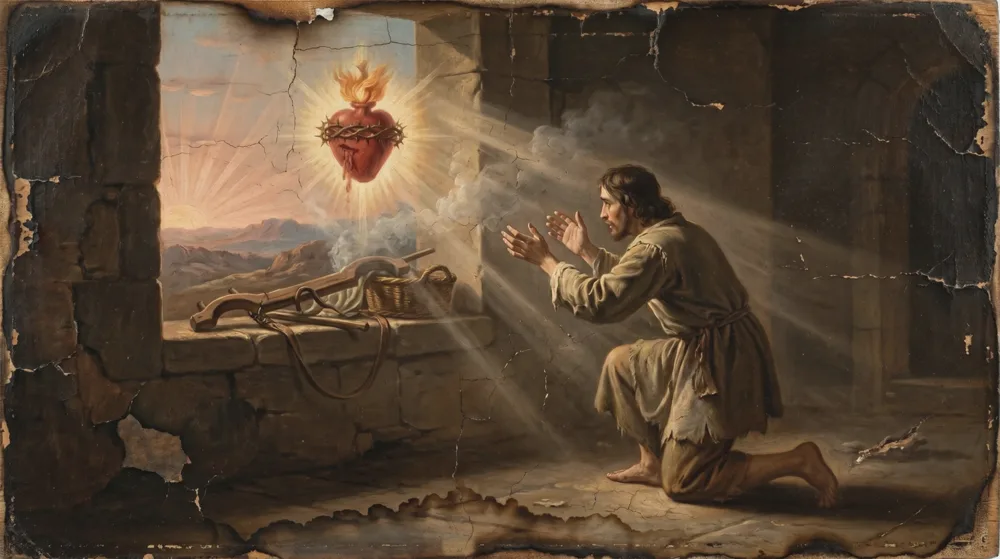
The novena to St Cajetan is the nine-day prayer said to the sixteenth-century priest whom the faithful acclaim as the father of Providence — the patron of job seekers, of the unemployed, and of all who must beg God for their daily bread and work. It is prayed above all when work has run dry, when a family cannot make ends meet, or when any pressing need calls for a trust in Divine Providence stronger than the fear of the moment. His feast falls on 7 August, and the nine days leading to it are the favoured time to pray it. Below we give the authentic prayers in full — the daily "father of Providence" invocation, the nine days' intentions, and the old petition for bread and work — with the true story of the saint who provided for the poor of Naples as he had learned to trust God for himself.
Who St Cajetan is, and why we bring him our need
St Cajetan of Thiene was a nobleman's son who gave up wealth, rank, and a promising career in law to serve the sick and the poor and to reform a corrupt clergy. He established the benevolent pawnshops — the montes pietatis, which lent to the poor without interest so they need not fall into the hands of usurers — and he cared for the incurables of Venice and Naples with his own hands. From that life of hidden charity comes his patronage of work and provision: he is invoked by the unemployed, by those seeking a job, by the poor, and by all in temporal want, because in life he was the friend of exactly such souls. If you are new to this form of prayer, see our guide to what is a novena; the fuller life of the saint is given further down this page.
The daily prayer: "Glorious Saint Cajetan, father of Providence"
This is the prayer at the heart of the devotion. It is said once on each of the nine days, with your intention named where marked:
Glorious Saint Cajetan, acclaimed by all people to be the father of Providence because you provide miraculous aid to all who come to you in need, I stand here before you today humbly asking that you present to the Lord the requests that I confidently deposit in your hands.
(Here name your request.)
May these graces that I now request help me to always seek the Kingdom of God and His righteousness, knowing that God — who dresses with beauty the flowers of the field and abundantly feeds the birds of the sky — will grant me all other things. Amen.
Saint Cajetan, pray for us!
After it, on each day, add one Our Father, one Hail Mary, and one Glory Be. Many begin the devotion with the old collect of his feast, which asks the very grace his whole life taught:
Almighty and everlasting God, who gave to blessed Cajetan Your confessor to imitate the apostolic manner of life: grant, by his intercession and example, that we may ever trust in You and seek only the things of heaven. Through our Lord Jesus Christ. Amen.
The nine days of the novena
The traditional novena carries a distinct intention for each of the nine days, drawn from the virtues St Cajetan lived. Say the "father of Providence" prayer above every day, and let each day's thought shape how you pray it.
Day One — Prayer. St Cajetan spent long hours before God, and taught that prayer is the key to every grace. We ask for the gift of prayer that is living, humble, confident, and persevering — the prayer he never let his own labours crowd out.
Day Two — The Blessed Sacrament. He longed to see Christians "flocking like little children to feed on the Bread of Life," and restored frequent Communion and the exposition of the Blessed Sacrament in his day. We ask for reverence and hunger for the Holy Eucharist.
Day Three — Devotion to Our Lady. We place ourselves under the protection of the Blessed Virgin Mary, and beg her aid especially at the hour of death, as St Cajetan did.
Day Four — The gift of faith. He gave his life to defend the faith against the errors of his age. We ask to prize the true faith above all things and to reject error swiftly and firmly.
Day Five — Hope in Providence. This is the heart of his patronage: an unshaken confidence that God, who feeds the birds and clothes the lilies, will not abandon those who trust Him. We ask for this hope in our own want.
Day Six — The love of God and neighbour. He served the incurables and the poorest of the poor for the love of Christ in them. We ask to love God with our whole heart and our neighbour as ourselves.
Day Seven — Humility. Nobly born, he chose the lowest company and the meanest work. We ask for the sincere humility that alone makes a soul fit to receive God's mercies.
Day Eight — Patience in adversity. Worn out by strife and disappointment, he still trusted God to the end. We ask to bear the trials and losses of this life patiently, for the sake of the glory to come.
Day Nine — Purity of heart. We ask, on this last day, for the grace of purity and Christian self-denial, and we commend our whole petition once more into his hands, that he may lay it before the Lord.
The St Cajetan novena for employment and for job seekers
Of everything brought to St Cajetan, the plea for work is the greatest — so much so that in many countries he is known simply as the patron of job seekers and the unemployed, and his feast is a day of pilgrimage for those asking bread and work. The reason is his own life: he lent to the poor without interest, found work and relief for the destitute, and never let a soul who came to him go away empty. A St Cajetan novena for employment uses the same "father of Providence" prayer above; name plainly the work you seek, and add this short petition:
St Cajetan, father of Providence and friend of the poor, you who fed the hungry and found relief for the destitute, obtain for me honest work by which I may support myself and those in my care. Provide, as you provided for the poor of your own day; and if this need be long in the answering, obtain for me the faith to trust that God, who feeds the birds of the air, will not forget His child. Amen.
Pray for the place you need — but ask first for work to do and for the strength to do it justly, leaving the outcome to God. This is the same trust that carries the novena to St Joseph, the carpenter who fed the Holy Family by his hands; the two saints are the surest patrons of all who labour and all who lack. For an urgent or seemingly hopeless need, many join to it the novena to St Jude, patron of desperate cases, or the swift help of the novena to St Expeditus.
How to pray the novena to St Cajetan
A novena is nine consecutive days of prayer. To end on his feast, begin on 30 July, so that the ninth day falls on 7 August — though the novena may be prayed at any time of year, whenever the need arises. Say the "father of Providence" prayer once each day at a fixed hour, name your intention, and add the Our Father, Hail Mary, and Glory Be. Where you can, join your petition to Holy Mass and Communion, or at least a decade of the Rosary. Above all, pray in submission: ask for the grace you need, but leave to God the manner and the moment of His answer, in the very trust in Providence that St Cajetan lived and taught.
The story of St Cajetan of Thiene
St Cajetan (Gaetano) was born at Vicenza in 1480, son of Caspar, Count of Thiene, and Mary di Porto. His father was killed in battle when the boy was two, and his widowed mother raised him so well that he was known from youth for an unusual goodness. He studied at the University of Padua, took the degree of doctor in civil and canon law in 1504, and was made a senator of his native town — but, resolved to serve God as a priest, he received the tonsure and went to Rome in 1506, drawn by a conviction that he was needed there for some great work.
Pope Julius II made him a protonotary, but on that Pope's death Cajetan gave up the office and spent three years preparing for the priesthood, being ordained in 1516 at the age of thirty-three. In Rome he had joined the confraternity of Divine Love, an association of devout clerics labouring for God's honour and the good of souls. Returning north, he sought out the sick and the poor of Vicenza, Verona, and Venice, and served those suffering from the most loathsome diseases in the hospitals of the incurables. "In this oratory," he said of his brethren, "we try to serve God by worship; in our hospital we may say that we actually find Him." At Venice he restored the exposition of the Blessed Sacrament and worked tirelessly to bring the people back to frequent Communion.
The Church of his day was, in the words of the age, "sick in head and members" — the corruption of the clergy weakening her before the assaults of the Protestant revolt. Cajetan judged that the remedy was to revive in the clergy the zeal of the first apostolic pastors. With three companions — chief among them John Peter Caraffa, bishop of Chieti (Theate), afterwards Pope Paul IV — he founded a new order of clerks regular: priests bound by vow and living in community, yet engaged in active preaching, the care of the sick, and the reform of the priesthood. On 14 September 1524 the four made their profession in St Peter's; from Caraffa's episcopal title they were called Theatines. During the last years of his life St Cajetan, with Blessed John Marinoni, established the montes pietatis — benevolent pawnshops that lent to the poor without interest, sparing them the usurer's grip. It is this above all that made him, for later ages, the patron of those in temporal want.
He served through the sack of Rome in 1527, through plague and famine at Venice, and through the founding of his order at Naples, where he refused the offer of an estate: "God is the same in both cities," he answered, when told the Neapolitans were poorer than the Venetians. Worn out with striving to appease civil strife and grieved by the suspension of the Council of Trent, he took to his bed in the summer of 1547. When his physicians urged him to lie on a mattress rather than the bare boards, he answered: "My Saviour died on a cross; allow me at least to die on wood." He died at Naples on 7 August 1547, and after a rigorous scrutiny of the many miracles worked by his intercession, he was canonized in 1671 by Pope Clement X. He remains one of the great figures of the Catholic reform, and one of the surest intercessors for all who must trust God for their daily bread. For the deeper reflection every such devotion should carry, see the Four Last Things.
Frequently Asked Questions
What is St Cajetan the patron saint of?
St Cajetan is the patron of job seekers, the unemployed, and workers, and more widely of the poor, of those in temporal need, and of gamblers and gamers who ask his help against their vice. His patronage of work and provision springs from his own life: he fed the hungry, cared for the incurable sick, and founded the montes pietatis that lent to the poor without interest. For this reason he is acclaimed the "father of Providence," and his feast is a day of pilgrimage for those seeking bread and work.
When is St Cajetan's feast day?
St Cajetan's feast is kept on 7 August, the day of his death at Naples in 1547. Because a novena is nine days, those who wish to end on the feast begin on 30 July; but the novena may be prayed at any time a need arises.
When should I start the St Cajetan novena?
To finish on his feast day, begin the nine days on 30 July, so that the last day falls on 7 August. There is no obligation to tie it to the feast, however — a novena to St Cajetan may be begun on any day, whenever you have a pressing need for work, bread, or the help of Providence.
Why is St Cajetan the patron of the unemployed and job seekers?
Because in his own life he was the friend and provider of the poor. He sought out the destitute, found them relief, and set up the benevolent pawnshops that lent to the needy without interest, so they need not despair or fall into the hands of usurers. The faithful, remembering this, bring him their own want of work and money with confidence that the friend of the poor on earth is their advocate in heaven — the "father of Providence" who obtains bread and work for those who ask.
How do I pray the St Cajetan novena for employment?
Say the "father of Providence" prayer once each day for nine days, naming plainly the work you seek, and add the Our Father, Hail Mary, and Glory Be. You may add the short petition for bread and work given above. Ask first for honest work to do and the strength to do it well, and leave the particular place and time to God's Providence, praying always Thy will be done. Join your novena to Mass and Communion where you can.
Is there a difference between the St Cajetan novena and the novena to St Joseph for work?
Both are sure recourses for the unemployed, and many pray them together. St Joseph is the carpenter who fed the Holy Family by the labour of his hands, the model of the working man; St Cajetan is the priest and reformer who provided for the poor and trusted wholly in Providence. St Joseph teaches the dignity of the work itself; St Cajetan teaches the confidence that God will supply. Praying to both, a soul in need of work leans on the two strongest patrons the Church gives it.
Can I pray the novena for a need other than employment?
Yes. Though he is best known as patron of job seekers, St Cajetan is the "father of Providence" for every temporal need — for money, for the poor, for a family that cannot make ends meet, for any grace that seems humanly out of reach. Name your request in the daily prayer and trust it to his intercession, together with the wider help of the whole Church in the Litany of the Saints.
Pray the novena to St Cajetan with day-by-day reminders and audio, in Latin and your own language, in the Iter Fidei app. Download it here.
Sources. Butler's Lives of the Saints, 7 August, St Cajetan, Confessor (born Vicenza 1480, founder of the Theatine Clerks Regular, the montes pietatis, died Naples 7 August 1547, canonized 1671); the traditional collect of the feast of St Cajetan; the novena prayer Glorious Saint Cajetan, father of Providence, with its nine days' intentions, as carried in traditional Catholic prayer-books; Holy Scripture, Matthew 6:26-33 (the birds of the air and the lilies of the field; "seek first the Kingdom of God and His righteousness").