
Novenas
Novena to St Elizabeth
The novena to St Elizabeth — the mother of St John the Baptist, patroness of mothers and those hoping to conceive, and the great St Elizabeth of Hungary, patroness of the poor — with the full prayers, plus the novenas to St Elizabeth Ann Seton and St Elizabeth of the Trinity.
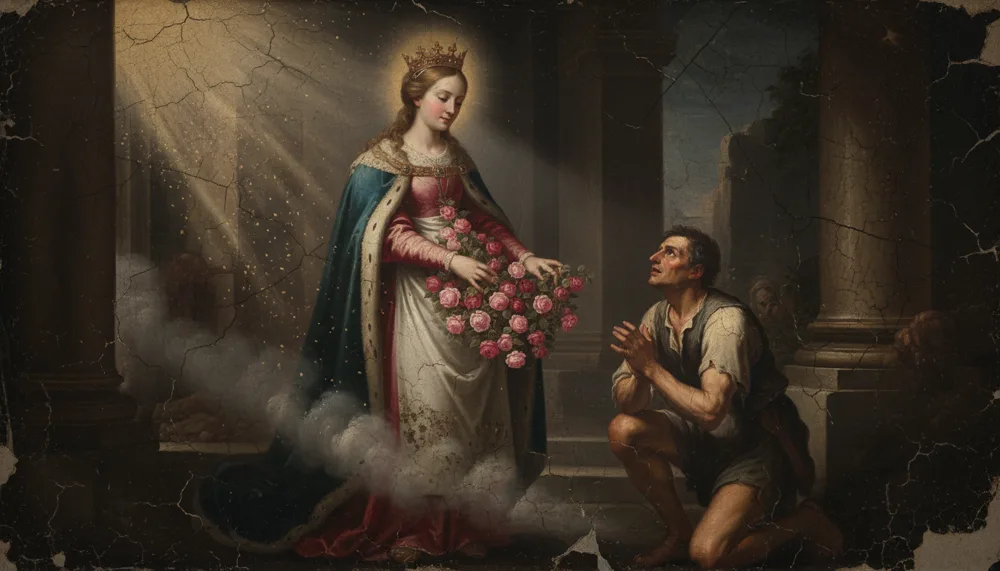
A novena to St Elizabeth is nine days of prayer asking the intercession of one of the several holy women the Church honours under that blessed name — most often St Elizabeth, the mother of St John the Baptist and cousin of Our Lady, the patroness of mothers and of those longing for a child; or St Elizabeth of Hungary, the widowed princess who became patroness of the poor. Because more than one saint bears the name, this page gives the full prayers for each, so you can be sure you are praying to the one you mean. If you are new to the practice, our guide to what is a novena explains the nine days and why the Church prays them.
Which St Elizabeth do you mean?
Four saints share the name, and the searches for a "novena to St Elizabeth" run to all of them. Here is the short guide before the prayers:
- St Elizabeth, mother of St John the Baptist — the kinswoman of the Blessed Virgin who greeted her at the Visitation (Luke 1). Patroness of expectant and barren women. Feast: 5 November. This is the "St Elizabeth novena" and the "novena to St Elizabeth, cousin of Mary."
- St Elizabeth of Hungary — a thirteenth-century princess, widow, and Franciscan tertiary, patroness of the poor, of widows, of bakers, and of charitable works. Traditional feast: 19 November.
- St Elizabeth Ann Seton — an American convert, widow, and foundress, the first native-born citizen of the United States to be canonized. Feast: 4 January.
- St Elizabeth of the Trinity — a French Discalced Carmelite mystic of the interior indwelling of the Blessed Trinity. Feast: 8 November.
The first two belong to the ancient and medieval treasury of the Church; the last two are modern saints, canonized in our own age, and we note their dates honestly below.
The novena to St Elizabeth, mother of St John the Baptist
This is the novena most people mean when they search simply for "St Elizabeth." She is the wife of the priest Zachary and the cousin of the Blessed Virgin Mary; barren and "well advanced in years" (Luke 1:7), she conceived St John the Baptist by the promise of the angel, and at the Visitation, filled with the Holy Ghost, she cried out the words we still pray in the Hail Mary: "Blessed art thou among women, and blessed is the fruit of thy womb" (Luke 1:42). For this reason she is the patroness of mothers, of the childless, and of women who wait in hope for a child. The novena is traditionally begun on 28 October to end on her feast, 5 November, though it may be prayed at any time of need.
Each of the nine days, make the Sign of the Cross and pray:
In the name of the Father, and of the Son, and of the Holy Ghost. Amen.
O glorious St Elizabeth, after many childless years of marriage, in your old age your faith in God was rewarded with the birth of a very special son — St John the Baptist, the herald of the Messiah. Help me, dear saint, to be patient and to trust in the will of God, knowing that He knows what is best for me.
O God, who chose St Elizabeth to play a central part in the mystery of our Redemption, her openness to Thy will is a model for us. May we follow Thee as faithfully as she did. This we ask through Christ our Lord. Amen.
(Here name your request.)
Our Father… Hail Mary… Glory be…
St Elizabeth, pray for us.
In the name of the Father, and of the Son, and of the Holy Ghost. Amen.
Because Elizabeth's story is bound up with the Visitation and the months she carried St John while her cousin carried the Lord, many join this novena to the Annunciation nine-month novena, and expectant mothers often add the novena to St Gerard Majella and the novena to St Anne, mother of Our Lady.
The novena to St Elizabeth for a child, or in barrenness
The oldest reason souls come to St Elizabeth is her own: she was barren, and God gave her a son when hope had passed. To ask her intercession for a child, a safe delivery, or patience while waiting is entirely fitting. Use the daily prayer above and name your intention at the marked place. Ask, as she did, in submission to God's will: her greatness was not that she bore a son but that she believed, and gave her child wholly back to God.
The novena to St Elizabeth of Hungary
St Elizabeth of Hungary is the second great St Elizabeth, and the one most searched after the biblical Elizabeth. A king's daughter who became a landgravine of Thuringia, then a widow at twenty, she gave herself and her wealth to the poor and the sick, entered the Third Order of St Francis, and died at twenty-four in 1231. She is patroness of the poor, of widows, of bakers, of nurses, and of Franciscan tertiaries. Her traditional feast is 19 November (kept on 17 November in the newer calendar), and the novena is prayed the nine days before it. Each day pray:
Dear St Elizabeth, you were always poor in spirit, most generous toward the poor, faithful to your husband, and fully consecrated to your Divine Bridegroom. Grant your help to all who are in need; teach widows how to bear their loss and to spend their days in the service of God; and obtain for me the grace I now ask.
(Here name your request.)
St Elizabeth of Hungary, pray for us.
Our Father… Hail Mary… Glory be…
To this the traditional prayer-books add an older and fuller invocation, an indulgenced prayer long carried in the manuals of devotion, which may be said as the novena's own prayer for the nine days:
Blessed Elizabeth, vessel elect of exalted virtues, thou dost show forth to the world by thy example what the virtues of Faith, Hope, and Charity are able to do in a Christian soul. Thou didst employ all the powers of thy heart to love thy God alone. Thou didst love Him with a love so pure and fervent that it rendered thee worthy to taste upon earth beforehand those favours and sweetnesses of Paradise which are given to souls invited to the nuptials of the divine and adorable Lamb of God. Thou, illumined by supernatural light and by a faith immovable, didst show thyself a true daughter of the Holy Gospel, seeing in the person of thy neighbour the Person of our Lord Jesus Christ, sole object of thy affections. Protect us in our dangerous pilgrimage; obtain for us the pardon of our sins, and open for us the way to enter and share with thee the Kingdom of God. Amen.
Because she was a Franciscan tertiary who saw Christ in the poor, this novena is often prayed alongside the devotions to St Francis of Assisi, whose spirit she made her own.
The novena to St Elizabeth Ann Seton
A note on this devotion: St Elizabeth Ann Seton (1774–1821) is a modern saint — a New York convert from the Episcopal Church, a widow and mother of five, who founded the Sisters of Charity and the first Catholic parochial school in the United States. She was canonized by Pope Paul VI in 1975, the first native-born citizen of the United States to be raised to the altars. We give her novena in full because it is widely sought and entirely orthodox; those keeping strictly to the 1962 books and calendar will not find her feast there. Her feast is kept on 4 January. The novena, drawn from her own words, is prayed each day:
Lord God, You blessed Elizabeth Ann Seton with gifts of grace as wife and mother, educator and foundress, so that she might spend her life in service to Your people. Through her example and prayers may we learn to express our love for You in love of our fellow men and women.
O Father, the first rule of our dear Saviour's life was to do Thy will. Let His will of the present moment be the first rule of our daily life and work, with no other desire but for its most full and complete accomplishment. Help us to follow it faithfully, so that, doing what Thou wishest, we may be pleasing to Thee.
(Here name your request.)
St Elizabeth Ann Seton, pray for us.
Our Father… Hail Mary… Glory be…
The novena to St Elizabeth of the Trinity
A note on this devotion: St Elizabeth of the Trinity (1880–1906) is a modern saint — a French Discalced Carmelite who died at twenty-six, canonized by Pope Francis in 2016. Her feast (8 November) and novena are recent; we include them because her doctrine of the soul as a dwelling-place of the Blessed Trinity is deeply sought and wholly sound, but those keeping the 1962 calendar will not find her there. The novena is prayed for the nine days before 8 November (beginning 30 October), and its heart is her own famous prayer. Each day pray:
O blessed Elizabeth of the Trinity, in your great love for God you were always close to your friends in their needs. Now that you are in heaven before the face of the Lord, intercede with Him for the intentions I now commend to you.
(Here name your request.)
Teach us, in faith and love, to live with the Holy Trinity in the depths of our hearts, and to radiate the love of God to others in our daily lives, as you did in order to be a praise of His glory.
St Elizabeth of the Trinity, pray for us.
Our Father… Hail Mary… Glory be…
Many add her great prayer O my God, Trinity whom I adore, which begins: "O my God, Trinity whom I adore, let me entirely forget myself that I may abide in You, still and peaceful as if my soul were already in eternity." Because she was a daughter of Carmel and of St Teresa of Avila, her novena sits naturally beside the devotions of St Thérèse of Lisieux, her near-contemporary, and any prayer to the Holy Trinity, the mystery she made her home.
How to pray a novena to St Elizabeth
However many saints share the name, the manner of praying is one. Choose the Elizabeth you mean and keep to her. Pray the daily prayer at a fixed hour for nine days running, without breaking the chain; name your intention each day; and count the nine days back from the saint's feast so the last falls on it. Add the Our Father, Hail Mary, and Glory be. Ask in submission to God's will — for the novena does not compel Heaven but commends a need to a friend of God who will carry it faithfully to Him.
Who was St Elizabeth?
St Elizabeth, mother of St John the Baptist
Elizabeth was of the priestly line of Aaron, the wife of the priest Zachary, and a kinswoman of the Blessed Virgin Mary. St Luke tells us both were "just before God" yet childless and old. While Zachary served in the Temple, the angel Gabriel promised him a son who would "go before Him in the spirit and power of Elias." When Mary, newly the Mother of God, came to the hill country of Juda, the infant John "leaped in the womb" of Elizabeth, who, filled with the Holy Ghost, spoke the first half of the Hail Mary. She is honoured on 5 November as patroness of mothers, of the barren, and of all who wait on God's promises.
St Elizabeth of Hungary, widow
Butler's account tells how Elizabeth, daughter of King Andrew II of Hungary, was betrothed in infancy to Louis, Landgrave of Thuringia, and raised at his court. Married young and happily, she filled the castle of the Wartburg with works of mercy — feeding the poor at her own table, building hospitals, and dressing with her own hands the sores that others fled. Her husband imitated rather than opposed her, until he took the Cross and died of fever at Otranto in 1227 on his way to the Holy Land.
Widowed and driven from her home, Elizabeth bore poverty and injustice without complaint, took the habit of the Third Order of St Francis, and spent her last years serving the sick at a hospice she built in Marburg. She died there in 1231, aged only twenty-four, and was canonized by Pope Gregory IX in 1235 — one of the swiftest canonizations in the Church's history. Her traditional feast is 19 November.
St Elizabeth Ann Seton and St Elizabeth of the Trinity
The two modern Elizabeths continue the same pattern of holiness. Elizabeth Ann Seton, an American wife and mother left a young widow, entered the Catholic Church at great cost, founded a religious congregation and the first Catholic schools of her country, and died in 1821 (canonized 1975). Elizabeth of the Trinity, a musician who entered the Carmel of Dijon, taught that the soul in grace is a living temple of the Blessed Trinity; she died in 1906 (canonized 2016). Both are given with their dates set plainly.
Frequently Asked Questions
Who is the St Elizabeth of the novena?
It depends which you mean. The plain "novena to St Elizabeth" usually means St Elizabeth, the mother of St John the Baptist and cousin of the Blessed Virgin Mary (feast 5 November), patroness of mothers and of the childless. But the name is also borne by St Elizabeth of Hungary (19 November), patroness of the poor; St Elizabeth Ann Seton (4 January); and St Elizabeth of the Trinity (8 November). This page gives the full novena for each.
What is St Elizabeth the patron saint of?
St Elizabeth, mother of the Baptist, is patroness of expectant mothers, of women who long to conceive, and of the elderly with child. St Elizabeth of Hungary is patroness of the poor, of widows, of nurses and hospitals, of bakers, and of Franciscan tertiaries. St Elizabeth Ann Seton is a patroness of Catholic schools and of widows; St Elizabeth of the Trinity is invoked by the sick and by those seeking a deeper interior life.
When should I start the novena to St Elizabeth?
Count nine days back from the saint's feast so the ninth day lands on it. For the mother of St John the Baptist (5 November), begin 28 October. For St Elizabeth of Hungary (19 November), begin 11 November. For St Elizabeth of the Trinity (8 November), begin 30 October. For St Elizabeth Ann Seton (4 January), begin 27 December. A novena may also be prayed at any time a grace is needed.
Is there a novena to St Elizabeth to conceive a child?
Yes — and it is the oldest reason to seek her. St Elizabeth, mother of St John, was barren until old age, and God rewarded her faith with a son. Praying her nine-day novena for the gift of a child, or for a safe pregnancy, follows her own story exactly. Ask in trust and in submission to God's will, and join to it, if you wish, the novena to St Gerard Majella, patron of expectant mothers.
Why did Elizabeth call Mary "blessed among women"?
At the Visitation, when the Blessed Virgin came to her, Elizabeth was "filled with the Holy Ghost" and cried, "Blessed art thou among women, and blessed is the fruit of thy womb. And whence is this to me, that the mother of my Lord should come to me?" (Luke 1:42–43). Her words, together with the angel's greeting, form the first half of the Hail Mary. She recognized Mary as the Mother of God by the light of the Holy Ghost, and her own child John leaped for joy in her womb.
Is St Elizabeth of Hungary the same as St Elizabeth of Portugal?
No, though the two are related and easily confused. St Elizabeth of Portugal (feast 4 July) was a queen and great-niece of St Elizabeth of Hungary, named after her, and famous as a peacemaker. The novena on this page is to St Elizabeth of Hungary, the thirteenth-century landgravine of Thuringia and patroness of the poor.
Can I pray to more than one St Elizabeth?
You may honour any and all of them, but pray one novena at a time to the saint whose intercession you seek, so that your prayer is clear. Choose the Elizabeth whose patronage matches your need, and keep to her prayer for the nine days.
The Iter Fidei app carries the novenas, litanies and prayers — including the prayers to St Elizabeth and the Gospel of the Visitation — in Latin and your own language, with day-by-day reminders and audio. Download it here.
Sources. Holy Scripture, the Gospel according to St Luke, ch. 1 (the annunciation to Zachary, the Visitation, and the birth of St John the Baptist); Butler's Lives of the Saints, "St Elizabeth of Hungary, Widow" (19 November); the traditional novena prayers to St Elizabeth, mother of St John the Baptist, and to St Elizabeth of Hungary, including the indulgenced prayer Blessed Elizabeth, vessel elect of exalted virtues, as carried in Catholic prayer-books; the canonization of St Elizabeth of Hungary by Pope Gregory IX (1235); the novena and writings of St Elizabeth Ann Seton (canonized 1975) and of St Elizabeth of the Trinity, including her prayer O my God, Trinity whom I adore (canonized 2016).