
The Liturgical Year
The O Antiphons of Advent (Dec 17-23)
The seven great O Antiphons are the ancient cries of the Church in the last week of Advent — O Sapientia, O Adonai, O Radix Jesse, O Clavis David, O Oriens, O Rex Gentium, O Emmanuel — each a title of Christ drawn from Scripture, and together the root of the hymn O Come, O Come, Emmanuel.
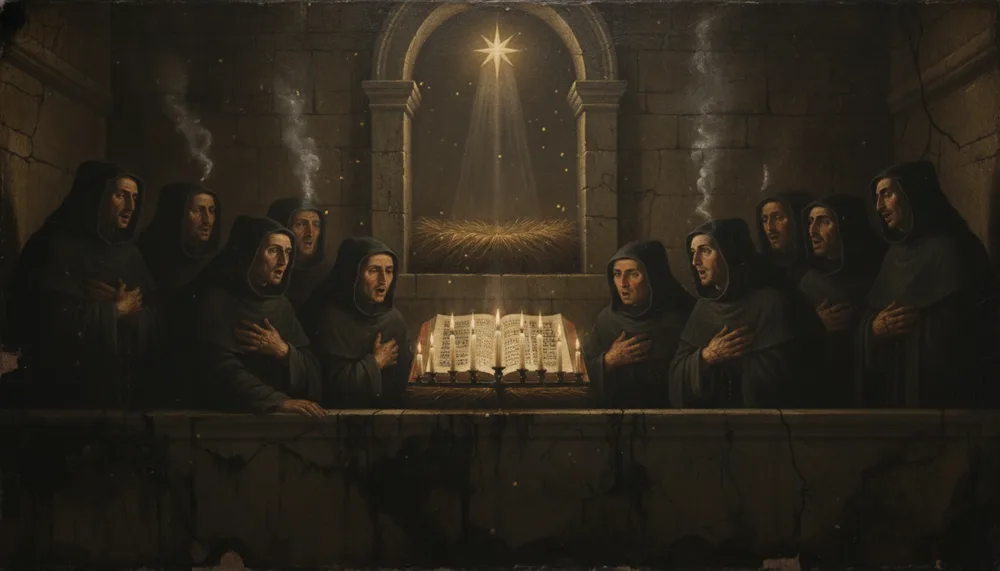
The O Antiphons are the seven great antiphons the Church sings at the Magnificat during Vespers on the last seven days of Advent, from the 17th to the 23rd of December. Each begins with the cry O and salutes the coming Redeemer under a different title drawn from Holy Scripture — O Sapientia, O Adonai, O Radix Jesse, O Clavis David, O Oriens, O Rex Gentium, O Emmanuel. They are among the most ancient and beautiful prayers of the Roman rite, and from them comes the familiar hymn O Come, O Come, Emmanuel.
What are the O Antiphons
An antiphon is a short verse sung before and after a psalm or canticle, framing it and giving it its colour. In the closing days of Advent the Church appoints seven of unusual solemnity, each set to the Magnificat, the song of Our Lady, at evening prayer. They are called the Great Antiphons or, more often, the O Antiphons, because every one of them opens with that single longing syllable.
The seven are sung on the evenings of the 17th to the 23rd of December — the threshold of Christmas, when Advent turns from its first, distant longing for the Last Day, already gladdened at Gaudete Sunday, wholly toward the Nativity now near at hand. They are a sevenfold cry of the whole Church, gathered into one week, that the Lord so long awaited would delay no longer.
Their pattern is always the same: the title, an unfolding of it from Scripture, and the petition, Veni — "Come." The structure is itself a prayer in miniature — we name who Christ is, we remember what he has promised, and we ask him to do it.
The seven O Antiphons in Latin and English
Here are the seven, with the day of Advent each is sung, in the Latin of the Roman breviary and in English.
December 17 — O Sapientia (O Wisdom)
O Sapientia, quae ex ore Altissimi prodisti... veni ad docendum nos viam prudentiae. "O Wisdom, who camest out of the mouth of the Most High, reaching from end to end mightily, and sweetly disposing all things: come and teach us the way of prudence." The antiphon draws on the Book of Wisdom: "She reacheth, therefore, from end to end mightily, and ordereth all things sweetly" (Wisdom 8:1). Christ is the Wisdom of God, by whom all things were made.
December 18 — O Adonai (O Lord)
O Adonai... veni ad redimendum nos in brachio extento. "O Adonai, and Leader of the house of Israel, who didst appear to Moses in the fire of the burning bush, and gavest him the law on Sinai: come and redeem us with an outstretched arm." Adonai is the Hebrew name for the Lord; the antiphon recalls God who spoke to Moses and gave the Law, and asks that same mighty arm now to save.
December 19 — O Radix Jesse (O Root of Jesse)
O Radix Jesse... veni ad liberandum nos, jam noli tardare. "O Root of Jesse, who standest as a sign to the peoples... come to deliver us, and tarry not." The root of the prophecy of Isaias: "And there shall come forth a rod out of the root of Jesse, and a flower shall rise up out of his root" (Isaias 11:1). Christ springs from the line of David's father, the promised flower of an old and royal stock.
December 20 — O Clavis David (O Key of David)
O Clavis David... veni, et educ vinctum de domo carceris, sedentem in tenebris. "O Key of David, and Sceptre of the house of Israel, who openest and no man shutteth, who shuttest and no man openeth: come and lead the prisoner from the prison-house, who sitteth in darkness and the shadow of death." Here is Isaias again: "And I will lay the key of the house of David upon his shoulder: and he shall open, and none shall shut: and he shall shut, and none shall open" (Isaias 22:22).
December 21 — O Oriens (O Dayspring)
O Oriens... veni, et illumina sedentes in tenebris et umbra mortis. "O Orient, Splendour of eternal light and Sun of justice: come and enlighten them that sit in darkness and the shadow of death." The Oriens, the rising of the dawn, echoes the canticle of Zachary: "the Orient from on high hath visited us" (St Luke 1:78). Christ is the true Sun rising upon a world in night.
December 22 — O Rex Gentium (O King of the Nations)
O Rex Gentium... veni, et salva hominem, quem de limo formasti. "O King of the nations, and their Desire, the Cornerstone who makest both one: come and save mankind, whom thou formedst out of the clay." He is the cornerstone of Isaias: "Behold I will lay a stone in the foundations of Sion, a tried stone, a corner stone, a precious stone" (Isaias 28:16) — the King who joins Jew and Gentile in one Church.
December 23 — O Emmanuel (O God With Us)
O Emmanuel, Rex et legifer noster... veni ad salvandum nos, Domine, Deus noster. "O Emmanuel, our King and Lawgiver, the Expectation of the nations and their Saviour: come and save us, O Lord our God." This is the name of the prophecy: "Behold a virgin shall conceive, and bear a son and his name shall be called Emmanuel" (Isaias 7:14) — Emmanuel, "God with us." On the last evening before Christmas Eve, the Church names the Child by the name that gathers up all the rest.
O Antiphons and "O Come, O Come, Emmanuel"
The beloved hymn O Come, O Come, Emmanuel is nothing other than the seven O Antiphons turned into verse. Each stanza takes up one of the titles — Emmanuel, Wisdom, Lord of Might (Adonai), Rod of Jesse, Key of David, Dayspring, Desire of nations — and the refrain, "Rejoice! Rejoice! Emmanuel shall come to thee, O Israel," carries the antiphons' single petition: Veni, Come. The hymn (from the Latin Veni, veni, Emmanuel) was set to a chant melody and has carried the substance of these prayers into countless homes that never sang them at Vespers.
There is also a hidden word in the antiphons themselves. Read from the last to the first, the initial letters of the Latin titles — Emmanuel, Rex, Oriens, Clavis, Radix, Adonai, Sapientia — spell ERO CRAS, which in Latin means "Tomorrow, I will be." The Church, having cried Come for seven evenings, hears in her own prayers the answer of the One she awaits: Ero cras — "Tomorrow, I shall be there." On the 23rd the last antiphon is sung, and on the morrow's morrow is Christmas.
O Antiphons music: the chant and where to sing it
The O Antiphons belong to the Divine Office, the daily public prayer of the Church, and their native music is Gregorian chant. All seven share a single melody set in the second mode (the Hypodorian), a grave and yearning line that binds the week into one prayer: to hear one of the seven is to recognise the rest. The melody opens on a long, rising O — the sustained cry of longing — then descends through the title and the Scripture and gathers again at the petition Veni. Because the mode and the melody are constant, a family or a choir that learns one antiphon has, in effect, learned all seven.
The chant is found in the Liber Usualis and the Antiphonale Romanum, the standard chant books of the Roman rite, under the Magnificat antiphons for Vespers of December 17 to 23. In the traditional Office they are sung doubled: the antiphon is intoned in full before the Magnificat and repeated in full after it, a solemnity reserved for the greatest feasts and for these seven evenings. Many parishes that keep the traditional Latin Mass and Office sing them at Vespers in the last week of Advent, and recordings of the full set are widely available for those learning the melody at home.
Praying the O Antiphons at home (and a printable PDF)
The O Antiphons may also be prayed at home, and doing so is one of the simplest and most ancient ways to keep the last week of Advent. To take up one antiphon each evening from the 17th to the 23rd — reading the title aloud, then the Scripture beneath it, then the petition Veni — turns the final week into a sevenfold preparation for the Nativity. A common practice is to read the antiphon at the family table or before the Advent wreath, pausing on the title of Christ proper to that day.
For a printable set, the full text of all seven antiphons — Latin and English, with the Scripture references and the day of Advent for each — is given complete in the section above; it can be copied to a single page and kept by the wreath or in a missal. We provide the seven in Iter Fidei with their chant audio, so that each evening's antiphon can be both read and heard. There is no single "official PDF": the antiphons are public liturgical texts of the Roman breviary, and any faithful copy of the Latin and the traditional English (such as the one set out here) serves for home prayer.
Rather than a loose printout, carry it in the Iter Fidei app: each day's text, a reminder at the hour you choose, offline, in Latin and in English. Join early access here.
Frequently Asked Questions
What are the O Antiphons?
The O Antiphons are seven antiphons sung at the Magnificat during Vespers on the seven evenings from December 17 to December 23, in the last week of Advent. Each opens with the cry O and addresses the coming Christ by a title drawn from Scripture — Wisdom, Adonai, Root of Jesse, Key of David, Dayspring, King of the Nations, and Emmanuel — and then begs him to come.
What are the seven O Antiphons in order?
In the order of their days: O Sapientia (O Wisdom, Dec 17), O Adonai (O Lord, Dec 18), O Radix Jesse (O Root of Jesse, Dec 19), O Clavis David (O Key of David, Dec 20), O Oriens (O Dayspring, Dec 21), O Rex Gentium (O King of the Nations, Dec 22), and O Emmanuel (O God With Us, Dec 23).
When are the O Antiphons sung?
They are sung on the seven evenings of December 17 through 23, one each day, at Vespers, joined to the Magnificat. These are the days that immediately precede the Vigil of Christmas on December 24.
Are the O Antiphons the same as "O Come, O Come, Emmanuel"?
The hymn is drawn directly from them. Each verse of O Come, O Come, Emmanuel takes up one of the seven titles, and the refrain echoes the antiphons' one petition, Veni — "Come." The hymn carries the same titles and the same longing into a form that can be sung by all.
What does "ERO CRAS" mean in the O Antiphons?
Reading the first letters of the seven Latin titles backward — Emmanuel, Rex, Oriens, Clavis, Radix, Adonai, Sapientia — gives ERO CRAS, Latin for "Tomorrow, I will be." It is read as Christ's own answer to the week of pleading: the Church cries Come, and the acrostic replies that he comes on the morrow.
What music are the O Antiphons sung to?
All seven share one Gregorian chant melody in the second mode, sung at Vespers before and after the Magnificat. The line rises on the opening O, unfolds through the title and its Scripture, and settles on the petition Veni. The chant is found in the Liber Usualis and the Antiphonale Romanum under the Magnificat antiphons for December 17-23.
How do I pray the O Antiphons at home?
Take one antiphon each evening from December 17 to 23: read the title of Christ aloud, then the Scripture it draws on, then the petition Veni — "Come." Many families do this at the table or before the Advent wreath. The full Latin and English of all seven is given above and can be printed to a single page.
Is there an official O Antiphons PDF?
There is no single official PDF, because the antiphons are public liturgical texts of the Roman breviary; any faithful copy of the Latin and the traditional English serves. The complete text of the seven, with Scripture references and the day for each, is set out in this article and can be copied to one page for home use.
Iter Fidei serves the liturgical calendar, prayers and psalms, in Latin and English with audio. Join early access here.
Sources. The Roman Breviary, the Proper of the Time, the Great Antiphons (O Sapientia through O Emmanuel) appointed at the Magnificat for Vespers of December 17-23; the traditional Roman calendar of Advent; the hymn Veni, veni, Emmanuel (O Come, O Come, Emmanuel); Holy Scripture, Douay-Rheims (Wisdom 8:1; Isaias 11:1; 22:22; 28:16; 7:14; St Luke 1:78).