
The Liturgical Year
The Feast of Christ the King
When is the Feast of Christ the King? In the traditional calendar it falls on the last Sunday of October, instituted by Pope Pius XI in 1925 to proclaim the social kingship of Christ over men and nations.
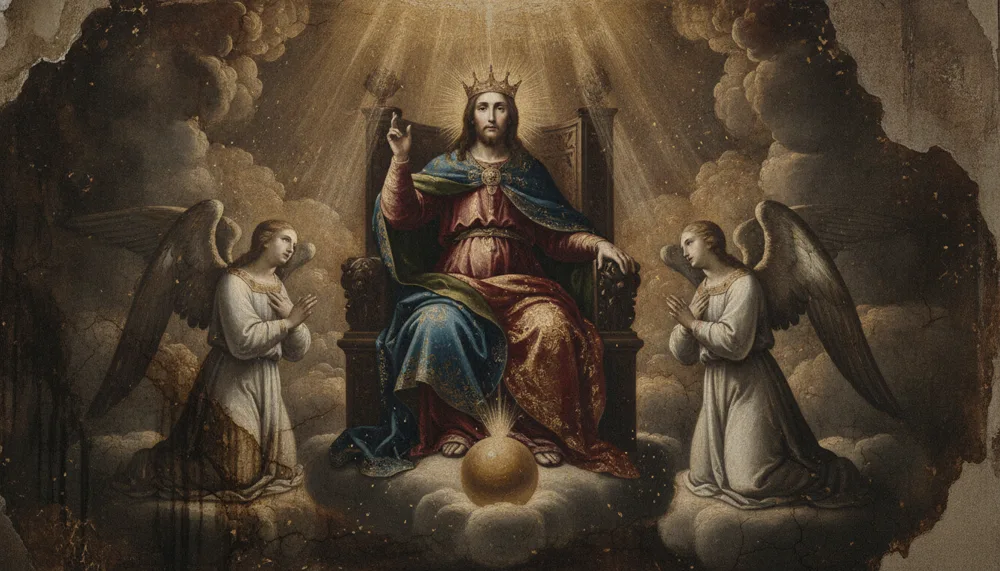
The Feast of Christ the King is the solemnity by which the Church proclaims that Jesus Christ is King — not in name only, nor over souls alone, but truly and by right over all men, all families, and all nations. It was instituted by Pope Pius XI in 1925, in the Holy Year, by the encyclical Quas Primas, and in the traditional calendar it is kept on the last Sunday of October, the Sunday before the Feast of All Saints.
When is the Feast of Christ the King?
In the traditional Roman calendar, the Feast of Christ the King falls on the last Sunday of October. This is the date Pius XI fixed in 1925: he chose the close of the liturgical month before All Saints' Day so that, as he wrote, the kingship of Christ celebrated on earth might lead at once into the feast of those who already share His reign in heaven. The feast therefore stands as a kind of crown upon the whole liturgical year, immediately before All Saints' Day on November 1.
It is worth noting a difference many readers meet. Since the reform of the calendar, the modern observance of "Christ the King Sunday" has been moved to the last Sunday of the liturgical year, in late November, just before Advent. The original and traditional date — the one kept in the Tridentine Mass and given to us by Pius XI himself — remains the last Sunday of October. In 2026, that traditional Sunday is October 25.
What is the Feast of Christ the King?
The feast was established by the encyclical Quas Primas on December 11, 1925 — a date squarely within the traditional era, the work of a pope who governed the Church between the two world wars and saw rising before him the great secular tyrannies that would deny Christ any place in public life. Pius XI answered them not with a slogan but with a doctrine: that Christ reigns.
This kingship is no metaphor. Pius XI taught that Christ is King by a triple title. He is King first by nature, for as the eternal Son He is the Creator: "all things were created by him and in him," writes St Paul, "and he is before all: and by him all things consist" (Colossians 1:16-17). He is King secondly by inheritance, the Father having said to the Son in the second Psalm, "Ask of me, and I will give thee the Gentiles for thy inheritance, and the utmost parts of the earth for thy possession" (Psalm 2:8).
And He is King thirdly by conquest, having bought us at the price of His own Blood. Christ Himself confessed His kingship before Pilate: "Thou sayest that I am a king. For this was I born, and for this came I into the world" (St John 18:37) — adding that same hour, "My kingdom is not of this world" (St John 18:36), not to deny His reign but to show that it rests on truth and charity, not on arms.
The social kingship of Christ
The heart of Quas Primas is the doctrine of the social kingship of Christ: the truth that Christ reigns not only over individual hearts but over societies — over states, laws, and rulers. Pius XI saw clearly that the great evil of his age was the deliberate banishing of God from public life, "the plague of anti-clericalism, its errors and impious activities," and the pretence that nations might be governed as though Christ were not their Lord.
Against this he set the old confession of the Church. Kings and princes, Pius XI wrote, "are bound to give public honour and obedience to Christ" no less than private men; rulers are "bound to give public honour and obedience to Christ." For all authority comes from God, and Christ is the King to whom the Father has subjected all things. A nation that orders its public life without reference to Him does not thereby become neutral — it merely chooses a different master. The feast was given to the Church as a yearly, public, liturgical act of homage by which the whole body of the faithful confesses that Christ is Lord of the city as well as of the soul.
This is why the feast carries with it the Act of Consecration of the Human Race to the Sacred Heart of Jesus, which Pius XI commanded to be renewed each year on this day. The kingship of Christ and the Sacred Heart are one devotion seen from two sides: the throne of the King is His pierced and loving Heart.
Feast or Solemnity of Christ the King?
Both words are heard, and both are correct, but they belong to two different rankings. When Pius XI instituted the day in 1925 he gave it the rank of a feast of the first class — festum, in the language of the Roman Missal — and that is the title still used in the traditional calendar: the Feast of Christ the King, kept the last Sunday of October.
The reformed calendar of 1969 raised the day to the rank of a solemnity and renamed it the Solemnity of Our Lord Jesus Christ, King of the Universe, fixing it on the last Sunday before Advent. So the Solemnity of Christ the King is the modern name and date; the Feast of Christ the King is the original one given by Pius XI. The doctrine confessed is the same — the kingship of Christ — but at Iter Fidei we keep the feast on its traditional October Sunday, as Quas Primas intended.
Christ the King in Scripture
The reign of Christ is written across both Testaments. In the prophet Daniel the Son of man receives an everlasting dominion: "he gave him power, and glory, and a kingdom: and all peoples, tribes, and tongues shall serve him: his power is an everlasting power that shall not be taken away" (Daniel 7:14). In the Apocalypse the same Lord rides in triumph, bearing the title written upon His garment and upon His thigh: "KING OF KINGS AND LORD OF LORDS" (Apocalypse 19:16). The feast does not invent a doctrine; it gathers into one day the constant witness of God's word, that to Christ belongs the kingdom and the power and the glory.
How to keep the Feast of Christ the King
The chief act of the day is the Mass, in which the Church prays in her Collect that "all the families of nations, rent asunder by the wound of sin, may be subjected to His most gentle rule." The faithful are urged to assist at the Holy Sacrifice, to renew the Act of Consecration to the Sacred Heart, and where possible to take part in the public processions and adoration that mark the feast. The traditional practice attaches a plenary indulgence, under the usual conditions, to the public recitation of the Act of Consecration on this Sunday.
Beyond the day itself, the feast asks something of the whole of life: that we acknowledge the reign of Christ in our homes, our work, and our duties as citizens — that we let no corner of life remain a province from which He is shut out. To enthrone the Sacred Heart in the home, to keep the Morning Offering, to obey the precepts of the Church: these are the small, daily ways in which a Christian confesses that Christ is King.
Christ the King Mass times: finding the traditional Mass
Many who keep this feast want to assist at the Holy Sacrifice in the traditional Roman rite, and the first question is practical: where, and at what time? Because the feast is of the first class, most chapels and churches offering the Tridentine Mass keep it with a Sung or High Mass, often followed by the public recitation of the Act of Consecration to the Sacred Heart. Christ the King Mass times vary by chapel, so the surest course is to consult the bulletin of your nearest traditional apostolate — whether served by the Institute of Christ the King, the Fraternity of St Peter, or a diocesan traditional community — for the schedule of that particular Sunday; to find a Latin Mass near you, start from our directory of traditional Masses. The Iter Fidei app carries the propers of the feast, the Collect and the Act of Consecration, so that wherever you assist you may follow and pray the Mass of Christ the King.
Cathedrals and churches of Christ the King
The kingship of Christ has given its name to cathedrals and churches across the world, many raised in the decades after Quas Primas when devotion to the social reign of Christ was at its height. A church or Cathedral of Christ the King is simply a house of God placed under this title, dedicated to the Lord precisely as King. The feast and the buildings spring from one source: the doctrine that Christ is sovereign, and that His sovereignty deserves both a day in the calendar and a throne in stone.
The Institute of Christ the King
Among the orders that carry this devotion in our own time, the Institute of Christ the King Sovereign Priest takes its very name from the feast. Founded in 1990 and erected as a society of apostolic life of pontifical right, the Institute of Christ the King is dedicated entirely to the traditional Roman liturgy. Its full title — Institute of Christ the King Sovereign Priest — joins the kingship of Christ to His priesthood, for the King reigns from the altar as truly as from the Cross. The Institute exists, in its own words, to spread the reign of Christ in all spheres of human life — the same social kingship that Pius XI proclaimed in Quas Primas — preaching the King not as a tyrant but as the meek Lord who reigns from the Cross.
Frequently Asked Questions
When is Christ the King Sunday?
In the traditional Catholic calendar it is the last Sunday of October — the date set by Pius XI in 1925. The reformed calendar moved the modern observance to the last Sunday of the liturgical year, in late November, but the original and traditional date remains the last Sunday of October.
When is the Feast of Christ the King?
It is always a Sunday. In the traditional calendar, the last Sunday of October; in 2026 that falls on October 25, the Sunday before All Saints' Day.
What is Christ the King Sunday?
It is the feast, instituted by Pope Pius XI in the 1925 encyclical Quas Primas, on which the Church publicly proclaims that Jesus Christ is King over all men and all nations — the doctrine of the social kingship of Christ — and renews the consecration of the human race to His Sacred Heart.
Is it the Feast or the Solemnity of Christ the King?
Both terms name the same day, in two calendars. In the traditional calendar it is the Feast of Christ the King, instituted by Pius XI in 1925 and kept the last Sunday of October. The reformed calendar of 1969 raised it to the rank of solemnity, renamed it the Solemnity of Our Lord Jesus Christ, King of the Universe, and moved it to the last Sunday before Advent. The traditional date is the original one.
What is the Institute of Christ the King?
The Institute of Christ the King Sovereign Priest is a Catholic society of apostolic life, founded in 1990, dedicated to the traditional Roman liturgy and to spreading the social reign of Christ proclaimed in Quas Primas. It takes its name directly from this feast.
Why did Pius XI institute the feast?
To answer the secularism of his age, which sought to banish Christ from public and political life. By giving the Church a yearly, solemn confession of Christ's kingship over societies as well as souls, Pius XI made the truth of Quas Primas a permanent part of the worship of the Church.
Iter Fidei serves traditional prayers, the psalms and the liturgical calendar, in Latin and English with audio. Join early access here.
Sources. Pope Pius XI, Quas Primas (encyclical instituting the Feast of Christ the King, December 11, 1925); the Roman Missal, Mass and Collect of the Feast of Christ the King; the Gospel of St John, ch. 18, the Epistle to the Colossians, ch. 1, the Book of Psalms, Psalm 2, the Prophecy of Daniel, ch. 7, and the Apocalypse, ch. 19 (Douay-Rheims).