
News
A court clears Cardinal Ouellet and condemns a false accusation
Quebec's Superior Court rules the misconduct accusations against Cardinal Ouellet false and orders his accuser to pay him 100,000 dollars.
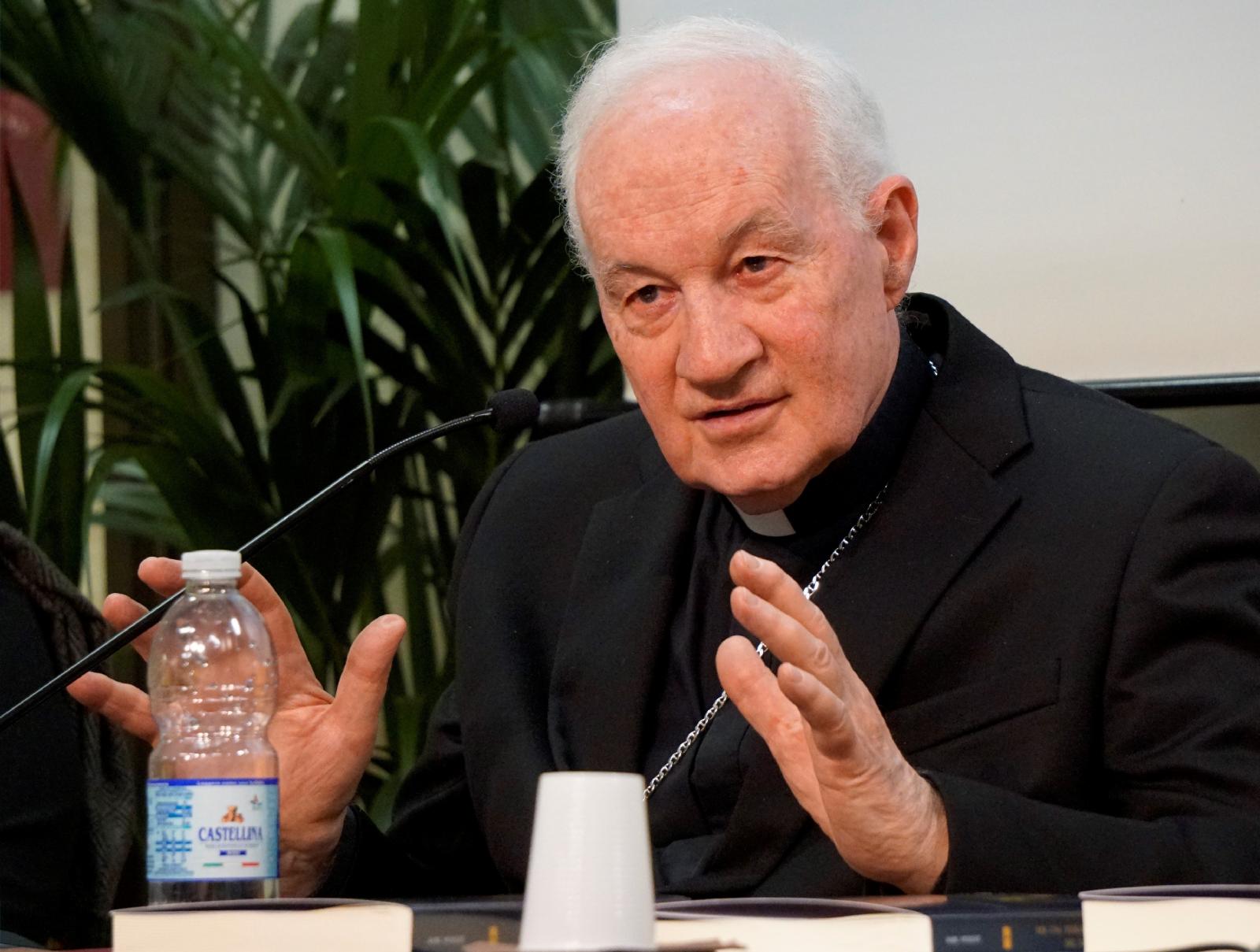
Quebec's Superior Court has found the accusations of sexual misconduct brought against Cardinal Marc Ouellet, former Archbishop of Quebec and former prefect of the Dicastery for Bishops, to be without foundation. In a decision handed down on 31 August 2026, Justice Martin Castonguay dismissed his accuser and ordered her to pay the cardinal 100,000 Canadian dollars (about 72,000 US dollars) in damages.
The plaintiff had charged the cardinal with touching her without her consent on three occasions between 2008 and 2010, while she was in training and then serving as a lay pastoral worker, and said she had felt "stalked" at another event. The court concluded that the allegations describing the four cited incidents were "false," and held her testimony to be "neither credible nor reliable," noting that she had changed her account several times. Two other women testified against the cardinal; the judge found their testimony irrelevant to the question of defamation, and concluded that the cardinal was not "the author of the acts" that one of these women alleged.
The allegations had surfaced in 2022 within a class action targeting the Archdiocese of Quebec and dozens of clergy and laity. The cardinal, retired since April 2024, had denied any wrongdoing and filed a counterclaim of 100,000 dollars for defamation. As early as 2022, the director of the Holy See Press Office had judged that there were not "sufficient elements to open a canonical investigation for sexual assault." The judge further observed that the harm had been "amplified by the vehicle chosen": a class action directed chiefly against pedophile religious, which thereby ranked the cardinal "within that group of individuals." The cardinal's counsel stressed that, even in a judicial setting, grave allegations must rest on "accurate and relevant facts" and be brought with the rigor their gravity demands.
The Eighth Commandment and false witness
Tradition does not judge the facts of a cause: it judges acts in the light of the law of God. And the law is clear. The Eighth Commandment — "Thou shalt not bear false witness against thy neighbour" (Exodus xx. 16) — forbids not only the lie sworn under oath, but calumny, which imputes to another a fault he has not committed.
The Catechism of the Council of Trent teaches that whoever has wounded a neighbour's good name is bound to restitution, like the man who has stolen his goods: a good name is a real good, and he who takes it away must give it back. And Scripture attaches a penalty to the false witness: "They shall render to him as he meant to do to his brother" (Deuteronomy xix. 19). The false witnesses of Susanna suffered the fate they had prepared for her (Daniel xiii).
The measure
We do not sit on the civil bench and we pronounce nothing upon souls. But the rule stands: to impute to a man a crime he has not committed is calumny, a grave sin against justice and against charity. The judge's finding — allegations "false," a testimony "neither credible nor reliable" — is measured against this commandment. And the order to pay 100,000 dollars echoes the ancient law of the false witness, who bears the weight he meant to lay upon the innocent. That the accusation travelled by the "vehicle" of a class action directed against predators does not lessen the fault: tradition holds public defamation to be graver than a hidden offence, for the wound is wider and harder to heal.
A civil verdict is not a moral absolution in the full sense; it establishes in law that these precise accusations were not proven and were judged false. The faithful will draw from it the perennial measure: guard the tongue, spread no accusation before it is established, presume the good. Real abuses exist and their victims have a right to justice — the class action against the archdiocese was approved on 12 August, with an out-of-court settlement of 31.5 million dollars for people truly abused since 1940. A false accusation wounds these victims too, by trivializing the charge. The cardinal has promised to give the 100,000 dollars to organizations that fight the sexual abuse suffered by Canada's Indigenous peoples: an act of mercy, which we salute without emphasis.
Sources. Catechism of the Council of Trent (1566), on the Eighth Commandment, on false witness, calumny and the restitution of a good name; Exodus xx. 16 and Deuteronomy xix. 16-19 (Douay-Rheims, Vulgate); Daniel xiii, on the false witnesses of Susanna.