
News
Getafe closes the sole community of the Hermanos del Amor Misericordioso
On 15 September 2026, the diocese of Getafe brings to an end the sole male community of the « Hermanos del Amor Misericordioso », a month and a half after the dissolution of the women's branch targeted by accusations of abuse.
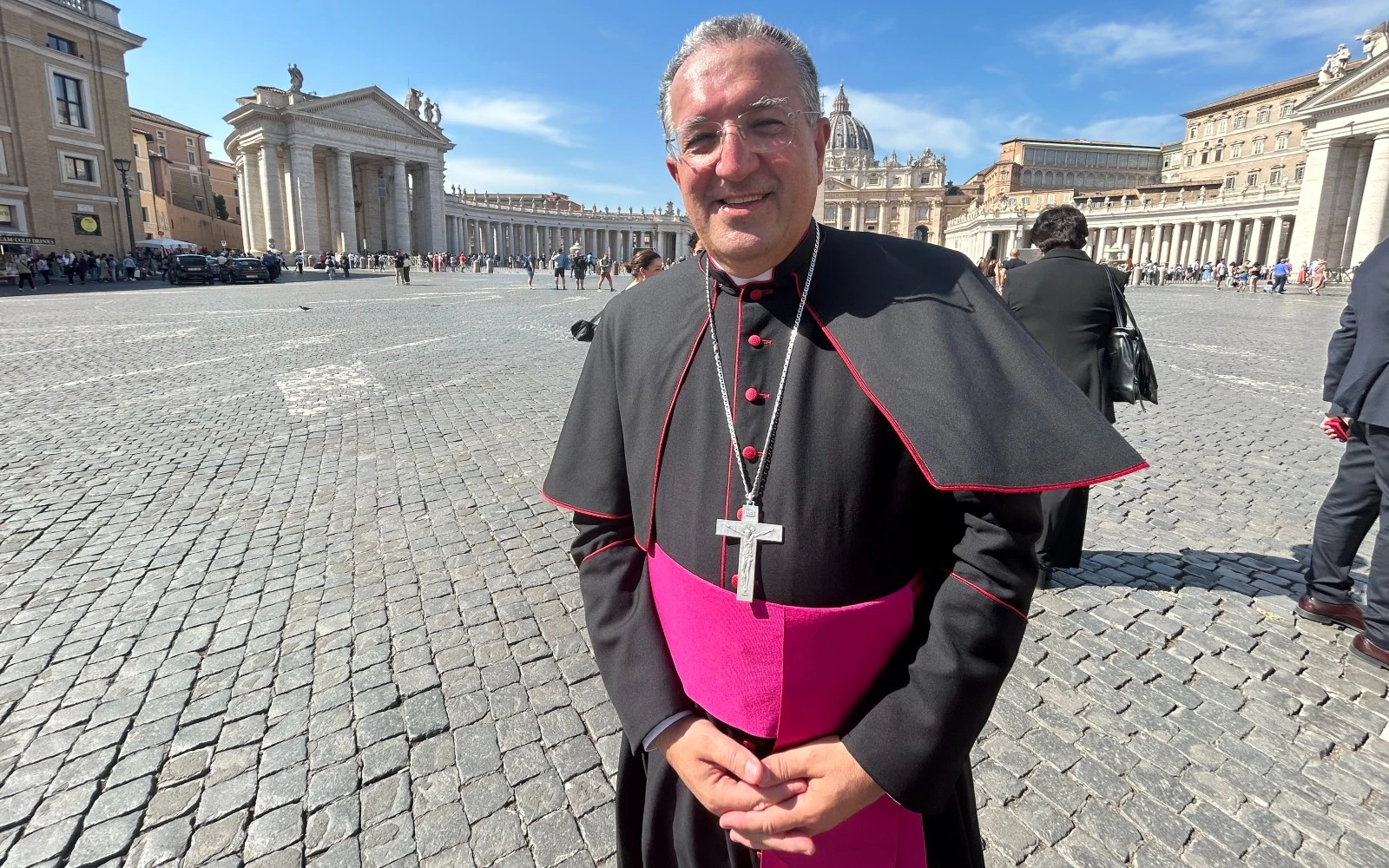
On 15 September 2026, the Bishop of Getafe brought to an end the sole community of the « Hermanos del Amor Misericordioso », the male branch attached to the Hijas del Amor Misericordioso. The house of formation, canonically erected by the diocese and where some thirty men lived together, is dissolved: seven priests, five of them incardinated in Getafe, two deacons, and around twenty seminarians. Accompanied since 2008 with a view to a possible constitution as a religious family, the group will not pursue that path in common.
The measure follows by about a month and a half the dissolution of the women's public association, pronounced by the Archbishop of Madrid against a background of accusations of abuse of power, of conscience, and sexual abuse. This women's entity, led by María de la Milagrosa Pérez Caballero, had been examined by the Tribunal of the Rota. As early as March 2026, the Bishop of Getafe had suspended the entry of new seminarians and forbidden ordinations, in order to correct the way of life and the practices of this group. No accusation of abuse bears directly on the male branch.
Religious life, the public profession of the evangelical counsels of poverty, chastity, and obedience, is a more perfect state which the Church has always held in high esteem. But she has never let a family of consecrated life be born of private impulse alone: the Church tries its spirit over time, and it is her judgment, not the enthusiasm of the founders, that gives an institute its being. Obedience, likewise, is rendered to God through legitimate superiors and within the bounds of law; where a superior bends consciences toward himself and demands the submission of the inner man, it is no longer obedience but its counterfeit, and a grave fault against souls. The Lord reserved the millstone about the neck for whoever scandalizes the little ones.
The diocese presents its decision as a reorientation, not a condemnation. Discernment about a possible vocation to religious life, the bishopric writes, « must be made in a personal and individual way »; the measure « does not suppose a negative judgment on the authenticity of the desire » shown by those concerned to live a religious vocation, so that each may discern « the concrete form by which the Lord calls him » to live the counsels, fraternal life in community, and a stable rule of life.
Other readings see in it a plain and simple dissolution. The facts, for their part, are not in dispute: the common house is closed. The seminarians may remain in their seminaries or join « an institute of religious life or another form of consecrated life legitimately recognized by the Church »; the ordained continue the ministries entrusted to them in the diocese, with priests of the group remaining at the head of two parishes in the south of Madrid, as diocesan priests.
Sources. Catechism of the Council of Trent (1566), on the Fourth Commandment, on the obedience owed to legitimate superiors and its just limits (« if they had the misfortune to ordain something evil or unjust … we should be obliged in no wise to obey them »); Gospel according to Saint Matthew, XVIII, 6, on the scandal of the little ones (« it were better for him that a millstone should be hanged about his neck »).