
News
Leo XIV: the liturgical reform of Vatican II “firmly rooted in the living tradition of the Church”
At the general audience of 26 August 2026, Leo XIV closed his cycle on Sacrosanctum Concilium by defending the liturgical reform of Vatican II and calling for the rejection of abuses.
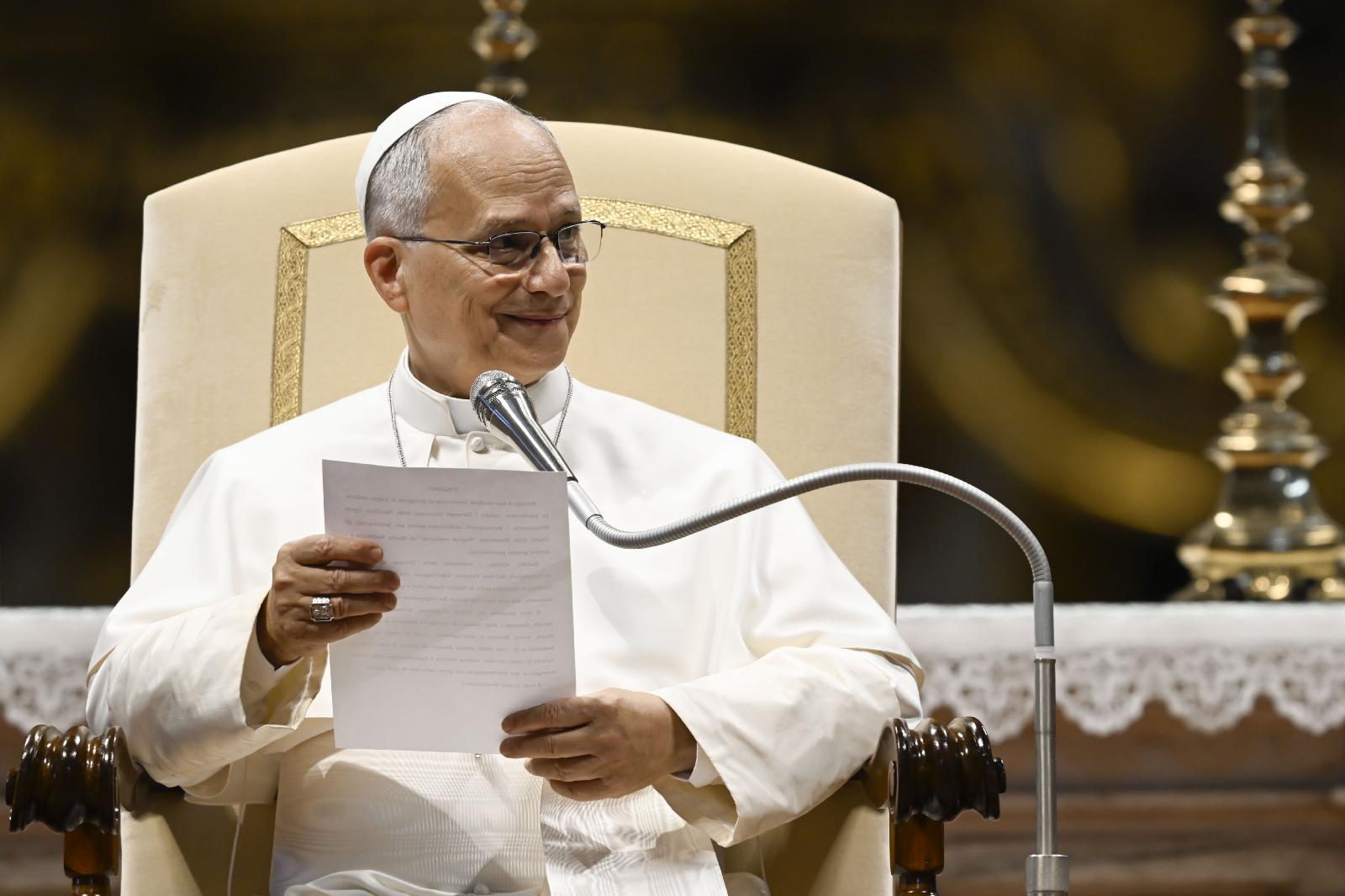
On 26 August 2026, at the general audience held in St Peter's Basilica, Leo XIV delivered the eighth and final catechesis of a cycle devoted to the conciliar constitution Sacrosanctum Concilium. He defended the liturgical reform that issued from the Second Vatican Council, calling it “firmly rooted in the living tradition of the Church,” and he called for the rejection of “the abuses that occurred in certain sectors of the Church during the post-Conciliar period, and which, unfortunately, still occur from time to time today.”
Tradition is not proved by the word but by the act. The Council of Trent teaches that the received and approved rites of the Church, customarily used in the solemn administration of the sacraments, may not be despised, or omitted without sin, or changed into other new ones by any pastor whatever (Session VII, canon 13). On the holy sacrifice, the same Council struck with anathema anyone who would hold the received ceremonies, vestments and outward signs to be incitements to impiety rather than incitements to piety (Session XXII).
Saint Pius V, promulgating the Roman Missal, fixed it “in perpetuity.” And Pius XII, in Mediator Dei, while distinguishing the immutable divine elements from the mutable human ones, condemned the archaeologism that holds a form to be better merely because it is older, and judged that it is “neither wise nor praiseworthy to reduce everything to antiquity by every possible device.”
To illuminate the reform, Leo XIV drew on the third “Letter of the Council” that Cardinal Giovanni Battista Montini, the future Paul VI and then archbishop of Milan, addressed to his faithful on 28 October 1962, telling them they were called no longer to “remain silent and passive,” their “physical presence” being irreconcilable “with their spiritual absence.”
He tied the reform to acts prior to the Council: the encyclical Mediator Dei of Pius XII (1947), the apostolic constitution Divini Cultus of Pius XI, Pius XII's restoration of the Holy Week rites returned to the hours of the paschal events, and the motu proprio Rubricarum instructum of John XXIII (25 July 1960). He repeated that the participation of the faithful “cannot be passive,” citing Sacrosanctum Concilium (n. 48), which asks that they not attend “as strangers or silent spectators,” and named the pastors, bishops and every priest as the first guarantors of a liturgy shining “with noble simplicity.”
That the human elements are mutable, tradition has never denied; that this authorizes remaking the received rite, it has always denied. The remedy for abuses is not the principle that made them possible, but the rite the Church has received and kept.
Sources. Council of Trent, Session VII, canon 13, on the received and approved rites of the sacraments, and Session XXII, on the holy sacrifice of the Mass; Roman Catechism (1566); the bull Quo Primum of Saint Pius V (1570); Pius XII, encyclical Mediator Dei (1947), against liturgical archaeologism.