
News
In the Philippines, the Church asks for a pause on the Pax Silica hub
In the Philippines, the Church's social arm asks to suspend any irreversible commitment to the Pax Silica tech hub until water, Aeta ancestral land and accountability are guaranteed.
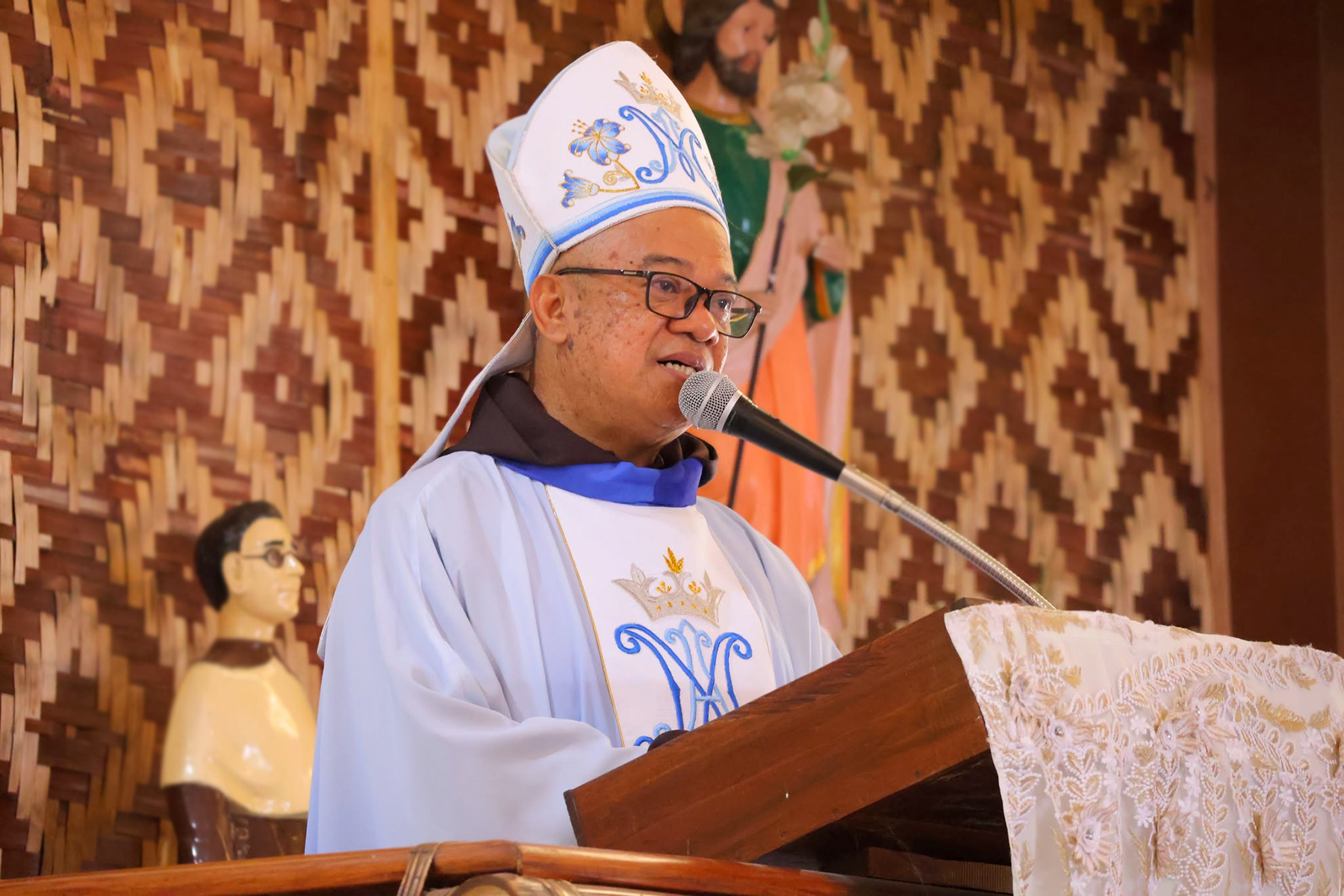
In the Philippines, the Catholic Church's social-action arm asked the government on Tuesday, 22 September, to open wider consultation before any irreversible commitment to Pax Silica, a 1,620-hectare industrial and technology hub planned at New Clark City, in the province of Tarlac, and meant to draw investment in semiconductors, artificial intelligence, critical minerals and advanced manufacturing.
Its president, Bishop Gerardo "Gerry" Alminaza of San Carlos, judged the timeline rushed: "It looks like they are rushing it. It also seems there has not been enough study or enough consultation of the communities and the people who will actually be affected, especially the Aeta communities." The public authority promoting the project estimates that it could require 65 to 90 million litres of water and about 3 gigawatts of electricity a day. "These are not minor requirements," he added. "They demand serious public scrutiny in a country already grappling with water stress, energy insecurity and climate vulnerability."
The most disputed point is the land. The government maintains that the site is public land titled to the bases-conversion authority, and that no indigenous community will be displaced; Aeta leaders hold part of that land to be ancestral domain. "Concurrent claims are not settled by mere assurances," the bishop warned: they must be settled "legally, transparently, and with the effective participation of the communities concerned, before contracts are signed and decisions become difficult or impossible to undo."
The measure of tradition
Scripture knows no progress that moves the landmark of the weak with impunity. "Cursed be he that removeth his neighbour's landmarks," says Deuteronomy, and the Book of Proverbs: "Pass not beyond the ancient bounds which thy fathers have set." The landmark is no surveyor's detail: it is the right of the least made visible, and God makes Himself the keeper of what the powerful would be tempted to erase.
The Catechism of the Council of Trent, expounding the seventh commandment, condemns not only open theft but every injustice by which one withholds or wrings from another what is his due; among the sins that cry to heaven for vengeance it ranks the fraud done to the weak. To render to each his own, to protect the one who has not the strength to defend himself: this is justice itself.
The earth, finally, is not handed to man that he may devour it. God placed man in the garden "to dress it, and to keep it" (Genesis II, 15): to dress and to keep, not to exhaust. And Leo XIII reminded states of their first duty, to watch over the common good and to defend the poor against the oppression of the powerful.
The measure of the fact
None of this condemns technology, investment or honest work; the bishop said so himself, and tradition has held it for ages. What tradition condemns is the haste that skips justice, the opacity that spirits away consent, and the use of creation that treats water, land and men as a raw material without limit. Measured by this rule, the bishop's warning does not run against progress: it demands the only form of it worthy of the name. "Progress worthy of the name must improve lives without sacrificing the land, the water, the culture and the future of the people who live there," he said. That is, almost word for word, the doctrine of the ancient landmarks.
The faithful are not here to settle a dispute over land titles; that is not their office, and the facts themselves are contested. Their part is to hold firm to the principle: a work that prospers by trampling the weak and draining creation is not a good work, whatever its yield. What tradition asks of rulers has not aged: consult before binding, render to each his due, and keep the earth they did not create.
Sources. Catechism of the Council of Trent (1566), on the seventh commandment; Deuteronomy XXVII, 17 and Proverbs XXII, 28 (Douay-Rheims, from the Vulgate); Genesis II, 15; Leo XIII, encyclical Rerum novarum (1891).