
News
In Argentina, a bishop's 1977 death reclassified as a killing by the dictatorship
Argentine federal justice reopens the inquiry into the 1977 death of Bishop Ponce de León of San Nicolás, now treated as a crime against humanity, while the local Church asks for «truth and justice».
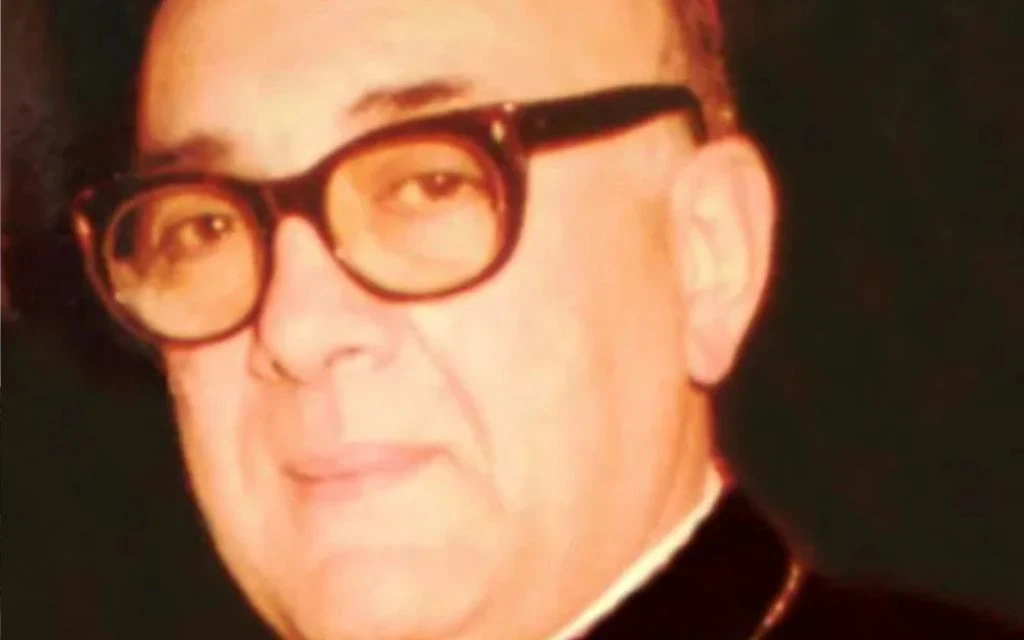
Nearly fifty years after the fact, Argentine federal justice has reopened the inquiry into the death of Bishop Carlos Horacio Ponce de León, bishop of San Nicolás, who died on 11 July 1977 on National Route 9. Presented at the time as a road accident, the death had been closed by a ruling of 1978. That ruling was annulled in 2024 for flaws in the investigation, and the case, reopened nearly forty-nine years later, now carries the charge of homicide and crime against humanity, laid to the military dictatorship.
The file, long blocked, was reassigned to the federal judge of Rosario, Carlos Alberto Vera Barros, who ordered the first hearings of the trial. The bishop had accompanied the families of detainees and of the disappeared and had denounced to the Vatican the human-rights violations committed by the military power, whose persecution he suffered. Priests from the poor neighbourhoods have called the communities and the whole Church of Argentina to «a time of prayer for truth and justice» over his death, hailing «a pastor of the people, committed to the end to the lowliest».
The number, identity and date of those cited to the first hearings differ from one account to another: some speak of two persons summoned for the end of September, others of three servicemen cited a few days earlier, others again of one former serviceman and two civilians. We do not settle this point, which remains open.
What tradition teaches
The fifth commandment, «Thou shalt not kill», forbids all voluntary killing of the innocent. The Catechism of the Council of Trent, expounding this precept, teaches the singular gravity of murder, by which one destroys at once the work of God in man, made to His image, and the order the Creator established. The Catechism of Saint Pius X ranks voluntary homicide among the sins that cry to heaven for vengeance before the face of God. And Scripture puts in the mouth of the Lord, speaking to Cain, the word that judges every murderer: «the voice of thy brother's blood crieth to me from the earth» (Genesis IV, 10).
The measure
If the evidence confirms what the case now holds, a planned attack disguised as an accident, then the bishop's death is not a misfortune of the road but a homicide, one of those crimes the divine law reserves to its own vengeance. To kill a pastor because he defended the persecuted adds to the murder the contempt of the sacred ministry. To seek the truth and to punish the guilty justly is therefore no political passion: it is a duty of justice, for the order willed by God requires that the wrong be acknowledged and repaired. In asking for «truth and justice», the local Church only names what the law of God demands.
What the faithful will take from it
To pray that the truth be brought to light, without hatred or spirit of reprisal. To remember that the blood of the innocent is never forgotten by God, even when the tribunals of men fail or tarry nearly half a century. And to commend to the divine mercy the soul of a bishop who died defending the least. The justice of men may fail; that of God, never.
Sources. Catechism of the Council of Trent (1566), on the fifth commandment, on the gravity of voluntary homicide. Catechism of Saint Pius X, on the sins that cry to heaven for vengeance before God, among them voluntary homicide. Holy Scripture, Genesis IV, 10 (Douay-Rheims, from the Vulgate).