
News
Tigray: fighting resumes, Leo XIV appeals for peace
Fighting has resumed in Tigray and the neighbouring regions of Ethiopia; Leo XIV calls on all parties to dialogue and to let humanitarian aid through.
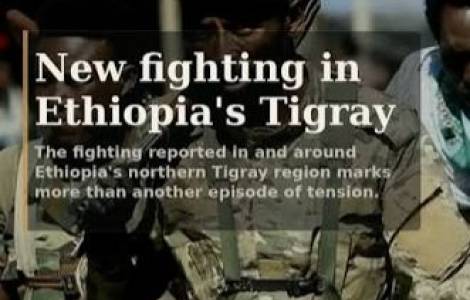
Fighting has resumed in northern Ethiopia. On 23 September 2026, Tigrayan fighters seized control of Mekelle's main airport and clashed with federal forces, which replied with drone strikes and ground operations. On 25 September, seven armed groups, among them the Tigray People's Liberation Front, announced the formation of a coalition, the "Ethiopian People's Forces Alliance for Survival," declaring their intent to overthrow the government of Prime Minister Abiy Ahmed. The offensive spread to the neighbouring regions of Afar and Amhara, with clashes along the Tekeze river, in the Welkait zone west of Tigray.
The Pretoria agreement, signed on 2 November 2022 under African Union mediation, had ended the Tigray war of 2020-2022. Three years later, the truce is coming apart. Internet and telephone links have been wholly cut in the north; flights to Tigray, and then to Lalibela, were suspended. A humanitarian convoy carrying food aid was attacked, in a region already isolated for months by restrictions on fuel, medical supplies, and the blocking of salaries. About 160 people were evacuated; between 22 and 25 September, more than 400 wounded reached the hospitals of Korem and Alamata, and 300 more those of Suhul and Shire.
The human toll remains unverified: the Ethiopian army claims to have killed 700 Tigrayan fighters in two days, a figure no independent source confirms. Addis Ababa accuses neighbouring Eritrea of backing the insurgents; Asmara firmly denies it. On 22 September, the chairperson of the African Union Commission had called on all parties to show "the utmost restraint" and to return to direct dialogue.
At the close of the general audience of 30 September 2026, Leo XIV made an appeal, in English, for peace in Tigray and the neighbouring regions. "Armed conflict never solves problems; it only aggravates them, leaving in its wake a trail of death, destruction, and resentment," he said, begging all parties to choose "the path of dialogue" and the international community to ensure that all humanitarian aid reaches those in need.
What tradition teaches
Peace is not the mere silence of arms; it is, in Saint Augustine's phrase, the tranquillity of order, the concord that is born when each renders to God and to his neighbour what is due to them. Our Lord ranked the peacemakers among the blessed: "Blessed are the peacemakers: for they shall be called the children of God." And the fifth commandment, "Thou shalt not kill," forbids, teaches the Catechism of the Council of Trent, not only homicide but all that, through anger, hatred, or greed, arms man's hand against his brother; by the same precept it binds us to come to the aid of our neighbour's life when it is threatened.
The measure
Measured by this rule, the appeal to dialogue is sound: to deny arms the last word, to seek concord, to demand that relief reach the starving and the wounded — this is what charity commands. But the same rule judges the acts as well. To cut a people off from all relief — fuel, medicine, wages — to starve a region and to attack a convoy of food, is not merely to wage war: it is to strike the innocent whom the fifth commandment shields first. No political grievance, no reason of state, makes licit what the law of God forbids. The blood shed and the starving abandoned cry out, both of them, against those who cause them.
For the faithful, the way is the one the Church has always shown: to pray for peace, to support almsgiving toward the victims, and to hold that justice, not victory, is the only foundation of a lasting peace.
Sources. Catechism of the Council of Trent (1566), on the fifth commandment "Thou shalt not kill." Gospel according to Saint Matthew, V, 9 (Vulgate; Douay-Rheims). Saint Augustine, The City of God, Book XIX, on peace as the tranquillity of order. Saint Thomas Aquinas, Summa Theologica, IIa-IIae, q. 29, on peace.