
News
Fulton Sheen raised to the altars: the first U.S.-born bishop proclaimed blessed
On 24 September in Saint Louis, Bishop Fulton Sheen (1895-1979) is proclaimed blessed, the first bishop born in the United States raised to the altars.
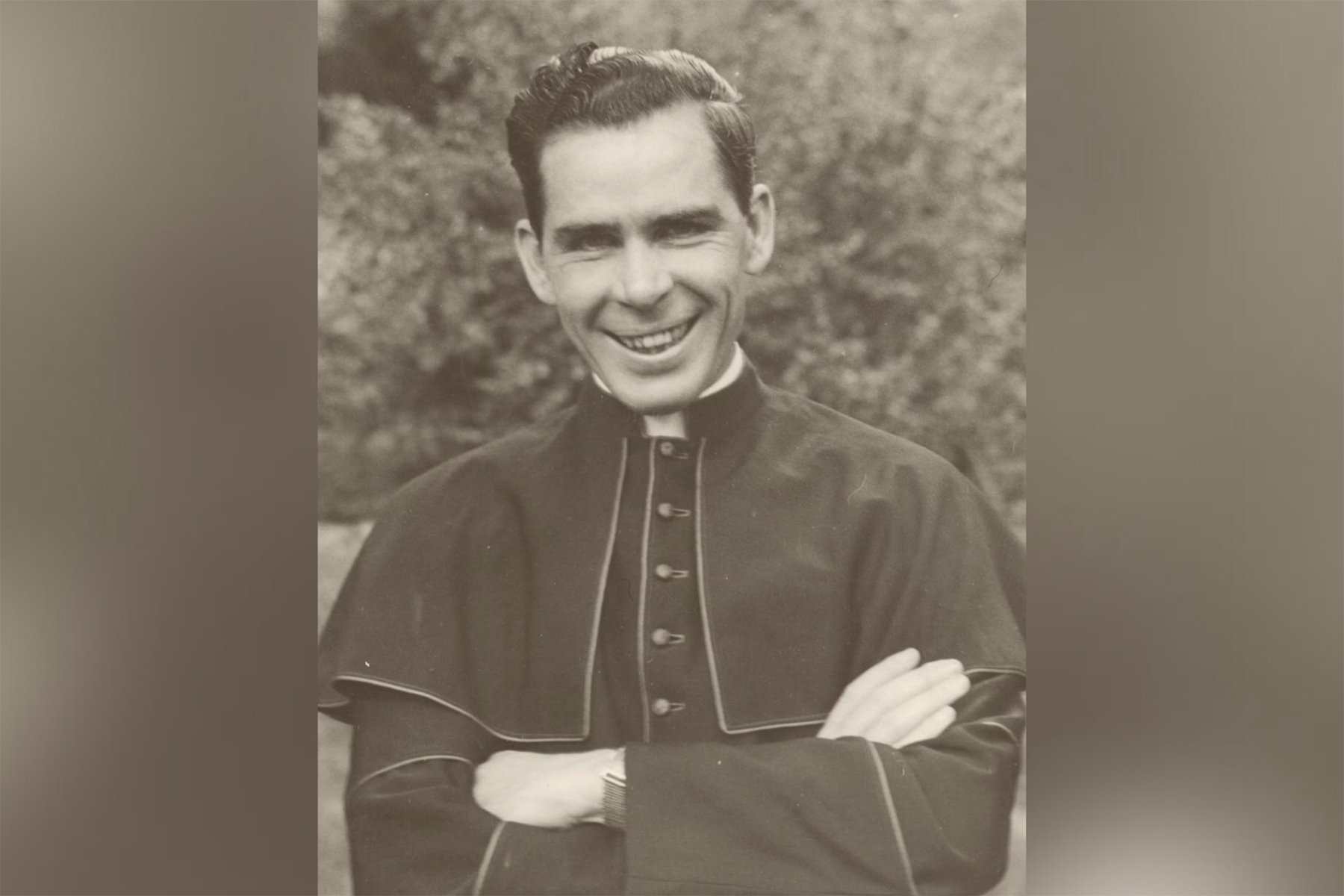
On 24 September, in Saint Louis, the Church raised to the altars Bishop Fulton J. Sheen (1895-1979), proclaiming him blessed. He becomes the first bishop born in the United States to receive this honour. His cause, opened some twenty years ago, had cleared its last Roman obstacle at the beginning of 2026; he had been declared venerable by a decree of 28 June 2012.
What the Church teaches of the saints
The Church honours those who already reign with Christ. The holy Council of Trent teaches that it is good and profitable to invoke the saints and to venerate their relics, because they offer their prayers to God for men. To raise a servant of God to the altars is not to flatter a man: it is to confess that grace has conquered in mortal flesh. “But we have this treasure in earthen vessels” (II Cor. IV, 7): holiness does not abolish weakness, it passes through it.
The measure of a bishop
The only standard worth anything is fidelity to Christ preached unmixed. Sheen was formed by the Church before the council: a doctor of theology from the Angelicum in Rome in 1924, he received in 1935 from Pius XI the charge of studying Marx and Lenin, in order to warn Americans against the communist error. It was this same error that Pius XI declared “intrinsically perverse”, with which no one who would save Christian civilization may collaborate.
Named auxiliary bishop of New York by Pius XII in 1951, he was consecrated in Rome, in the basilica of Saints John and Paul; he would later be bishop of Rochester (1966), then titular archbishop of Newport (1969). National director of the Society for the Propagation of the Faith from 1950 to 1966, he bore but one word, from the studio as from the pulpit. Bishop John Barres, whom he baptized as an infant in 1960, summed him up thus: “Whether Bishop Sheen was speaking from a radio studio, before a television camera, in a lecture hall or from a pulpit, his message remained the same: Jesus Christ.”
What the faithful must retain
What tradition retains here is not first the solemnity of the day, but the object of the praise: a priest who proclaimed Jesus Christ crucified and warned against the error that denies God. “For I judged not myself to know anything among you, but Jesus Christ; and him crucified” (I Cor. II, 2). This is the measure of a shepherd, and what the faithful are called to imitate.
Sources. Council of Trent (1566), Session XXV, On the invocation, veneration and relics of the saints; Pius XI, encyclical Divini Redemptoris (1937), on atheistic communism; Holy Scripture according to the Vulgate, I Cor. II, 2 and II Cor. IV, 7.