
The Saints
Saint Gerard Majella: patron of mothers
Saint Gerard Majella, the Redemptorist wonder-worker, is the patron of expectant mothers and of childbirth. His life, a prayer for mothers, his novena, his feast on 16 October, and why mothers invoke him.
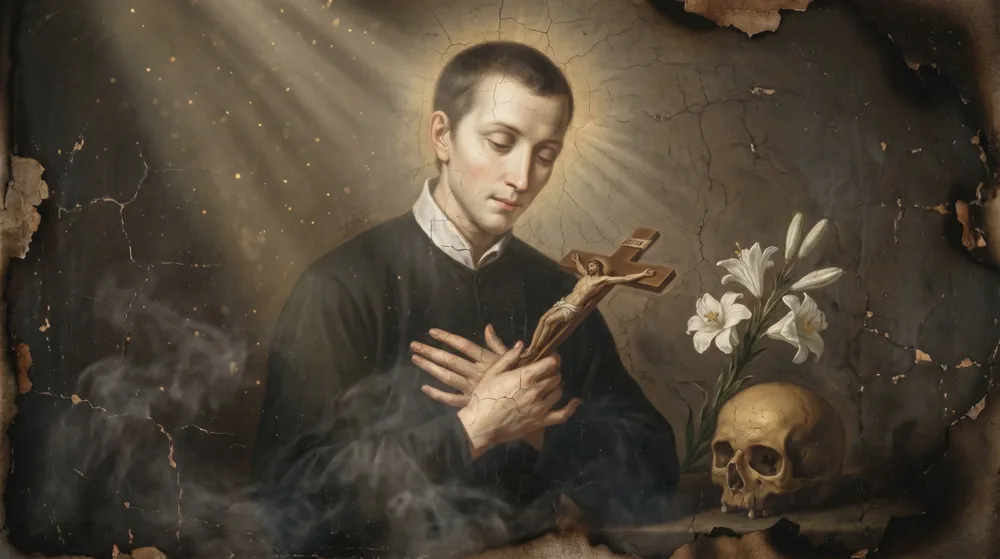
Saint Gerard Majella was an Italian Redemptorist lay brother of the eighteenth century, and the Church venerates him as the patron of mothers, of expectant mothers, and of a safe childbirth. He was a wonder-worker in his own lifetime, and the faithful have called him, with simple affection, the mother's saint. His feast is kept on 16 October. Mothers with child, women who long to conceive, and those who grieve a child lost invoke Saint Gerard Majella before God, asking through his intercession a safe delivery for mother and infant.
Who was Saint Gerard Majella, and the prayer mothers say
Gerard Majella was born in 1726 at Muro Lucano, in the kingdom of Naples, and died on 16 October 1755, not yet thirty years of age. The son of a poor tailor, he gave himself wholly to God from childhood, was received as a lay brother among the Redemptorists, and lived a hidden life of labour, penance, and prodigious charity. He is the patron of mothers because of two events touching the bearing of children, told below.
Here is the prayer to Saint Gerard Majella for an expectant mother most widely printed in prayer-books. It is a devotional composition, with no liturgical text and no approval of its own; Saint Gerard has no Mass in the universal Roman Missal of 1962.
O glorious Saint Gerard, because, when falsely accused of crime, thou didst bear, like thy Divine Master, without murmur or complaint, the calumnies of wicked men, thou hast been raised up by God as the patron and protector of expectant mothers. Preserve me from danger, and from the excessive pains accompanying childbirth, and shield the child which I now carry, that it may see the light of day and receive the cleansing waters of Baptism. Amen.
This prayer asks nothing apart from God. It begs Saint Gerard to bear a mother's need before the throne of God and to obtain for her, from the Author of life, a safe deliverance for herself and her child, and above all that the infant be baptised and made an heir of heaven.
The life of Saint Gerard Majella
Gerard's father died while the boy was still young, and he was apprenticed to the tailor's trade, then taken for a time into the household of the bishop of Lacedonia, where he was sorely tried by an ill-tempered servant whom he served without complaint. From his earliest years he was marked by an austere love of prayer, fasting, and bodily penance, and by a longing to give himself without reserve to God.
When Saint Alphonsus Liguori — founder of the Congregation of the Most Holy Redeemer, and a Doctor whom the Church reckons among the safe masters of the spiritual and moral life — sent his missionaries to preach at Muro, Gerard begged to be received among them. The fathers judged him too frail in health and at first refused; some accounts relate that his mother locked him in his room, and that he let himself down from the window to follow them. He would not be put off, and was admitted as a lay brother in 1749, professing his vows three years later.
He held no office of preaching or of the altar. He served in the lowest tasks — as porter, tailor, sacristan, gardener, and infirmarian — and in these humble duties he was perfected. The traditional life records that he laboured for the poor, counselled souls in the way of holiness with a wisdom beyond his learning, and bore in his body a great love of the Passion of our Lord, which carried him into long ecstasies. He died of consumption, worn out by penance and charity, on the day the Church now keeps as his feast.
Saint Gerard Majella the wonder-worker
The faithful know Saint Gerard as a wonder-worker, and the traditional accounts of his life relate many marvels. He is said to have read the secrets of consciences, to have multiplied bread and provisions for the poor when the stores ran dry, to have walked upon the sea or been borne over the water, and to have been seen in two places at once. Such prodigies, granted to a humble lay brother who held no high station, were a sign of the power of God working through a soul wholly surrendered.
We do not measure a saint by the catalogue of his miracles. What the Church set before her children when she raised Gerard Majella to the altars — beatified by Leo XIII in 1893, canonised by Saint Pius X in 1904 — was a brother who, in a hidden and laborious station, gave himself to God without reserve and bore a grave trial against his good name with the patience of Christ. The wonders adorn that holiness; they are not its substance. As the incorrupt saints and the marvels recorded of so many others attest, God glorifies His friends to draw us to Himself, the Author of every grace.
Why Saint Gerard Majella is the patron of mothers
The patronage of Saint Gerard over mothers with child rests upon two events recorded in the traditional history of his life.
The first was a calumny. A young woman, to cover her own fault, accused Brother Gerard of grave sin against chastity. Saint Alphonsus, hearing the charge, imposed silence and penance upon him; and Gerard, following the example of his crucified Lord, made no answer and bore the disgrace in patience, until the accuser, falling gravely ill, confessed that the charge was false. Because he was thus tried and vindicated in a matter touching a woman and a child, the faithful came to invoke him for the honesty and safety of childbirth.
The second was a sign given near his death. As he was leaving a house where he had been a guest, a daughter of the family ran after him to return a handkerchief he had let fall. Gerard bade her keep it, saying it might one day be useful to her. Years afterward, when that same woman was in danger of death in her labour, she called for the handkerchief; and tradition holds that upon its application the peril passed and she was safely delivered. From this Saint Gerard became, in the devotion of the people, a refuge for women in the hour of birth.
Upon these foundations rests the title under which most of the faithful now know him. Saint Gerard Majella is the patron of mothers, of expectant mothers, and of a safe childbirth — and so too of women who long for a child and have not conceived, and of those who grieve the loss of one. Their hope is grounded in the word of Scripture, that the gift of children is from God: "Behold the inheritance of the Lord are children: the reward, the fruit of the womb" (Psalm 126:3, Douay-Rheims). This devotion belongs naturally to the Christian home and to Catholic marriage, whose first end is the procreation and right rearing of children. We have written more fully on the saint's patronage in our companion piece on Saint Gerard, patron of expectant mothers.
A Saint Gerard Majella prayer for mothers
An expectant mother may say the prayer given above each day until her time. It belongs with the wider treasury of Catholic intercession for the family — the prayer for mothers, the prayer for my children, and the prayer for family — all of which ask God, through the saints, to keep and sanctify the Christian household.
The novena to Saint Gerard Majella
A novena is nine days of prayer for a particular intention, a devotion modelled on the nine days the Apostles and our Lady spent in prayer between the Ascension and Pentecost. The novena to Saint Gerard Majella is prayed especially by expectant mothers, by those hoping to conceive, and by their families, for nine consecutive days — often the nine days ending on his feast, 16 October, or before the expected birth.
There is no fixed or approved text; the faithful may pray the Saint Gerard prayer above, adding each day an Our Father, a Hail Mary, and a Glory Be, with their own petition.
The novena is best joined to the sacraments — to a good confession and Holy Communion — so that the soul approaches God in the state of grace, the surest disposition for a fruitful prayer.
The feast day of Saint Gerard Majella
The feast of Saint Gerard Majella is kept on 16 October, the day of his death. On this day the faithful honour him at Mass and in private devotion, mothers commend their children to his care, and parishes and shrines dedicated to him keep their patronal feast. He is not in the universal Roman calendar of 1962: his feast is observed by the Redemptorists and where his devotion is established; the liturgical year sets each saint's day as a fresh occasion to ask his prayers and to imitate his virtues.
The medal of Saint Gerard, often worn by expectant mothers, is not a charm but a sacramental — a token of confidence in his intercession that disposes the soul to prayer and trust in God. Our guide to the Catholic saints sets St Gerard Majella in the company of the other saints, listed month by month by feast day.
Frequently Asked Questions
Who is Saint Gerard Majella the patron of?
Saint Gerard Majella is the patron of mothers, of expectant mothers, of childbirth, and of unborn children. By extension the faithful invoke him for women who long to conceive, for safe delivery, for a good confession (from his own love of penance), and against false accusation, since he bore a grave calumny in silence.
What is the prayer to Saint Gerard Majella for mothers?
The prayer most widely printed, a devotional composition without liturgical standing, begins: "O glorious Saint Gerard, because, when falsely accused of crime, thou didst bear, like thy Divine Master, without murmur or complaint, the calumnies of wicked men, thou hast been raised up by God as the patron and protector of expectant mothers." It asks for protection in childbirth and that the child be safely born and baptised. The full text is given above.
When is the feast day of Saint Gerard Majella?
His feast is kept on 16 October, the anniversary of his death in 1755.
How do you pray the novena to Saint Gerard Majella?
You pray for nine consecutive days, naming your intention, and adding each day an Our Father, a Hail Mary, and a Glory Be to a prayer addressed to the saint. Many pray it in the nine days before his feast or before an expected birth, joined to confession and Holy Communion.
Why is Saint Gerard the patron of expectant mothers?
Because of two events in his life touching childbirth: he bore a false accusation by a young woman in patient silence until she confessed the truth, and he gave a handkerchief to a young woman that was later credited with bringing her safely through a dangerous labour. From these the faithful came to invoke him in the hour of birth.
Was Saint Gerard Majella a real wonder-worker?
The traditional life of the saint records many marvels — hidden knowledge of consciences, the multiplying of food for the poor, bilocation, and more — and the Church canonised him in 1904. We honour the wonders as signs of God's power working through a humble soul, while measuring his sanctity above all by his charity, humility, and patience.
Sources. Traditional lives of Saint Gerard Majella (Redemptorist sources); Catechism of Saint Pius X (on the intercession of the saints); Sacred Scripture, Psalm 126:3 (Douay-Rheims).
For more, see saint george.
For more, see saint maximilian kolbe.
For more, see saint josephine bakhita.
For more, see saint dominic savio.
For more, see saint gemma galgani.
For more, see saint john vianney.
For more, see saint camillus.
For more, see saint agatha.
For more, see saint martin de porres.
For more, see patron saint of students.
To go further, read also Saint Nicholas of Myra (the true Santa Claus) and Saint Philomena.
Iter Fidei serves the prayers, the Divine Office and the liturgical calendar, in Latin and English with audio. Join early access here.