
The Last Things
What Does God Say About the End Times?
What does God say about the end times? Of that day and hour no one knoweth — Our Lord forbids us to fix a date and bids us watch. The Church teaches the signs, the Antichrist, the Second Coming, and the General Judgment.
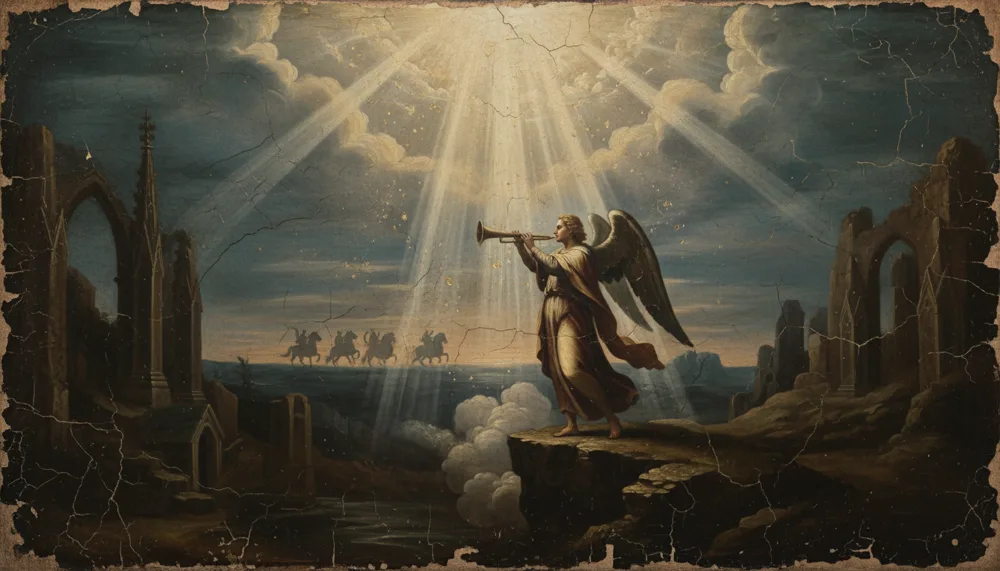
What does God say about the end times? He forbids us to fix the date, and He commands us to watch. Our Lord is exact: "But of that day and hour no one knoweth, no, not the angels of heaven, but the Father alone" (Matthew xxiv. 36). The Bible does not give the end times to feed curiosity; it gives them so that we live ready, because the Son of man "will come at an hour that you know not" (Matthew xxiv. 44). This is the whole of the Catholic answer in two lines: the day is hidden, the coming is certain.
What Does the Bible Say About the End Times?
Scripture speaks of two comings of the Son of God. The first, when, to save us, He took our nature in the womb of a Virgin; the second, "when, at the consummation of the ages, He shall come to judge all men," as the Roman Catechism puts it. This second coming Scripture calls the day of the Lord, and Saint Paul warns that "the day of the Lord shall so come, as a thief in the night" (1 Thessalonians v. 2). The end times are not a separate drama alongside the Gospel; they are the last act of the one work of Christ — Redeemer first, then Judge.
This is why the Church places "from thence He shall come to judge the living and the dead" in the very Creed we profess at Mass. It is an article of faith, not a speculation: the announcement of a fixed certainty and a summons to order our lives toward it. The four great realities that hang upon that day — death, judgment, hell, and heaven — are the four last things; the end times are simply those last things come upon the whole world at once.
"Of That Day and Hour No One Knoweth"
Here the Catholic reading parts firmly from the sensational ones. Our Lord could not have shut the door more plainly:
But of that day and hour no one knoweth, no, not the angels of heaven, but the Father alone. (Matthew xxiv. 36)
No date-setting survives that verse. Every prediction of "the end on such a year," every chart of the last days, every newspaper read as prophecy, is refused in advance by the lips of God Himself. The Apostles asked the same restless question after the Resurrection and were told: "It is not for you to know the times or moments, which the Father hath put in his own power" (Acts i. 7). To pretend to the hour is not zeal; it is the opposite of the obedience Christ asked, which is to keep watch precisely because we do not know.
The same Lord who hid the hour also forbade panic. "You shall hear of wars and rumours of wars. See that ye be not troubled. For these things must come to pass, but the end is not yet" (Matthew xxiv. 6). Wars, earthquakes, famines — these He calls "the beginning of sorrows" (Matthew xxiv. 8), not the end. The disciple who reads every disaster as the final sign has already disobeyed the command not to be troubled. If the fear of the end disturbs the soul, the answer is not calculation but the peace He left us when He said let not your heart be troubled; the Christian meets that fear as he meets every other, by turning to God, as we set out in what does God say about fear and be anxious for nothing.
What Are the Signs of the End Times?
Scripture does give signs — not to time the end, but to make it recognizable when it is near. The Roman Catechism names three that must precede the General Judgment: the preaching of the Gospel throughout all the earth, the great apostasy, and the Antichrist. Our Lord Himself sets the first: "And this gospel of the kingdom shall be preached in the whole world, for a testimony to all nations, and then shall the consummation come" (Matthew xxiv. 14).
Saint Paul gives the other two together, and against all impatience:
Let no man deceive you by any means, for unless there come a revolt first, and the man of sin be revealed, the son of perdition... (2 Thessalonians ii. 3)
The "revolt" is the apostasy, a falling away from the faith; the "man of sin" is the Antichrist. So long as these have not come, the Apostle says, the day is not yet. This is the Church's measured reading of the signs of the end times: real signs, soberly ordered, never a license to announce the date. Our Lord adds the warning against false signs — "For there shall arise false Christs and false prophets, and shall shew great signs and wonders" (Matthew xxiv. 24) — which is why a Catholic distrusts every sensational reading that rests on portents and excitement rather than on the deposit of faith.
Who Is the Antichrist?
The Antichrist is not a symbol or a mere mood of the age. Scripture and the Roman Catechism speak of him as the "man of sin... the son of perdition; who opposeth, and is lifted up above all that is called God" (2 Thessalonians ii. 3-4), a real persecutor who will deceive by lying wonders before the end.
Saint John warns that "even now there are become many Antichrists; whereby we know that it is the last hour" (1 John ii. 18) — every age has its forerunners of the great deceiver, every spirit that denies Christ. The Church watches for the one and resists the many, but she does not name dates or men. Against this seduction the only armour is fidelity in the daily spiritual combat and a faith too well taught to be deceived, which is why the catechism itself is given to us.
The Second Coming and the Resurrection of the Dead
When the day comes, it will not be hidden. "For as lightning cometh out of the east, and appeareth even into the west, so shall also the coming of the Son of man be" (Matthew xxiv. 27). At His Ascension the angels promised it plainly: "This Jesus who is taken up from you into heaven, shall so come, as you have seen him going into heaven" (Acts i. 11). The Lord who was judged and condemned by perverse judges will return visibly, in glory, to judge.
With His coming comes the resurrection of the body, which we confess in the Creed. "All that are in the graves shall hear the voice of the Son of God. And they that have done good things, shall come forth unto the resurrection of life; but they that have done evil, unto the resurrection of judgment" (John v. 28-29).
The Roman Catechism teaches that each will rise "with his own body, that is to say, with the same body that we have on earth," now made immortal, the bodies of the saints clothed with brightness — "the just shall shine as the sun in the kingdom of their Father" (Matthew xiii. 43). This is no vague survival of the soul, but the whole man, soul and risen body, standing before God; we set out this article of the Creed at length in the resurrection of the body.
The General Judgment
Here the sober Catholic teaching shows its weight. The Church holds two judgments. The first is the Particular Judgment, which each soul undergoes "at the moment when we have just departed from this life," says the Roman Catechism — an immediate, private reckoning that fixes the soul's eternity. The second is the General Judgment at the end of the world, when "all men gathered together, on the same day and in the same place, shall appear before the tribunal of their Judge." Saint Paul states the necessity: "For we must all be manifested before the judgment seat of Christ, that every one may receive the proper things of the body, according as he hath done, whether it be good or evil" (2 Corinthians v. 10).
Why a second judgment, if the first already decides? Because the influence of our deeds outlives us and runs to the last day; because the body shared in the soul's works and must share its sentence; and because the justice of God, often hidden here below where the wicked prosper, must be vindicated openly. The sentence will be public and final, the one tribunal whose authority over life and death is beyond all question, as we note in what God says about the death penalty.
To those on His right the Judge will say, "Come, ye blessed of my Father, possess the kingdom prepared for you from the foundation of the world"; to those on His left, "Depart from me, you cursed, into everlasting fire, which was prepared for the devil and his angels" (Matthew xxv. 34, 41). That the everlasting fire is real, we have set out in the four last things.
How Then Should We Live?
The end times are given for one purpose: that we live ready. "Watch ye therefore, because you know not what hour your Lord will come" (Matthew xxiv. 42). Ecclesiasticus draws the rule: "In all thy works remember thy last end, and thou shalt never sin" (Ecclesiasticus vii. 40). The man who keeps his death and the day of judgment before his eyes is kept from sin — which is why the Church orders her children to mental prayer, to confession, and to charity for the dead.
The holy souls still being purified await that same resurrection, and we owe them our prayers now, as we keep all souls' day and beg eternal rest for them with the litany of the poor souls in purgatory. And we turn to her who stood at the Cross in the litany of our Lady of Sorrows and the litany of the Immaculate Heart of Mary, that she may obtain for us a holy death and a place at the Judge's right hand. The faithful soul does not dread the day; it desires it, as a child desires to go to its Father.
So the answer to what God says about the end times is not a calendar but a command and a hope. Watch, because the hour is hidden. Live ready, because the coming is sure. And lift your eyes to that day when "he shall send his angels with a trumpet, and a great voice: and they shall gather together his elect from the four winds" (Matthew xxiv. 31). For more, see what does God say about hope, the collection of catholic bible verses, and the hub what does God say about.
Frequently Asked Questions
Are we in the end times?
We are forbidden to answer that with a date, and we are bound to answer it with vigilance. Every age since the Apostles has been the "last hour," for Saint John wrote "it is the last hour" (1 John ii. 18) in his own day; the whole time of the Church is the final age before the Lord returns. So the honest reply is the Lord's own: no one knoweth the day (Matthew xxiv. 36), and therefore we watch in every age as if it were ours.
What does the Bible say about the end times?
Scripture speaks of two comings of Christ: the first to redeem us, the second "at the consummation of the ages... to judge all men," as the Roman Catechism puts it. Saint Paul warns that "the day of the Lord shall so come, as a thief in the night" (1 Thessalonians v. 2), and Our Lord forbids us to fix its hour (Matthew xxiv. 36). The Bible gives the end times not to feed curiosity but so that we live ready, for the Son of man "will come at an hour that you know not" (Matthew xxiv. 44).
What does God say about the end of times?
God says two things: the day is hidden, and the coming is certain. He forbids us to set a date — "It is not for you to know the times or moments, which the Father hath put in his own power" (Acts i. 7) — and He commands us to watch: "Watch ye therefore, because you know not what hour your Lord will come" (Matthew xxiv. 42). The whole Catholic answer is a command and a hope, not a calendar.
What does the Bible say about the end of days?
The end of days, which Scripture calls the day of the Lord, will be the last act of the one work of Christ — Redeemer first, then Judge. It brings the resurrection of the body and the General Judgment, when "we must all be manifested before the judgment seat of Christ" (2 Corinthians v. 10). The Church places "from thence He shall come to judge the living and the dead" in the Creed itself: it is an article of faith, a fixed certainty, not a speculation.
What are the signs of the end times?
The Roman Catechism names three signs that must precede the General Judgment: the preaching of the Gospel throughout all the earth (Matthew xxiv. 14), the great apostasy or revolt, and the revealing of the Antichrist, the man of sin (2 Thessalonians ii. 3). Wars, earthquakes, and famines Our Lord calls only "the beginning of sorrows" (Matthew xxiv. 8), not the end. The signs are real and soberly ordered, but they are given to make the day recognizable, never to license announcing its date.
When will we know we are in the end of times?
We will not be given a date, and to demand one is the very curiosity Christ forbade. The Apostle teaches that until the apostasy comes and the Antichrist is revealed, "the day is not yet" (2 Thessalonians ii. 3); meanwhile Our Lord warns "see that ye be not troubled" (Matthew xxiv. 6). The disciple who reads every disaster as the final sign has already disobeyed the command not to be troubled — our task is to watch, not to calculate.
What does Jesus say about the end times?
Our Lord teaches the end times chiefly in the Olivet discourse (Matthew xxiv-xxv). He forbids date-setting — "of that day and hour no one knoweth, no, not the angels of heaven, but the Father alone" (Matthew xxiv. 36) — and forbids panic: "see that ye be not troubled. For these things must come to pass, but the end is not yet" (Matthew xxiv. 6). He calls wars and famines only "the beginning of sorrows" (xxiv. 8), warns of false Christs (xxiv. 24), and commands above all, "Watch ye therefore, because you know not what hour your Lord will come" (Matthew xxiv. 42).
What does Revelation say about the end times?
The Apocalypse of Saint John gives the same teaching as the Gospel, in vision rather than in plain speech: the persecution of the Church, the defeat of the dragon, the final judgment, and the new heaven and new earth where "God shall wipe away all tears from their eyes" (Apocalypse xxi. 4). The Church reads it as consolation, not as a cipher to decode current events; its purpose is to confirm that Christ reigns and conquers, not to time His coming. To wrest dates and headlines from its symbols is precisely the curiosity Our Lord forbade.
The Iter Fidei app carries the Douay-Rheims Bible, the prayers and litanies, in Latin and your own language. Get the app link by email here.
Sources. Sacred Scripture, Douay-Rheims version: Gospel of Saint Matthew xxiv-xxv (the Olivet discourse) and xiii. 43; Saint John v. 28-29; Acts of the Apostles i. 7, 11; 1 Thessalonians v. 2; 2 Thessalonians ii. 3-4; 2 Corinthians v. 10; 1 John ii. 18; Ecclesiasticus vii. 40. Catechism of the Council of Trent (Roman Catechism, 1566), on the Seventh Article of the Creed ("From thence He shall come to judge the living and the dead") and the Eleventh Article ("I believe in the resurrection of the body"). Catechism of Saint Pius X (1908), on the Last Things and the four last things.