
Novenas
Divine Mercy Novena: Full Text for All Nine Days
The full nine-day Divine Mercy Novena from St Faustina's diary — day 1 through day 9, the Chaplet of Divine Mercy, the 3 o'clock prayer, and when to start it (Good Friday to Divine Mercy Sunday).
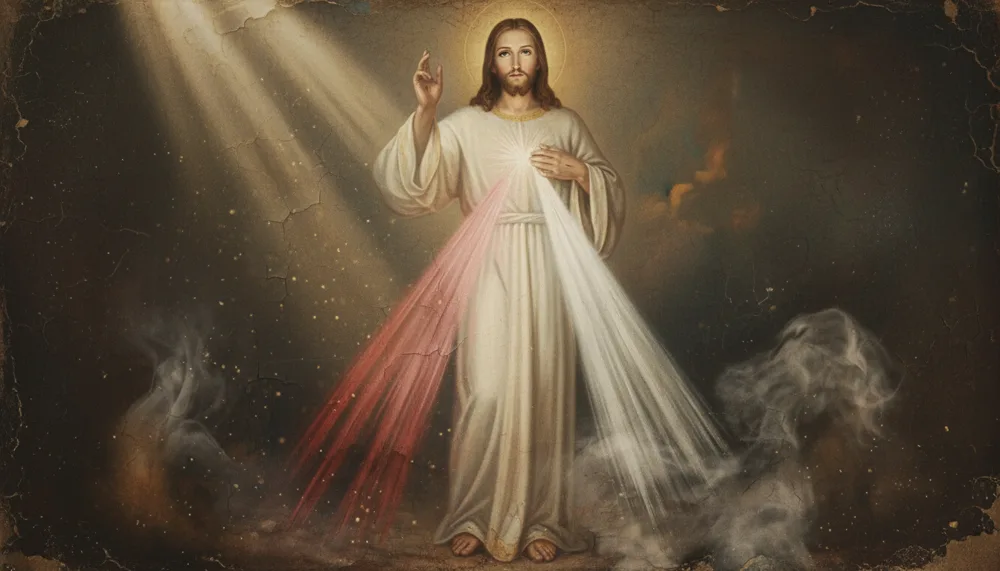
The Divine Mercy Novena is the nine-day prayer given to St Faustina Kowalska, in which Our Lord asks that on each of the nine days a different group of souls be brought to His mercy — beginning on Good Friday and ending on the eve of Divine Mercy Sunday, the Sunday after Easter. Each day joins a short intention to the same two prayers and to the Chaplet of Divine Mercy. Below we give the complete, authentic text for all nine days, the Chaplet, the 3 o'clock prayer, the history of the devotion, and where it stands in relation to the traditional calendar of 1962.
The view of tradition
The Divine Mercy devotion is recent, and it has no place in the liturgy of 1962. The facts, in order:
- St Maria Faustina Kowalska, a Polish sister of the Congregation of Our Lady of Mercy, died in Kraków on 5 October 1938. Her Diary records the private revelations she believed she received from 1931 onward; the novena, the Chaplet, the image and the request for a feast all come from it.
- On 19 November 1958 the Supreme Sacred Congregation of the Holy Office, having examined these alleged visions, decided that their supernatural character was not evident, that no feast of Divine Mercy was to be instituted, and that the images and writings spreading the devotion "in the forms proposed by Sister Faustina" were forbidden. The notification was published on 6 March 1959 in the Acta Apostolicae Sedis (vol. 51, p. 271).
- On 15 April 1978 the Sacred Congregation for the Doctrine of the Faith declared those prohibitions no longer binding, citing original documents unknown in 1959.
- St Faustina was beatified on 18 April 1993 and canonised on 30 April 2000. By a decree of 5 May 2000 the Congregation for Divine Worship gave the Second Sunday of Easter the added name "Divine Mercy Sunday", leaving its texts unchanged.
In the Missal and Breviary of 1962, therefore, the Sunday after Easter is simply Low Sunday, Dominica in Albis, named Quasimodo from its Introit, and there is no feast of Divine Mercy. We give the novena below because it is so widely sought, and its prayers are orthodox in their trust in the Passion; we give it as a private devotion of the twentieth century, not as part of the traditional rite.
The tradition had long taught the same confidence under older forms, and they remain the surest road:
- The Sacred Heart of Jesus, the devotion the Church set at the centre of her teaching on mercy and reparation: Pius XI's encyclical Miserentissimus Redemptor (8 May 1928) and Pius XII's Haurietis aquas (15 May 1956). It has its novena to the Sacred Heart, the Litany of the Sacred Heart and the chaplet of the Sacred Heart.
- The Precious Blood, whose feast falls on 1 July in the 1962 calendar: the same offering of the Passion to the Father, in the chaplet of the Precious Blood and the Precious Blood novena.
- The sacrament of Penance itself, where mercy is given and not only asked: the act of contrition and our guide on how to go to confession.
- The penitential psalms, above all the Miserere (Psalm 50 in the Vulgate): "Have mercy on me, O God, according to thy great mercy" (Douay-Rheims), and the Lenten antiphon Parce, Domine, parce populo tuo.
If you are new to this kind of prayer altogether, see first our guide to what a novena is.
When does the Divine Mercy Novena start?
Our Lord asked St Faustina to make the novena beginning on Good Friday. The nine days therefore run from Good Friday through Holy Saturday, Easter Sunday, and the days of Easter week, ending on the Saturday after Easter — so that Divine Mercy Sunday (the Second Sunday of Easter, also called Low Sunday or Quasimodo Sunday) is not day nine but the feast the novena leads into. In practice the days fall like this:
- Day 1 — Good Friday
- Day 2 — Holy Saturday
- Day 3 — Easter Sunday
- Day 4 — Easter Monday
- Day 5 — Easter Tuesday
- Day 6 — Easter Wednesday
- Day 7 — Easter Thursday
- Day 8 — Easter Friday
- Day 9 — Easter Saturday
That is the time St Faustina recorded, tied to the movable feast of Easter. Some, however, pray this novena at other times of year for a particular intention; the prayers are good in themselves and may be said whenever a soul wishes to beg God's mercy, though the great harvest of the devotion belongs to Divine Mercy Sunday.
How to pray the Divine Mercy Novena
The pattern is the same every day, and it is simple:
- Begin with the Sign of the Cross and name the day's intention (the "Today bring to Me…" line below).
- Say the day's prayer that begins "Most Merciful Jesus…"
- Say the day's prayer that begins "Eternal Father…"
- Pray the Chaplet of Divine Mercy (given in full further down).
Many add the Chaplet at the 3 o'clock hour — the hour of Our Lord's death — and end with the short 3 o'clock prayer. Keep to a fixed time each day, name your own intention alongside the appointed one, and pray with trust: the whole spirit of this devotion is confidence in the mercy of God. The full nine days follow.
The Divine Mercy Novena — full text, day by day
Day 1 — All mankind, especially sinners
Today bring to Me all mankind, especially all sinners, and immerse them in the ocean of My mercy.
Most Merciful Jesus, whose very nature it is to have compassion on us and to forgive us, do not look upon our sins but upon our trust which we place in Your infinite goodness. Receive us all into the abode of Your Most Compassionate Heart, and never let us escape from It. We beg this of You by Your love which unites You to the Father and the Holy Spirit.
Eternal Father, turn Your merciful gaze upon all mankind and especially upon poor sinners, all enfolded in the Most Compassionate Heart of Jesus. For the sake of His sorrowful Passion show us Your mercy, that we may praise the omnipotence of Your mercy for ever and ever. Amen.
(Then pray the Chaplet of Divine Mercy.)
Day 2 — Priests and religious
Today bring to Me the souls of priests and religious, and immerse them in My unfathomable mercy.
Most Merciful Jesus, from whom comes all that is good, increase Your grace in men and women consecrated to Your service, that they may perform worthy works of mercy; and that all who see them may glorify the Father of Mercy who is in heaven.
Eternal Father, turn Your merciful gaze upon the company of chosen ones in Your vineyard — upon the souls of priests and religious; and endow them with the strength of Your blessing. For the love of the Heart of Your Son in which they are enfolded, impart to them Your power and light, that they may be able to guide others in the way of salvation and with one voice sing praise to Your boundless mercy for ages without end. Amen.
Day 3 — Devout and faithful souls
Today bring to Me all devout and faithful souls, and immerse them in the ocean of My mercy.
Most Merciful Jesus, from the treasury of Your mercy, You impart Your graces in great abundance to each and all. Receive us into the abode of Your Most Compassionate Heart and never let us escape from It. We beg this grace of You by that most wondrous love for the heavenly Father with which Your Heart burns so fiercely.
Eternal Father, turn Your merciful gaze upon faithful souls, as upon the inheritance of Your Son. For the sake of His sorrowful Passion, grant them Your blessing and surround them with Your constant protection. Thus may they never fail in love or lose the treasure of the holy faith, but rather, with all the hosts of Angels and Saints, may they glorify Your boundless mercy for endless ages. Amen.
Day 4 — Those who do not know God
Today bring to Me those who do not believe in God and those who do not yet know Me.
Most compassionate Jesus, You are the Light of the whole world. Receive into the abode of Your Most Compassionate Heart the souls of those who do not believe in God and of those who as yet do not know You. Let the rays of Your grace enlighten them that they, too, together with us, may extol Your wonderful mercy; and do not let them escape from the abode which is Your Most Compassionate Heart.
Eternal Father, turn Your merciful gaze upon the souls of those who do not believe in You, and of those who as yet do not know You, but who are enclosed in the Most Compassionate Heart of Jesus. Draw them to the light of the Gospel. These souls do not know what great happiness it is to love You. Grant that they, too, may extol the generosity of Your mercy for endless ages. Amen.
Day 5 — Those separated from the Church
Today bring to Me the souls of those who have separated themselves from My Church, and immerse them in the ocean of My mercy.
Most Merciful Jesus, Goodness Itself, You do not refuse light to those who seek it of You. Receive into the abode of Your Most Compassionate Heart the souls of those who have separated themselves from Your Church. Draw them by Your light into the unity of the Church, and do not let them escape from the abode of Your Most Compassionate Heart; but bring it about that they, too, come to glorify the generosity of Your mercy.
Eternal Father, turn Your merciful gaze upon the souls of those who have separated themselves from Your Son's Church, who have squandered Your blessings and misused Your graces by obstinately persisting in their errors. Do not look upon their errors, but upon the love of Your own Son and upon His bitter Passion, which He underwent for their sake, since they, too, are enclosed in His Most Compassionate Heart. Bring it about that they also may glorify Your great mercy for endless ages. Amen.
Day 6 — Meek and humble souls, and little children
Today bring to Me the meek and humble souls and the souls of little children, and immerse them in My mercy.
Most Merciful Jesus, You yourself have said, "Learn from Me for I am meek and humble of heart." Receive into the abode of Your Most Compassionate Heart all meek and humble souls and the souls of little children. These souls send all heaven into ecstasy and they are the heavenly Father's favorites. They are a sweet-smelling bouquet before the throne of God; God Himself takes delight in their fragrance. These souls have a permanent abode in Your Most Compassionate Heart, O Jesus, and they unceasingly sing out a hymn of love and mercy.
Eternal Father, turn Your merciful gaze upon meek souls, upon humble souls, and upon little children who are enfolded in the abode which is the Most Compassionate Heart of Jesus. These souls bear the closest resemblance to Your Son. Their fragrance rises from the earth and reaches Your very throne. Father of mercy and of all goodness, I beg You by the love You bear these souls and by the delight You take in them: Bless the whole world, that all souls together may sing out the praises of Your mercy for endless ages. Amen.
Day 7 — Those who venerate and glorify His mercy
Today bring to Me the souls who especially venerate and glorify My mercy, and immerse them in My mercy.
Most Merciful Jesus, whose Heart is Love Itself, receive into the abode of Your Most Compassionate Heart the souls of those who particularly extol and venerate the greatness of Your mercy. These souls are mighty with the very power of God Himself. In the midst of all afflictions and adversities they go forward, confident of Your mercy; and united to You, O Jesus, they carry all mankind on their shoulders. These souls will not be judged severely, but Your mercy will embrace them as they depart from this life.
Eternal Father, turn Your merciful gaze upon the souls who glorify and venerate Your greatest attribute, that of Your fathomless mercy, and who are enclosed in the Most Compassionate Heart of Jesus. These souls are a living Gospel; their hands are full of deeds of mercy, and their hearts, overflowing with joy, sing a canticle of mercy to You, O Most High! I beg You O God: Show them Your mercy according to the hope and trust they have placed in You. Let there be accomplished in them the promise of Jesus, who said that the souls who will venerate this fathomless mercy of His, He Himself will defend as His glory during their life, and especially at the hour of death. Amen.
Day 8 — Souls in Purgatory
Today bring to Me the souls who are detained in Purgatory, and immerse them in the abyss of My mercy.
Most Merciful Jesus, You Yourself have said that You desire mercy; so I bring into the abode of Your Most Compassionate Heart the souls in Purgatory, souls who are very dear to You, and yet, who must make retribution to Your justice. May the streams of Blood and Water which gushed forth from Your Heart put out the flames of Purgatory, that there, too, the power of Your mercy may be celebrated.
Eternal Father, turn Your merciful gaze upon the souls suffering in Purgatory, who are enfolded in the Most Compassionate Heart of Jesus. I beg You, by the sorrowful Passion of Jesus Your Son, and by all the bitterness with which His most sacred Soul was flooded: Manifest Your mercy to the souls who are under Your just scrutiny. Look upon them in no other way but only through the Wounds of Jesus, Your dearly beloved Son; for we firmly believe that there is no limit to Your goodness and compassion. Amen.
This eighth day is a favourite occasion to remember the dead; those who wish to keep up the practice all year may join it to our novena for the holy souls in Purgatory.
Day 9 — Lukewarm souls
Today bring to Me souls who have become lukewarm, and immerse them in the abyss of My mercy.
Most compassionate Jesus, You are Compassion Itself. I bring lukewarm souls into the abode of Your Most Compassionate Heart. In this fire of Your pure love, let these tepid souls, who, like corpses, filled You with such deep loathing, be once again set aflame. O Most Compassionate Jesus, exercise the omnipotence of Your mercy and draw them into the very ardor of Your love, and bestow upon them the gift of holy love, for nothing is beyond Your power.
Eternal Father, turn Your merciful gaze upon lukewarm souls who are nonetheless enfolded in the Most Compassionate Heart of Jesus. Father of Mercy, I beg You by the bitter Passion of Your Son and by His three-hour agony on the Cross: Let them, too, glorify the abyss of Your mercy. Amen.
The Chaplet of Divine Mercy
St Faustina's Diary asks that the Chaplet be prayed each day of the novena; its history and the older prayers of the tradition are set out on our page on the Divine Mercy Chaplet. It is said on ordinary Rosary beads and takes only a few minutes. If you are unfamiliar with the beads, our guide on how to pray the Rosary shows the same string used here.
Begin with the Sign of the Cross, one Our Father, one Hail Mary, and the Apostles' Creed.
On the large bead before each decade (the "Our Father" bead), say:
Eternal Father, I offer You the Body and Blood, Soul and Divinity of Your dearly beloved Son, Our Lord Jesus Christ, in atonement for our sins and those of the whole world.
On the ten small beads of each decade (the "Hail Mary" beads), say:
For the sake of His sorrowful Passion, have mercy on us and on the whole world.
Repeat these two prayers for all five decades.
To conclude, say three times:
Holy God, Holy Mighty One, Holy Immortal One, have mercy on us and on the whole world.
Some add a closing prayer:
Eternal God, in whom mercy is endless and the treasury of compassion inexhaustible, look kindly upon us and increase Your mercy in us, that in difficult moments we might not despair nor become despondent, but with great confidence submit ourselves to Your holy will, which is Love and Mercy itself. Amen.
The 3 o'clock prayer (the Hour of Great Mercy)
Our Lord asked that the hour of His death — 3:00 in the afternoon — be honoured as the Hour of Great Mercy. Many who pray this novena pause at that hour to say the Chaplet and this short prayer:
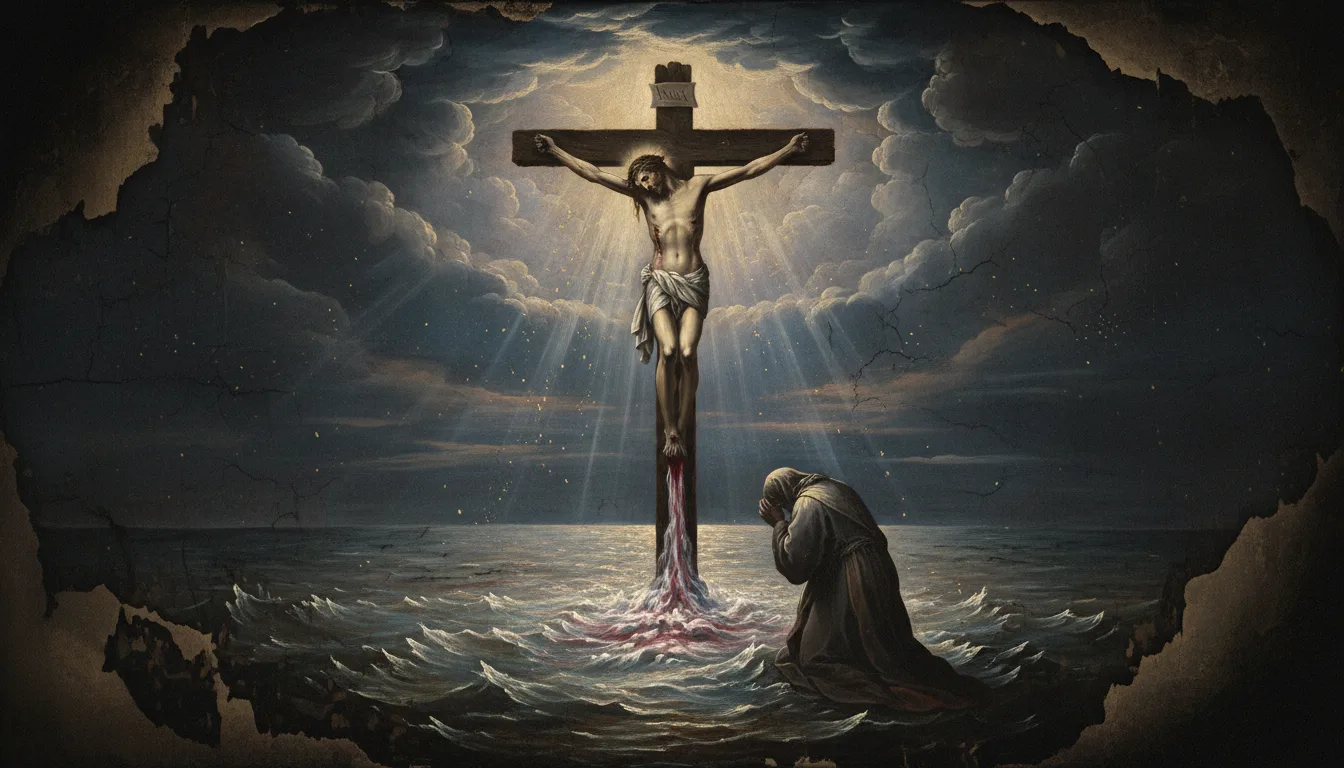
You expired, O Jesus, but the source of life gushed forth for souls, and the ocean of mercy opened up for the whole world. O Fount of Life, unfathomable Divine Mercy, envelop the whole world and empty Yourself out upon us.
A shorter aspiration, often repeated through the day, is:
O Blood and Water, which gushed forth from the Heart of Jesus as a fountain of Mercy for us, I trust in You.
The story of St Faustina and the Divine Mercy
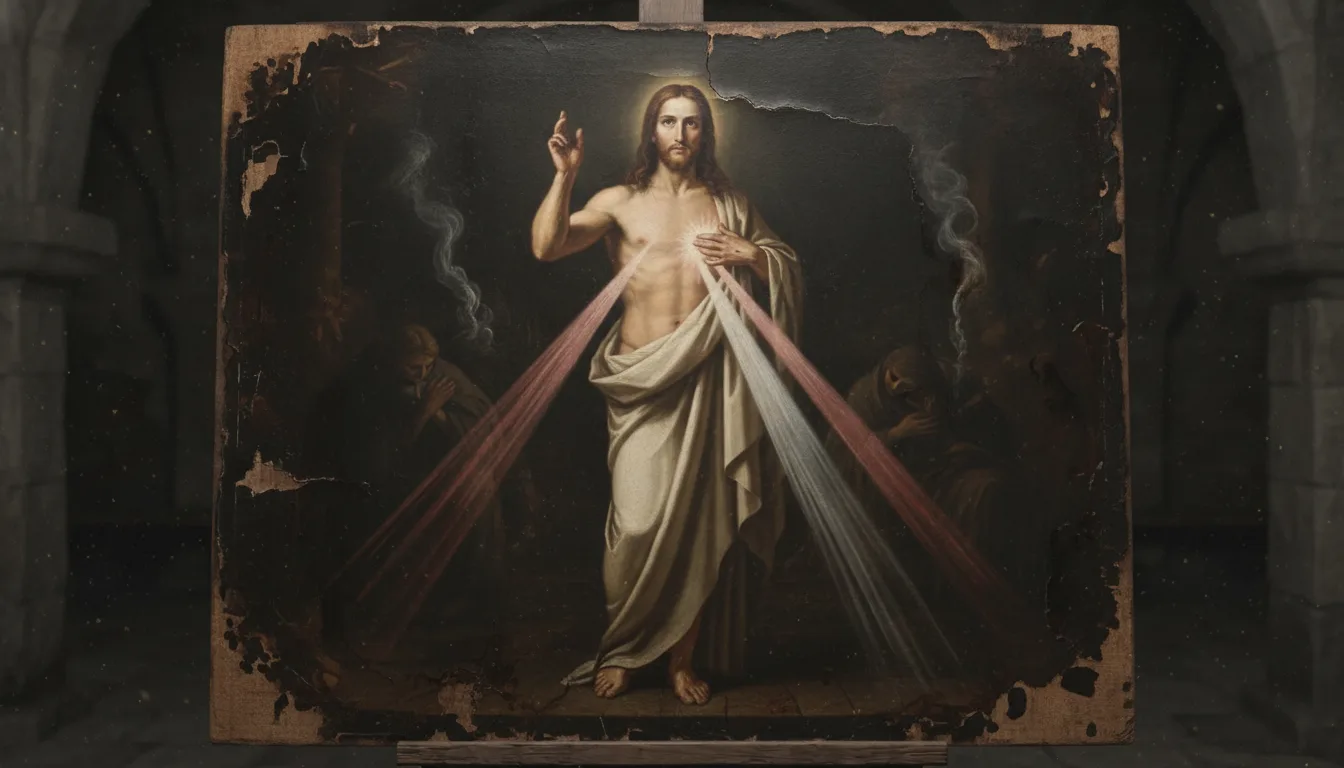
St Maria Faustina Kowalska (1905–1938) was a Polish religious sister of the Congregation of the Sisters of Our Lady of Mercy, a woman of little schooling who worked as a cook, gardener, and porter in the convents of her order. From 1931 she recorded in a Diary the interior locutions and visions she believed she received from Our Lord, centred on the mercy of God and on the image of Christ — one hand raised in blessing, the other touching His garment, with red and pale rays streaming from His Heart — inscribed Jesus, I trust in You. It was in these pages that the Chaplet, the novena, and the request for a Feast of Mercy on the Sunday after Easter were set down.
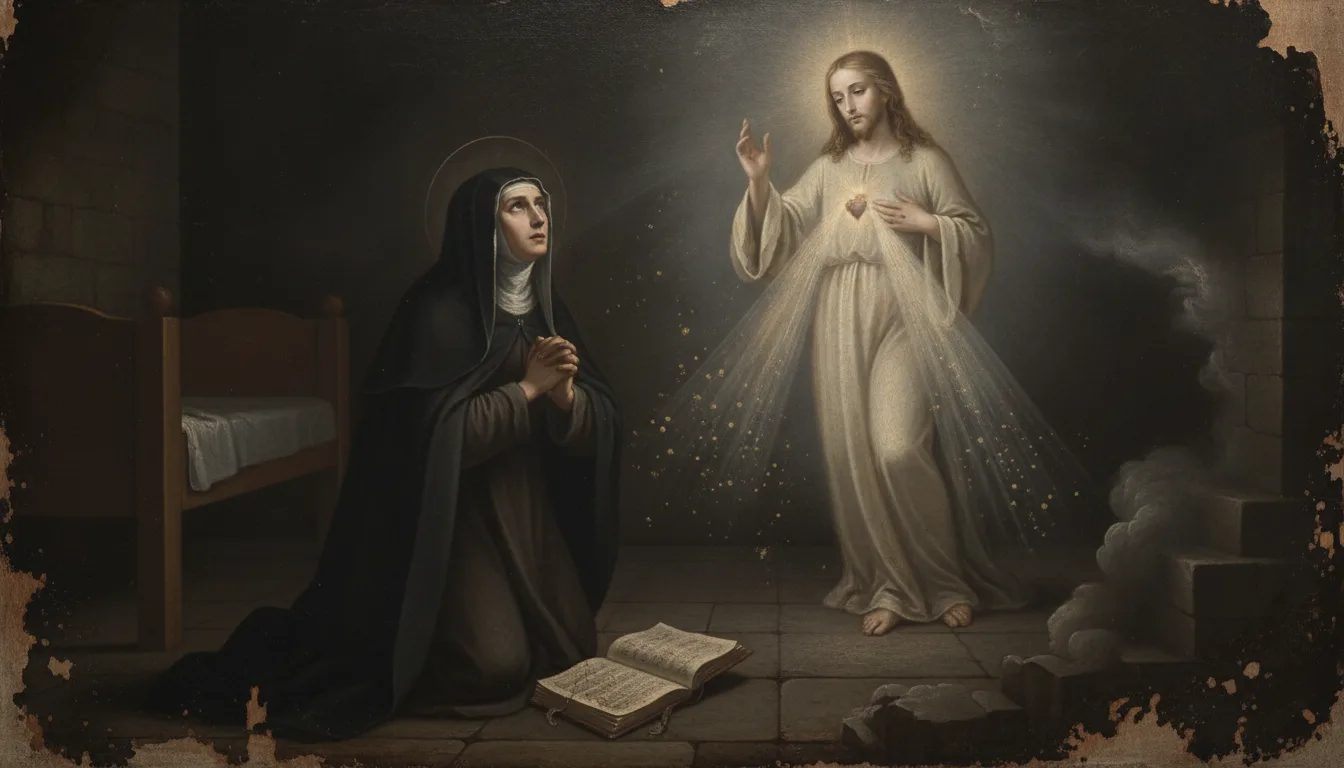
She died of tuberculosis on 5 October 1938, at the age of thirty-three. The history that followed (the Holy Office notification of 1958-1959, its withdrawal in 1978, the canonisation of 2000) is set out in the section on the view of tradition above.
It bears repeating that the message of Divine Mercy adds nothing new to the deposit of faith. The mercy of God, His desire to forgive the penitent, the infinite value of the Passion offered to the Father — these the Church has always taught. What the devotion offers is a form: a chaplet, a novena, an hour, an image, all bent toward one act of the soul, trust. Souls formed in the older tradition will find the same confidence, under forms the Church has long tried and approved, in the devotion to the Sacred Heart and in the great novenas such as the novena to St Joseph.
Frequently Asked Questions
What is the Divine Mercy Novena?
It is a nine-day prayer recorded by St Faustina Kowalska, in which Our Lord asks that on each of the nine days a different group of souls — sinners, priests, the faithful, unbelievers, the separated, the humble, those who venerate His mercy, the souls in Purgatory, and the lukewarm — be brought to His mercy. Each day joins a short intention to two prayers ("Most Merciful Jesus…" and "Eternal Father…") and to the Chaplet of Divine Mercy. It is prayed from Good Friday to the eve of Divine Mercy Sunday.
When does the Divine Mercy Novena start?
It begins on Good Friday and ends on the Saturday after Easter, so that day nine falls the evening before Divine Mercy Sunday (the Second Sunday of Easter). Because Easter is a movable feast, the calendar dates change each year; but the pattern — Good Friday through Easter week — is always the same.
How do you pray the Divine Mercy Novena?
Each day: make the Sign of the Cross and read the day's "Today bring to Me…" intention; say that day's "Most Merciful Jesus…" prayer and its "Eternal Father…" prayer; then pray the Chaplet of Divine Mercy on ordinary Rosary beads. Keep to a fixed time — many choose 3 o'clock, the Hour of Great Mercy — and add your own intention. The full text for all nine days is given above.
How many days is the Divine Mercy Novena?
Nine days — the meaning of the word novena, from the Latin for "nine." Our Lord asked that it begin on Good Friday and run through the nine days to Divine Mercy Sunday. Divine Mercy Sunday itself is the feast the novena leads to, not a tenth day of the novena.
What is the difference between the Divine Mercy Novena and the Chaplet?
The Chaplet is a short set prayer, said on Rosary beads, that can be prayed on any day. The Novena is the nine-day devotion with its own daily intentions and prayers — and it includes the Chaplet each day. So the Chaplet is one part of the novena, but it also stands on its own as a daily prayer for mercy at any time of year.
Is there a printable PDF of the Divine Mercy Novena?
Yes. The complete text for all nine days is available as a free PDF, ready to print: the Divine Mercy Novena PDF. The Iter Fidei novena app carries the novenas of the tradition with a reminder at the hour you choose, offline. Join early access here.
Is Divine Mercy Sunday in the 1962 calendar?
No. In the Missal of 1962 the Sunday after Easter is Low Sunday, Dominica in Albis. The name "Divine Mercy Sunday" was given to it by a decree of 5 May 2000, without any change to its Mass or Office.
Can I pray the Divine Mercy Novena at any time of year?
St Faustina placed it in the nine days from Good Friday to the Sunday after Easter. But the prayers are good in themselves, and many pray this novena at other times for a particular intention. There is nothing to forbid it; simply pray it with the same trust in God's mercy.
Does the Divine Mercy Novena really work?
A novena is not a formula that compels God, and to pray as though the right words guaranteed a result would be superstition, which the Church condemns. What the devotion promises is trust: that God's mercy is real, that the Passion of His Son is offered to the Father for us, and that the soul which comes in confidence is never turned away. Prayed in that spirit — asking for what we need but submitting to God's will — it never returns empty.
The Iter Fidei app carries the novenas of the tradition, the Missal and the Breviary of 1962, with daily reminders. Join early access here.
Sources. Diary of Saint Maria Faustina Kowalska (the novena, nos. 1209-1229; the Chaplet, nos. 475-476; the closing prayer, no. 950; the 3 o'clock prayer, nos. 1319 and 187); Supreme Sacred Congregation of the Holy Office, notification of 6 March 1959, Acta Apostolicae Sedis 51 (1959), p. 271; Sacred Congregation for the Doctrine of the Faith, notification of 15 April 1978; Congregation for Divine Worship, decree Misericors et miserator (5 May 2000); Pius XI, Miserentissimus Redemptor (1928); Pius XII, Haurietis aquas (1956); Holy Bible, Douay-Rheims version (Psalm 50).